
Help with your research

To request to view the materials in the Historical Archive and in the libraries of the Pirelli Foundation for study and research purposes and/or to find out how to request the use of materials for loans and exhibitions, please fill in the form below. You will receive an email confirming receipt of the request and you will be contacted.

Pirelli Foundation Educational Courses

Select the education level of the school

Visit the Foundation

For information about the Foundation's activities, guided tours and accessibility, please call +39 0264423971 or fill in the form below, providing details of your request in the notes field.

Pirelli Foundation at the 2016 Educational Robotics Festival

As part of its commitment to fostering innovation, research, training, applied education and supporting young talents, this year the Pirelli Foundation is taking part in the 10th edition of the Educational Robotics Festival (the innovative educational method that uses small robots as tools for learning various types of skills, scheduled to take place on 12 and 13 May at the Milan-Bicocca University. It is organised by the Amicorobot Schools Network under the patronage of the Milano Bicocca University and of the Associazione Genitori della Scuola Primaria “G. B. Pirelli” (G.B.Pirelli. Primary School Parent’s Association)

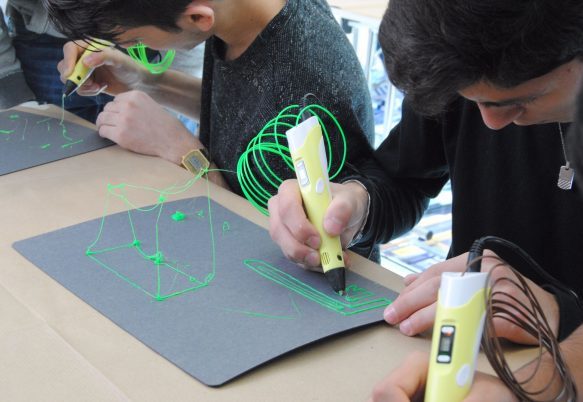
Pirelli Foundation has been active for over four years in the field of education, with events also put on by the Pirelli Educational Foundation. The free programme consists of educational and creative courses for primary, middle and secondary schools with workshops that are also devoted to research and innovation topics.

We look forward to seeing you on Thursday 12 and Friday 13 May 2016 from 10:30 a.m. at the Milano Bicocca University, Building U26, Palestra Universitaria, in Via Giolli on the corner of Via T. Mann 8, Milan

As part of its commitment to fostering innovation, research, training, applied education and supporting young talents, this year the Pirelli Foundation is taking part in the 10th edition of the Educational Robotics Festival (the innovative educational method that uses small robots as tools for learning various types of skills, scheduled to take place on 12 and 13 May at the Milan-Bicocca University. It is organised by the Amicorobot Schools Network under the patronage of the Milano Bicocca University and of the Associazione Genitori della Scuola Primaria “G. B. Pirelli” (G.B.Pirelli. Primary School Parent’s Association)

Pirelli Foundation has been active for over four years in the field of education, with events also put on by the Pirelli Educational Foundation. The free programme consists of educational and creative courses for primary, middle and secondary schools with workshops that are also devoted to research and innovation topics.

We look forward to seeing you on Thursday 12 and Friday 13 May 2016 from 10:30 a.m. at the Milano Bicocca University, Building U26, Palestra Universitaria, in Via Giolli on the corner of Via T. Mann 8, Milan

Multimedia

Images

Fondazione Pirelli at the XXI Triennale International Exhibition in Milan: “Le vie del Compasso d’Oro: la scimmietta Zizì e il Cifra 5”

Also at the XXI Triennale International Exhibition in Milan entitled “XXI Century. Design after design”, of which Pirelli is Official Partner, Fondazione Pirelli will be involved in the activity promoted by ADI Lombardia (Industrial Design Association) called Le vie del Compasso d’Oro, featuring a selection of events dedicated to the places connected in various ways to the prestigious “Compasso d’Oro” industrial design award. Fondazione Pirelli will be showing Zizì, the toy monkey designed by Bruno Munari, winner of the first Compasso d’Oro award in 1954, and the advertising material for Cifra 5, the clock designed by Gino Valle and made by Solari di Udine (a Pirelli subsidiary), that took the award in 1956.

To see the objects and advertising material related to the Compasso D’Oro award winners, please write to visite@fondazionepirelli.org or call 02 64423971 to reserve your visit.

The exhibition will be open from April 4th to September 12th, Mondays to Fridays, from 9 a.m. to 6 p.m. (closed in August).

Entrance: Fondazione Pirelli – Viale Sarca 222 – Milan

Also at the XXI Triennale International Exhibition in Milan entitled “XXI Century. Design after design”, of which Pirelli is Official Partner, Fondazione Pirelli will be involved in the activity promoted by ADI Lombardia (Industrial Design Association) called Le vie del Compasso d’Oro, featuring a selection of events dedicated to the places connected in various ways to the prestigious “Compasso d’Oro” industrial design award. Fondazione Pirelli will be showing Zizì, the toy monkey designed by Bruno Munari, winner of the first Compasso d’Oro award in 1954, and the advertising material for Cifra 5, the clock designed by Gino Valle and made by Solari di Udine (a Pirelli subsidiary), that took the award in 1956.

To see the objects and advertising material related to the Compasso D’Oro award winners, please write to visite@fondazionepirelli.org or call 02 64423971 to reserve your visit.

The exhibition will be open from April 4th to September 12th, Mondays to Fridays, from 9 a.m. to 6 p.m. (closed in August).

Entrance: Fondazione Pirelli – Viale Sarca 222 – Milan

Fondazione Pirelli at the XXI Triennale International Exhibition in Milan. A trip through Pirelli’s sites and history” (May-June-July 2016)

At the XXI Triennale International Exhibition in Milan entitled “XXI Century. Design after design”, of which Pirelli is Official Partner, Fondazione Pirelli will be staging an exhibition dedicated to Industrial Architecture: from the Bicocca Project to the Settimo Torinese Industrial Site. A trip through Pirelli’s sites and history”.

 The exhibition will be set up in three of the most significant buildings of Pirelli’s current headquarters:

– HQ1, the building designed by Gregotti Associati around the ancient cooling tower of the Bicocca plants;

– the XV century Bicocca degli Arcimboldi, which is home to the Group’s current executive offices;

historical building 134, preserved and refurbished to house the activities of the Fondazione, including the Historical Archives.

The exhibition will be an opportunity to discover the key moments and events in the history of Pirelli, its presence in the city and its relationships with architecture from the first factory in Via Ponte Seveso (currently Via Fabio Filzi) and the creation of the major industrial plant in Bicocca to the famous skyscraper designed by Gio Ponti dubbed the “Pirellone” by locals,  Gregotti Associati’s Bicocca Project for reconverting the industrial area and the new plant in Settimo Torinese with is central “spine” structure for research and services designed by Renzo Piano.

Visits will be led by the Fondazione Pirelli personnel (tours in English available on demand).

The exhibition will be open from May to July (reservations needed, until tickets last).

For information and reservations please call 02-64423971 or write to visite@fondazionepirelli.org

Entrance: Pirelli Headquarters – Via Bicocca degli Arcimboldi, 3 – Milan

Save the date – Industrial Architecture

At the XXI Triennale International Exhibition in Milan entitled “XXI Century. Design after design”, of which Pirelli is Official Partner, Fondazione Pirelli will be staging an exhibition dedicated to Industrial Architecture: from the Bicocca Project to the Settimo Torinese Industrial Site. A trip through Pirelli’s sites and history”.

 The exhibition will be set up in three of the most significant buildings of Pirelli’s current headquarters:

– HQ1, the building designed by Gregotti Associati around the ancient cooling tower of the Bicocca plants;

– the XV century Bicocca degli Arcimboldi, which is home to the Group’s current executive offices;

historical building 134, preserved and refurbished to house the activities of the Fondazione, including the Historical Archives.

The exhibition will be an opportunity to discover the key moments and events in the history of Pirelli, its presence in the city and its relationships with architecture from the first factory in Via Ponte Seveso (currently Via Fabio Filzi) and the creation of the major industrial plant in Bicocca to the famous skyscraper designed by Gio Ponti dubbed the “Pirellone” by locals,  Gregotti Associati’s Bicocca Project for reconverting the industrial area and the new plant in Settimo Torinese with is central “spine” structure for research and services designed by Renzo Piano.

Visits will be led by the Fondazione Pirelli personnel (tours in English available on demand).

The exhibition will be open from May to July (reservations needed, until tickets last).

For information and reservations please call 02-64423971 or write to visite@fondazionepirelli.org

Entrance: Pirelli Headquarters – Via Bicocca degli Arcimboldi, 3 – Milan

Save the date – Industrial Architecture

Multimedia

All
Images
Video

The Geneva International Motor Show in Pirelli’s historical archives: from the Fiat 600 to the Lamborghini Miura

“Every time a new car is placed on the market, the tyre engineers are given the far from easy task of creating its very own “tyre”, in other words an item that best accommodates the car’s specific requirements”. These are the initial words of a short article on the company’s house organ, Fatti & Notizie dating back to 1959 regarding the Geneval International Motor Show, one of the biggest car shows, which was inaugurated in 1905.

For Pirelli, the Motor Show has always meant new challenges, but also the opportunity to present innovation and technology, to support newly arising needs ahead of time. Pirelli has attended the Motor Show since 1929, presenting its entire range of tyres; in the 1950s first, and then in the 1960s, it was star of the show with uber-modern booths designed by famous architects and designers and with the presentation of new tyres. At the 1953 show, the Pirelli booth hosted a car that made it possible to simulate the behaviour of tyres on the road, accompanying its movements with a soundtrack recorded in Italian and in French. In 1954, the particular “Stelvio” revolved on an installation secured to a mirror-surfaced base, with a panelled background illustrating information and photos of the latest victories achieved in the world racing championships. Four Pirelli tyres were fitted on the Ferrari driven by Umberto Maglioli at the Carrera in Mexico.

In 1955, for the Fiat 600, the “best affordable small 4-seater car” presented at the Show, Pirelli designed and produced the “Rolle” tyre specifically: the cover page of the “Pirelli” magazine that year was in fact dedicated to Dante Giacosa, the designer of the legendary 600. For the Fiat 1800 presented at the 1959 Motor Show, Pirelli produced the “Sempione” tyre. Sempione Rolle and Cinturato were the true stars of mass motoring during the economic boom. At the 30th° Geneva International Motor Show in 1960, Pirelli presented a tyre with an interchangeable tread, the BS3, which was an absolute technological revolution. Consequently a generously-sized booth of 200 square metres was set up to allow interested spectators to see demonstrations of how these were fitted and removed.

In 1967, an article published in the “Pirellimagazine entitled “Ginevra degli autieri” (literally Geneva for drivers) spoke of the establishment of a new car concept: the sports car. Geneva, which sets the “fashion trend of the year”, recalibrates a new way to travel: after years in which the car was used mostly as a means to an end to do your shopping, the car goes back to doing what it was conceived for: travelling. Powerful, designer cars – the first was the Ford Mustang – made an appearance and were hugely admired by the public. In 1966 – exactly 50 years ago – Lamborghini presented the prototype of the “Miura“, a masterpiece of a car, fitted with Pirelli tyres. Its designer, Marcello Gandini, recalls how “at the time, the only type of tyre available for this type of car was the Pirelli 205/70-15“; the year after, the “Marzal” prototype built by Bertone on Lamborghini 2000 mechanics was presented. Naturally, it was fitted with Pirelli Cinturato tyres.
A story of great cars and great tyres, technological excellence and speed that continue to this day.

“Every time a new car is placed on the market, the tyre engineers are given the far from easy task of creating its very own “tyre”, in other words an item that best accommodates the car’s specific requirements”. These are the initial words of a short article on the company’s house organ, Fatti & Notizie dating back to 1959 regarding the Geneval International Motor Show, one of the biggest car shows, which was inaugurated in 1905.

For Pirelli, the Motor Show has always meant new challenges, but also the opportunity to present innovation and technology, to support newly arising needs ahead of time. Pirelli has attended the Motor Show since 1929, presenting its entire range of tyres; in the 1950s first, and then in the 1960s, it was star of the show with uber-modern booths designed by famous architects and designers and with the presentation of new tyres. At the 1953 show, the Pirelli booth hosted a car that made it possible to simulate the behaviour of tyres on the road, accompanying its movements with a soundtrack recorded in Italian and in French. In 1954, the particular “Stelvio” revolved on an installation secured to a mirror-surfaced base, with a panelled background illustrating information and photos of the latest victories achieved in the world racing championships. Four Pirelli tyres were fitted on the Ferrari driven by Umberto Maglioli at the Carrera in Mexico.

In 1955, for the Fiat 600, the “best affordable small 4-seater car” presented at the Show, Pirelli designed and produced the “Rolle” tyre specifically: the cover page of the “Pirelli” magazine that year was in fact dedicated to Dante Giacosa, the designer of the legendary 600. For the Fiat 1800 presented at the 1959 Motor Show, Pirelli produced the “Sempione” tyre. Sempione Rolle and Cinturato were the true stars of mass motoring during the economic boom. At the 30th° Geneva International Motor Show in 1960, Pirelli presented a tyre with an interchangeable tread, the BS3, which was an absolute technological revolution. Consequently a generously-sized booth of 200 square metres was set up to allow interested spectators to see demonstrations of how these were fitted and removed.

In 1967, an article published in the “Pirellimagazine entitled “Ginevra degli autieri” (literally Geneva for drivers) spoke of the establishment of a new car concept: the sports car. Geneva, which sets the “fashion trend of the year”, recalibrates a new way to travel: after years in which the car was used mostly as a means to an end to do your shopping, the car goes back to doing what it was conceived for: travelling. Powerful, designer cars – the first was the Ford Mustang – made an appearance and were hugely admired by the public. In 1966 – exactly 50 years ago – Lamborghini presented the prototype of the “Miura“, a masterpiece of a car, fitted with Pirelli tyres. Its designer, Marcello Gandini, recalls how “at the time, the only type of tyre available for this type of car was the Pirelli 205/70-15“; the year after, the “Marzal” prototype built by Bertone on Lamborghini 2000 mechanics was presented. Naturally, it was fitted with Pirelli Cinturato tyres.
A story of great cars and great tyres, technological excellence and speed that continue to this day.

For a Sustainable Corporate Culture, 2015

Corporate Culture Week 2015: The Company Takes the Stage, 2015

A Muse in the Wheels: Presentation for the Triennale, 2015

A Muse in the Wheels: The Book, 2015

The Pirelli Historical Archives: Cultural Heritage at the Service of the People, Now Also in Digital Form

Since its inception, the Pirelli Foundation has been working to catalogue and digitise the Group’s historical archives, which consist of over three kilometres of documents about the history of the organisation’s activities. This extraordinary wealth of documents was declared in 1972 to be of significant historical interest by Italy’s Ministry of Cultural Heritage and Tourism.

In 2014, in order to catalogue and inventory the historical archives, the Foundation adopted the open-source xDams platform, which provides for the integrated processing, management, and access of multimedia archives. This project called for the creation of both a digital library and a website, which features photos, sketches and drawings, corporate documents, and video content. Visitors to the site can also browse through the pages of the Pirelli magazine, which was published from 1948 to 1972, promoting one of the nation’s most highly evolved forums of cultural debate for over two decades.

The entire catalogue is available in both English and Italian and represents an example of excellence in online corporate archives.

The publication of this content, which is periodically updated through ongoing efforts to catalogue and digitise the Historical Archives, meets one of the Foundation’s primary objectives, which is that of promoting the organisation’s history and culture by ensuring the greatest access possible to this rich cultural heritage.

Since its inception, the Pirelli Foundation has been working to catalogue and digitise the Group’s historical archives, which consist of over three kilometres of documents about the history of the organisation’s activities. This extraordinary wealth of documents was declared in 1972 to be of significant historical interest by Italy’s Ministry of Cultural Heritage and Tourism.

In 2014, in order to catalogue and inventory the historical archives, the Foundation adopted the open-source xDams platform, which provides for the integrated processing, management, and access of multimedia archives. This project called for the creation of both a digital library and a website, which features photos, sketches and drawings, corporate documents, and video content. Visitors to the site can also browse through the pages of the Pirelli magazine, which was published from 1948 to 1972, promoting one of the nation’s most highly evolved forums of cultural debate for over two decades.

The entire catalogue is available in both English and Italian and represents an example of excellence in online corporate archives.

The publication of this content, which is periodically updated through ongoing efforts to catalogue and digitise the Historical Archives, meets one of the Foundation’s primary objectives, which is that of promoting the organisation’s history and culture by ensuring the greatest access possible to this rich cultural heritage.

1976 Monte Carlo Rally: When the P7 Reassured the Dragon

When he was asked by a journalist from the Pirelli house organ Fatti e Notizie if he would have won if the circuit had all been in snow, the Dragon had not the slightest doubt: “I’d have won all the same. The Stratos is the best car and the P7 would have been perfect on the snow, too.” It was 24 January  1976 when Sandro “Dragon” Munari, together with Silvio Maiga in the Lancia Stratos no. 10 – won the Monte Carlo Rally. Forty years ago.

Although Munari had full confidence in the reliability of the tyres in dry conditions, he might have had some doubts about them on the snow… But the debut on the rally scene – at Monte Carlo in 1976 – of the brand-new Pirelli P7, which had been specially developed for the Lancia Stratos Alitalia, and which was being used for the first time as the “mono-tyre”, could not have been more successful. So successful that, on the only snow test on the entire route, the innovative ultra-low-profile created by Pirelli technicians had proved its absolute superiority. “What emerged was something quite extraordinary: a snow tyre with a racing compound”, said the Dragon. Enough to allow the Stratos to handle it well even without studded treads.

The first across the line on 24 January was Munari-Maiga’s Stratos no. 10. The second was another Stratos: the no. 6, with Waldegaard-Thorszelius, the Swedish team. And yet another Stratos came third: the all-French Bernard Darniche and Alain Mahé team, in no. 12. This hat-trick would have been enough to establish the absolute superiority of Pirelli at Monte Carlo in 1976, but the festivities also included the German team, with Walter Rohrl and Jochen Berger, who came in fourth in their Opal Kadett GT/E. With Pirelli P7s, of course.

When he was asked by a journalist from the Pirelli house organ Fatti e Notizie if he would have won if the circuit had all been in snow, the Dragon had not the slightest doubt: “I’d have won all the same. The Stratos is the best car and the P7 would have been perfect on the snow, too.” It was 24 January  1976 when Sandro “Dragon” Munari, together with Silvio Maiga in the Lancia Stratos no. 10 – won the Monte Carlo Rally. Forty years ago.

Although Munari had full confidence in the reliability of the tyres in dry conditions, he might have had some doubts about them on the snow… But the debut on the rally scene – at Monte Carlo in 1976 – of the brand-new Pirelli P7, which had been specially developed for the Lancia Stratos Alitalia, and which was being used for the first time as the “mono-tyre”, could not have been more successful. So successful that, on the only snow test on the entire route, the innovative ultra-low-profile created by Pirelli technicians had proved its absolute superiority. “What emerged was something quite extraordinary: a snow tyre with a racing compound”, said the Dragon. Enough to allow the Stratos to handle it well even without studded treads.

The first across the line on 24 January was Munari-Maiga’s Stratos no. 10. The second was another Stratos: the no. 6, with Waldegaard-Thorszelius, the Swedish team. And yet another Stratos came third: the all-French Bernard Darniche and Alain Mahé team, in no. 12. This hat-trick would have been enough to establish the absolute superiority of Pirelli at Monte Carlo in 1976, but the festivities also included the German team, with Walter Rohrl and Jochen Berger, who came in fourth in their Opal Kadett GT/E. With Pirelli P7s, of course.

Sign up for the newsletter