

L’agenda del weekend – Sabato 9 novembre 2019
08 November 2019

Accessibility Come visit us.
Find out moreHelp with your research To access the Historical Archive's documents and materials, please fill out the form to request an appointment.
Request an appointmentHelp with your research To access the Historical Archive's documents and materials, please fill out the form to request an appointment.
Request an appointmentThe Pirelli Foundation Educational Programs
Explore pathsCome visit us.
Come visit us.
To access the Historical Archive's documents and materials, please fill out the form to request an appointment.
Grazie per la tua richiesta
Riceverai una mail di conferma dell'avvenuta ricezione della richiesta e sarai ricontattato.
Grazie per la tua richiesta
Abbiamo ricevuto la tua richiesta. Sarai ricontattato dallo staff di Fondazione Pirelli Educational.
Grazie per la tua richiesta
Abbiamo ricevuto la tua richiesta. Sarai ricontattato al più presto.
Ten years have gone by since the Agnelli Foundation, the Pirelli Foundation, the Fondazione Edoardo Garrone and the Collège des Ingénieurs in Paris opened the Scuola di Alta Formazione al Management, later the Collège des Ingénieurs Italia, or CDI Italia, in Turin. The aim was to create an international Master of Business Administration (MBA) in Italy for young graduates, mainly in science and technology disciplines. A completely free course, it now involves about 50 talented young people every year.
These are brilliant students, who are selected solely on the basis of merit and for their level of preparation, and they are given analytical and managerial skills that will help Italian companies accomplish their development programmes on markets around the world. To celebrate the landmark occasion and to take stock of their shared journey, about 350 former students, guests, partners, companies and founders met today in the Auditorium of the Sanpaolo skyscraper in Turin. Over the years, the Collège des Ingénieurs Italia has led to numerous business and institutional partnerships, launching several projects to tackle issues concerning innovation. These include Innovation for Change, a programme promoted together with CERN in Geneva, the Politecnico University of Turin and the Enel Foundation, during which the MBA students and PhD students from the Politecnico work to find solutions to the challenges of the future, and particularly those concerning sustainability and the impact on society.
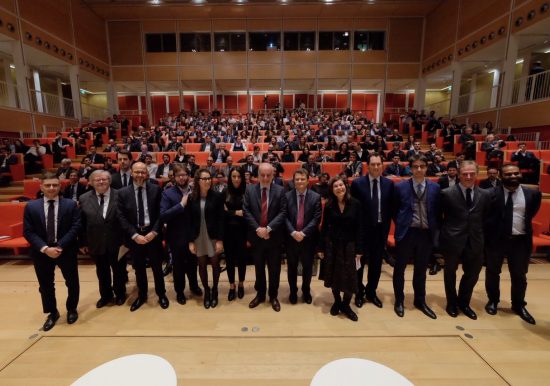
Ten years have gone by since the Agnelli Foundation, the Pirelli Foundation, the Fondazione Edoardo Garrone and the Collège des Ingénieurs in Paris opened the Scuola di Alta Formazione al Management, later the Collège des Ingénieurs Italia, or CDI Italia, in Turin. The aim was to create an international Master of Business Administration (MBA) in Italy for young graduates, mainly in science and technology disciplines. A completely free course, it now involves about 50 talented young people every year.
These are brilliant students, who are selected solely on the basis of merit and for their level of preparation, and they are given analytical and managerial skills that will help Italian companies accomplish their development programmes on markets around the world. To celebrate the landmark occasion and to take stock of their shared journey, about 350 former students, guests, partners, companies and founders met today in the Auditorium of the Sanpaolo skyscraper in Turin. Over the years, the Collège des Ingénieurs Italia has led to numerous business and institutional partnerships, launching several projects to tackle issues concerning innovation. These include Innovation for Change, a programme promoted together with CERN in Geneva, the Politecnico University of Turin and the Enel Foundation, during which the MBA students and PhD students from the Politecnico work to find solutions to the challenges of the future, and particularly those concerning sustainability and the impact on society.
As part of the “Settimana della Cultura d’Impresa” (Corporate Culture Week) promoted by Museimpresa, Kartell Museo and the Pirelli Foundation present the exhibition Industry Is Imagination: Great Names for Kartell and Pirelli Projects and Products at the Kartell Museo in Noviglio. The display retraces a story of research into materials and product innovation in the two companies, both of them symbols of the Made in Italy label. Starting from the ski rack, the first Pirelli-patented product made by Kartell, the exhibition illustrates a journey through Italy at the time of the reconstruction and the economic boom. It includes patents, materials and products invented and shaped by the genius and creativity of great names in design and science – from Giulio Castelli to Giulio Natta and Carlo Barassi, from Bruno Munari to Marco Zanuso – who created objects that, then as now, have accompanied Italians on their journeys and in their everyday lives.
All the intelligence and fantasy of polymers can be found in Pirelli and Kartell. Their paths first crossed in 1950, just after Pirelli had celebrated its first 75 years of international activities in the world of rubber and cables, while Kartell, which had been founded in 1949, was taking its first steps in the production of car accessories, household items, lamps, and furnishings in plastic materials. And it was in 1950s that Kartell made a ski rack for the Car Accessories Division, based on Pirelli patents that were transferred as part of a partnership agreement between the two companies. The innovative feature of the Kartell K101 Brevetto Pirelli ski rack, the first product made by Kartell, was in its combination of new materials. In 1948, the Pirelli engineer Carlo Barassi had patented the Cord, or Nastro Cord, an elastic textile tape made with the same rubberised textile as that used in the manufacture of tyres. Just when the first prototype was ready, a new protagonist became part of this story: the great architect and designer Roberto Menghi joined engineer Barassi to file the patent for the ski rack. Also at Pirelli in the 1950s, the brilliant mind of Carlo Barassi brought about another revolutionary invention for Italians on the move, especially in the winter: the BS3 tyre, with a tread detached from the carcass, with three interchangeable rings that could turn it into a tyre for snow and ice in the winter, or a tyre for summer use. Like the advertising campaign, the logo of the revolutionary BS3 was the brainchild of Giulio Confalonieri and Ilio Negri, two masters of graphic design.
It was thanks to research into new materials that applications in the industrial sector were expanded, leading to the creation of new objects. Foam rubber Gommapiuma had already gone into production at Pirelli in 1933, but it was after the war that its use really took off. Great designers like Bruno Munari would use it for the creation of design objects, such as the famous toy cat Meo Romeo. Towards the end of the decade, Giulio Natta, the future Nobel laureate in Chemistry, carried out his first experiments in applied research in the industrial sector at the Bicocca laboratories, discovering a new way of producing synthetic rubber. And it was Giulio Natta again, in 1954, who discovered polypropylene, giving rise to a brand-new area of industry in plastic and synthetic materials. This discovery was also to be fundamental for the history of Kartell. Natta’s synthetic polymer had opened the door to modernity, which was made of polyethylene, polypropylene, and polycarbonate. These ductile, creative materials meant that Menghi could design containers and watering cans worthy of display at MoMA in New York while Marco Zanuso, together with Kartell, could reinvent the art of sitting and turn it into an icon of the twentieth century. Pirelli foam rubber continued to play its part: “it has revolutionised the shape of armchairs”, said the architect and designer Franco Albini. And the name Albini became linked to Arflex – another Milanese company, set up by a group of engineers from Pirelli, including Carlo Barassi himself – with which the designer Zanuso worked from the moment it was set up.
To this day, Kartell and Pirelli have remained committed to process and product innovation: processes, products and people who have made – and who continue to make – the history of two great Italian companies.
For information about the exhibition, please write to:

As part of the “Settimana della Cultura d’Impresa” (Corporate Culture Week) promoted by Museimpresa, Kartell Museo and the Pirelli Foundation present the exhibition Industry Is Imagination: Great Names for Kartell and Pirelli Projects and Products at the Kartell Museo in Noviglio. The display retraces a story of research into materials and product innovation in the two companies, both of them symbols of the Made in Italy label. Starting from the ski rack, the first Pirelli-patented product made by Kartell, the exhibition illustrates a journey through Italy at the time of the reconstruction and the economic boom. It includes patents, materials and products invented and shaped by the genius and creativity of great names in design and science – from Giulio Castelli to Giulio Natta and Carlo Barassi, from Bruno Munari to Marco Zanuso – who created objects that, then as now, have accompanied Italians on their journeys and in their everyday lives.
All the intelligence and fantasy of polymers can be found in Pirelli and Kartell. Their paths first crossed in 1950, just after Pirelli had celebrated its first 75 years of international activities in the world of rubber and cables, while Kartell, which had been founded in 1949, was taking its first steps in the production of car accessories, household items, lamps, and furnishings in plastic materials. And it was in 1950s that Kartell made a ski rack for the Car Accessories Division, based on Pirelli patents that were transferred as part of a partnership agreement between the two companies. The innovative feature of the Kartell K101 Brevetto Pirelli ski rack, the first product made by Kartell, was in its combination of new materials. In 1948, the Pirelli engineer Carlo Barassi had patented the Cord, or Nastro Cord, an elastic textile tape made with the same rubberised textile as that used in the manufacture of tyres. Just when the first prototype was ready, a new protagonist became part of this story: the great architect and designer Roberto Menghi joined engineer Barassi to file the patent for the ski rack. Also at Pirelli in the 1950s, the brilliant mind of Carlo Barassi brought about another revolutionary invention for Italians on the move, especially in the winter: the BS3 tyre, with a tread detached from the carcass, with three interchangeable rings that could turn it into a tyre for snow and ice in the winter, or a tyre for summer use. Like the advertising campaign, the logo of the revolutionary BS3 was the brainchild of Giulio Confalonieri and Ilio Negri, two masters of graphic design.
It was thanks to research into new materials that applications in the industrial sector were expanded, leading to the creation of new objects. Foam rubber Gommapiuma had already gone into production at Pirelli in 1933, but it was after the war that its use really took off. Great designers like Bruno Munari would use it for the creation of design objects, such as the famous toy cat Meo Romeo. Towards the end of the decade, Giulio Natta, the future Nobel laureate in Chemistry, carried out his first experiments in applied research in the industrial sector at the Bicocca laboratories, discovering a new way of producing synthetic rubber. And it was Giulio Natta again, in 1954, who discovered polypropylene, giving rise to a brand-new area of industry in plastic and synthetic materials. This discovery was also to be fundamental for the history of Kartell. Natta’s synthetic polymer had opened the door to modernity, which was made of polyethylene, polypropylene, and polycarbonate. These ductile, creative materials meant that Menghi could design containers and watering cans worthy of display at MoMA in New York while Marco Zanuso, together with Kartell, could reinvent the art of sitting and turn it into an icon of the twentieth century. Pirelli foam rubber continued to play its part: “it has revolutionised the shape of armchairs”, said the architect and designer Franco Albini. And the name Albini became linked to Arflex – another Milanese company, set up by a group of engineers from Pirelli, including Carlo Barassi himself – with which the designer Zanuso worked from the moment it was set up.
To this day, Kartell and Pirelli have remained committed to process and product innovation: processes, products and people who have made – and who continue to make – the history of two great Italian companies.
For information about the exhibition, please write to:
Multimedia


The Pirelli Foundation is taking part in the first Festival della Tecnologia di Torino with an event entitled “Alla ricerca dell’uomo vitruviano” (“In Search of Vitruvian Man”), scheduled for Saturday 9 November in the Spazio Prometeo at the Politecnico University of Turin. The meeting will include an open conversation between Antonio Calabrò, Giuseppe Caldarola, Vittorio Marchis and Alberto Saibene, who will examine some of the most important magazines since the post-war period in Italy that have focused on the relationship between technical issues, industry and liberal culture, promoting dialogue and interdependence: Comunità for Olivetti, Civiltà delle macchine for Finmeccanica and our own Pirelli. Rivista d’informazione e di tecnica. Published from 1948 to 1972, this last magazine was the brainchild of Arturo Tofanelli, who directed it until 1957 and who declared: “In waiting rooms, Pirelli magazine didn’t have that pristine, dusty look of publications for non-existent readers, but the comforting appearance of a crumpled, dog-eared magazine that people had read way too much.”
Illustrating the multidisciplinary nature of Pirelli magazine is one of the objectives of our publishing project Industrial Humanism: An Anthology of Thoughts, Words, Images and Innovations, published by Mondadori, which will also be examined during the meeting, and to which an entire section of our website is devoted, with an in-depth analysis of the book, and of the articles, and the biographies of the authors and contributors to the periodical.

The Pirelli Foundation is taking part in the first Festival della Tecnologia di Torino with an event entitled “Alla ricerca dell’uomo vitruviano” (“In Search of Vitruvian Man”), scheduled for Saturday 9 November in the Spazio Prometeo at the Politecnico University of Turin. The meeting will include an open conversation between Antonio Calabrò, Giuseppe Caldarola, Vittorio Marchis and Alberto Saibene, who will examine some of the most important magazines since the post-war period in Italy that have focused on the relationship between technical issues, industry and liberal culture, promoting dialogue and interdependence: Comunità for Olivetti, Civiltà delle macchine for Finmeccanica and our own Pirelli. Rivista d’informazione e di tecnica. Published from 1948 to 1972, this last magazine was the brainchild of Arturo Tofanelli, who directed it until 1957 and who declared: “In waiting rooms, Pirelli magazine didn’t have that pristine, dusty look of publications for non-existent readers, but the comforting appearance of a crumpled, dog-eared magazine that people had read way too much.”
Illustrating the multidisciplinary nature of Pirelli magazine is one of the objectives of our publishing project Industrial Humanism: An Anthology of Thoughts, Words, Images and Innovations, published by Mondadori, which will also be examined during the meeting, and to which an entire section of our website is devoted, with an in-depth analysis of the book, and of the articles, and the biographies of the authors and contributors to the periodical.
Multimedia


The ‘Twentieth Rota Report on Turin’: the story of a city that once exemplified the culture of industry
Manufacturing districts, clusters of social momentum and business opportunities, stories of people and of technical ingenuity, are the qualities of many of the areas that have produced and continue to produce (despite everything) Italy’s wealth and well-being. It also applies to the business culture that is created and develops in the country’s manufacturing areas. A wide range of circumstances, yet all united by the common trait of Italianness. Understanding their development is useful to better understanding the future, as well as the nature of the present. You can do so by reading the ‘Twentieth Giorgio Rota Report on Turin’, written by multiple authors and coordinated by the Centro di Ricerca e Documentazione Luigi Einaudi (with Turin University and Turin Polytechnic).
‘Futuro rinviato’ (‘future postponed’) is the subtitle the writers chose to give the report, effectively summing up the 20 years of evolution in the Piedmontese capital between pushes for growth and halts to development. It’s a real ‘balance sheet of the last twenty years’, divided into three parts. In the first of these, from a wide range of statistical data and indicators, a long-term comparison is made between Turin and other Italian cities. In the second part, plans, projects and strategic documents, launched around the year 2000, are examined to verify what has actually been achieved over the years, when and how, and what issues have emerged. Finally, in the third part, the decisions taken by local government are analysed, along with methods for studying them.
The research also asks ‘How has the city changed compared to two decades ago? giving an overall positive response but adding: ‘Considering the trend of Turin over the last twenty years (compared to the average) and its current position among Italian cities, the main strengths that emerge are above all its universities, various aspects of the city’s cultural system, but also some environmental qualities.’ In other cases, the city is ‘still well positioned but has lost ground over the years, in innovation (patents, exports, skilled labour) and sustainability (green, waste, cycling).’
What emerges from the results of the research is a complex and apparently contradictory narrative, but a story that outlines the difficulties of development (and therefore not only of growth in quantitative terms) of what was once considered a factory city and which then had to reinvent itself and change perspective. The culture of production and doing business also changed.
Reading the ‘Twentieth Rota Report’ is useful for anyone who wants not only to learn more about a territory that was once industrial par excellence, but also to learn the evolutionary traits of an area once dedicated to industry which had to reinvent itself relatively quickly. Also, as has been said, from a cultural aspect as well as manufacturing and development.
Futuro rinviato. Ventesimo Rapporto Giorgio Rota su Torino
Various authors
Centro di Ricerca e Documentazione Luigi Einaudi, 2019
The entire report can be downloaded at the link https://www.rapporto-rota.it/
The ‘Twentieth Rota Report on Turin’: the story of a city that once exemplified the culture of industry
Manufacturing districts, clusters of social momentum and business opportunities, stories of people and of technical ingenuity, are the qualities of many of the areas that have produced and continue to produce (despite everything) Italy’s wealth and well-being. It also applies to the business culture that is created and develops in the country’s manufacturing areas. A wide range of circumstances, yet all united by the common trait of Italianness. Understanding their development is useful to better understanding the future, as well as the nature of the present. You can do so by reading the ‘Twentieth Giorgio Rota Report on Turin’, written by multiple authors and coordinated by the Centro di Ricerca e Documentazione Luigi Einaudi (with Turin University and Turin Polytechnic).
‘Futuro rinviato’ (‘future postponed’) is the subtitle the writers chose to give the report, effectively summing up the 20 years of evolution in the Piedmontese capital between pushes for growth and halts to development. It’s a real ‘balance sheet of the last twenty years’, divided into three parts. In the first of these, from a wide range of statistical data and indicators, a long-term comparison is made between Turin and other Italian cities. In the second part, plans, projects and strategic documents, launched around the year 2000, are examined to verify what has actually been achieved over the years, when and how, and what issues have emerged. Finally, in the third part, the decisions taken by local government are analysed, along with methods for studying them.
The research also asks ‘How has the city changed compared to two decades ago? giving an overall positive response but adding: ‘Considering the trend of Turin over the last twenty years (compared to the average) and its current position among Italian cities, the main strengths that emerge are above all its universities, various aspects of the city’s cultural system, but also some environmental qualities.’ In other cases, the city is ‘still well positioned but has lost ground over the years, in innovation (patents, exports, skilled labour) and sustainability (green, waste, cycling).’
What emerges from the results of the research is a complex and apparently contradictory narrative, but a story that outlines the difficulties of development (and therefore not only of growth in quantitative terms) of what was once considered a factory city and which then had to reinvent itself and change perspective. The culture of production and doing business also changed.
Reading the ‘Twentieth Rota Report’ is useful for anyone who wants not only to learn more about a territory that was once industrial par excellence, but also to learn the evolutionary traits of an area once dedicated to industry which had to reinvent itself relatively quickly. Also, as has been said, from a cultural aspect as well as manufacturing and development.
Futuro rinviato. Ventesimo Rapporto Giorgio Rota su Torino
Various authors
Centro di Ricerca e Documentazione Luigi Einaudi, 2019
The entire report can be downloaded at the link https://www.rapporto-rota.it/
A newly published book about how the provincial areas of the country could be a real resource for kick-starting development
The culture of manufacturing and production in Italy takes myriad forms. It is a living, breathing culture, not a theoretical one. As a corporate culture it is found all over Italy. It is one of Italy’s strong points when it comes to doing business, and much more besides. The things which make our country great are unique in the world, but they also increase the difficulties we must face, starting with the relationship between city centres and suburbs. It’s a matter of no small importance that production in Italian suburbs must be properly understood in order to find new ways to boost local areas. Most importantly because these are the areas that have put their spirit and hard work into the country’s manufacturing.
Reading Provincia non periferia. Innovare le diversità italiane (‘province not periphery: innovation in all Italy’s areas’) by Paolo Manfredi, helps better understand the situation of the many local areas, or provinces, of Italy. Today these areas are in crisis, but they can get back on the crucial path of modernisation and bring the rest of the country along with them in the process.
The book (just over a hundred pages long), is based on the observation that the development of the digital economy and ever-increasing urbanisation, together with the long economic crisis, seem to have created stress never seen before. This is affecting Italy’s ‘biodiversity’ and its key habitat: the extraordinarily rich and unique world that is the province. In other words, resources for redistributive policies, to protect the needs of local areas, have vanished. In addition, the digital economy has rewritten the rules of global competition through platforms, both virtual and physical. The more efficient and profitable, the more they are scalable and able to reduce differentiation, essentially flattening them. In this new environment, the Italian province is at risk of being reduced to an out-of-date concept.
And yet, according to Manfredi, by taking advantage of the characteristics of the provinces, it is possible to restart and create new development based specifically on Italy’s unique production culture. Therefore the suburbs can become a sort of laboratory for experimenting with a new paradigm of radical innovation. This will involve including those who have so far been excluded, and creating value from the diversity in skills, cultures and local areas.
The book identifies three things: the digital modernisation of manufacturing as the key to modernising provinces; creating strong connections between local areas, people and skills that are geographically distant; and using Milan as the ‘accelerator city’ for the whole country, as it is currently the only Italian city that is globally important in terms of development.
To explain this, Manfredi begins his first chapter with an image captioned ‘All roads lead elsewhere,’ before moving on to a description of the geography of the Italian suburbs and then diving into ‘intelligent manufacturing.’
Manfredi explains in his conclusion that the country possesses ‘extraordinary resources’ but that this ‘power’ must be transformed into ‘action.’ The book also outlines ways to take action after the analysis.
Provincia non periferia. Innovare le diversità italiane
Paolo Manfredi
Ega, 2019

A newly published book about how the provincial areas of the country could be a real resource for kick-starting development
The culture of manufacturing and production in Italy takes myriad forms. It is a living, breathing culture, not a theoretical one. As a corporate culture it is found all over Italy. It is one of Italy’s strong points when it comes to doing business, and much more besides. The things which make our country great are unique in the world, but they also increase the difficulties we must face, starting with the relationship between city centres and suburbs. It’s a matter of no small importance that production in Italian suburbs must be properly understood in order to find new ways to boost local areas. Most importantly because these are the areas that have put their spirit and hard work into the country’s manufacturing.
Reading Provincia non periferia. Innovare le diversità italiane (‘province not periphery: innovation in all Italy’s areas’) by Paolo Manfredi, helps better understand the situation of the many local areas, or provinces, of Italy. Today these areas are in crisis, but they can get back on the crucial path of modernisation and bring the rest of the country along with them in the process.
The book (just over a hundred pages long), is based on the observation that the development of the digital economy and ever-increasing urbanisation, together with the long economic crisis, seem to have created stress never seen before. This is affecting Italy’s ‘biodiversity’ and its key habitat: the extraordinarily rich and unique world that is the province. In other words, resources for redistributive policies, to protect the needs of local areas, have vanished. In addition, the digital economy has rewritten the rules of global competition through platforms, both virtual and physical. The more efficient and profitable, the more they are scalable and able to reduce differentiation, essentially flattening them. In this new environment, the Italian province is at risk of being reduced to an out-of-date concept.
And yet, according to Manfredi, by taking advantage of the characteristics of the provinces, it is possible to restart and create new development based specifically on Italy’s unique production culture. Therefore the suburbs can become a sort of laboratory for experimenting with a new paradigm of radical innovation. This will involve including those who have so far been excluded, and creating value from the diversity in skills, cultures and local areas.
The book identifies three things: the digital modernisation of manufacturing as the key to modernising provinces; creating strong connections between local areas, people and skills that are geographically distant; and using Milan as the ‘accelerator city’ for the whole country, as it is currently the only Italian city that is globally important in terms of development.
To explain this, Manfredi begins his first chapter with an image captioned ‘All roads lead elsewhere,’ before moving on to a description of the geography of the Italian suburbs and then diving into ‘intelligent manufacturing.’
Manfredi explains in his conclusion that the country possesses ‘extraordinary resources’ but that this ‘power’ must be transformed into ‘action.’ The book also outlines ways to take action after the analysis.
Provincia non periferia. Innovare le diversità italiane
Paolo Manfredi
Ega, 2019
We don’t need critics to be either apocalyptic or integrated. We need critics with knowledge of the problems, who will make the right choices. These are the conditions that shape the commitment and responsibility of anyone already doing an intellectual job. With all the upcoming challenges of our controversial modern world, we need to look to the future, to a utopia, but at the same time have a realistic attitude to work, with precision and detail in daily life. Utopia and reform, to put it in a nutshell. This brings to mind one of the many philosophical lessons of Ernst Cassirer, as quoted in last week’s blog: ‘The great mission of utopia is to make room for the possible as opposed to a passive acquiescence in the present actual state of affairs. It is symbolic thought which overcomes the natural inertia of man and endows him with a new ability, the ability constantly to reshape his universe.’ It also leans on Karl Popper’s courageous ambition for an ‘open society’ and John Maynard Keynes’ daring and radical renewal of economic thought, all in the name of long-term crisis prevention through productive public investments and redistribution of power. This is democratic liberalism with strong social value.
‘Clerics, courtiers, mavericks. What is the role of intellectuals?’ is what we asked ourselves last week during a riveting conference at Cattolica University in Milan. It was a timely discussion, given the present crisis and the challenges it poses for the elites, of which intellectuals are considered an integral part in populist thinking. The debate covered the essential links between knowledge, skills, scientific progress, economic development and social evolution, and needs to be continued.
There are also other potential roles, beyond that of cleric and courtier. Intellectuals as people can bring together humanistic thought and scientific knowledge to create a ‘polytechnic culture.’ They can also give meaning to the new questions posed by evolving technology, conflicting interests in the dynamics of globalisation, and the recovery of local identities from the crises that lacerate politics, markets and society. In summary, we need clerics and courtiers who are capable of critical thought, not of slavish obedience. They must be committed to exerting an influence on the metaphorical church and monarchy in the modern forms they have assumed (be they institutions, political parties or companies). With the ability to influence power with skill and overcome the restrictive role of the so-called ‘organic intellectual’ from Marxist political science. And again, weaving original dialogues with the various components of the social body and above all with the indispensable ‘free intellectuals’ or, to put it better, ‘heretics’, to build a courageous, unprejudiced, innovative ‘public discourse’ (a good reference on this topic is Jürgen Habermas).
Italian intellectuals have had a rocky relationship with modernity, particularly from the second half of the twentieth century to the present, bemoaning the decaying peasant civilisation, while neglecting the realities of extreme poverty, degradation and violence, and losing sight of the fundamental rights of men and especially women. They have sought palingenesis, that is to say, veered between conservatism and Jacobinism. Thus have they avoided the responsibility of careful, patient and long-term change, of taking on the need to alter the course of things with a view to greater social equity and more conscious participation of people (in other words, reforming the Italian Constitution).
In short, at present it is worth trying to change the paradigm and reason critically on new ways of thinking, between science and philosophy, memory and the future, rights and responsibilities. Delve back into Max Weber. A useful method is the analytical, enlightened severity of and ‘heretical’ critical ability of Leonardo Sciascia (finally back on shelves, thirty years after his death). But also making available practical choices to the questions of sustainability, environmental and social, for balanced development. All this while being very careful that precisely this word, sustainability, so full of values, does not end up trivialised and stultified in public discourses, or translate into so-called ‘greenwashing’ of bad habits.
Apart from the misleading dichotomy ‘apocalyptic or integrated,’ there is a theme that calls for maximum attention: that of artificial intelligence, of cohabitation between human intelligence and machines capable of human thought. ‘Control and submission,’ as Remo Bodei has just written for Il Mulino, analysing ‘the two ends of a strongly asymmetrical power relationship that animates the history of humanity and that has gone through numerous metamorphoses in Western civilisation.’
Those relationships are now under particular strain and involve knowledge, the economy, political and social structures, manufacturing and consumption, as well as new instability and possible rebalancing. We must learn how to deal with it without being Luddites, but in the knowledge that the new horizons of Artificial Intelligence are by no means just another evolution in technology. Will humans dominate robots or will machine self-learning mechanisms and their amazing ability to process information create new hierarchies of power, subjugating us humans?
Outside the confines of science fiction, the problem goes beyond technical understanding and calls into question what it means to be human, the value of a person and of the community. This is fundamental intellectual work.
There are some who suggest that ‘it is time to think of algorethics, that is an ethics for algorithms,’ like Paolo Benanti, a Franciscan friar, scholar of bioethics and technological evolution, who argues: ‘If we want machines to support humans, then algorithms must include ethical values and not just numerical ones.’
The responsibility therefore lies with those who build, program, update and redefine these machines, who must ensure that the moment of choice is always overseen by a human. Herein lies the value of intellectual work. And in the constantly changing, resilient, and critical definition of the relationships between technology, social conditions (avoiding the inequalities of the divides resulting from access to high-tech processes), knowledge, and democracy. This set of relationships is held together by memory and metamorphosis, and challenges the search for meaning at the core of intellectual work.
‘Democracies are fragile in the face of technological supremacy,’ warns President of the Republic Sergio Mattarella, analysing with clarity, before an audience of young people (at the end of October, in Bergamo), the questions posed by the concentration of digital powers and insisting on the need to strengthen, with the formation and growth of critical conscience, the awareness of ongoing changes. That’s a task for anyone but clerics or courtiers.
In other words, innovation is one of the conditions of contemporary human philosophy, devoid of overriding certainties and easy answers. It is far from nostalgic; if anything, it’s open-minded. We must always be mindful, however, of the insight of another of the great reformers of the twentieth century, Gustav Mahler: ‘Tradition is not the custody of ashes, but the preservation of fire.’

We don’t need critics to be either apocalyptic or integrated. We need critics with knowledge of the problems, who will make the right choices. These are the conditions that shape the commitment and responsibility of anyone already doing an intellectual job. With all the upcoming challenges of our controversial modern world, we need to look to the future, to a utopia, but at the same time have a realistic attitude to work, with precision and detail in daily life. Utopia and reform, to put it in a nutshell. This brings to mind one of the many philosophical lessons of Ernst Cassirer, as quoted in last week’s blog: ‘The great mission of utopia is to make room for the possible as opposed to a passive acquiescence in the present actual state of affairs. It is symbolic thought which overcomes the natural inertia of man and endows him with a new ability, the ability constantly to reshape his universe.’ It also leans on Karl Popper’s courageous ambition for an ‘open society’ and John Maynard Keynes’ daring and radical renewal of economic thought, all in the name of long-term crisis prevention through productive public investments and redistribution of power. This is democratic liberalism with strong social value.
‘Clerics, courtiers, mavericks. What is the role of intellectuals?’ is what we asked ourselves last week during a riveting conference at Cattolica University in Milan. It was a timely discussion, given the present crisis and the challenges it poses for the elites, of which intellectuals are considered an integral part in populist thinking. The debate covered the essential links between knowledge, skills, scientific progress, economic development and social evolution, and needs to be continued.
There are also other potential roles, beyond that of cleric and courtier. Intellectuals as people can bring together humanistic thought and scientific knowledge to create a ‘polytechnic culture.’ They can also give meaning to the new questions posed by evolving technology, conflicting interests in the dynamics of globalisation, and the recovery of local identities from the crises that lacerate politics, markets and society. In summary, we need clerics and courtiers who are capable of critical thought, not of slavish obedience. They must be committed to exerting an influence on the metaphorical church and monarchy in the modern forms they have assumed (be they institutions, political parties or companies). With the ability to influence power with skill and overcome the restrictive role of the so-called ‘organic intellectual’ from Marxist political science. And again, weaving original dialogues with the various components of the social body and above all with the indispensable ‘free intellectuals’ or, to put it better, ‘heretics’, to build a courageous, unprejudiced, innovative ‘public discourse’ (a good reference on this topic is Jürgen Habermas).
Italian intellectuals have had a rocky relationship with modernity, particularly from the second half of the twentieth century to the present, bemoaning the decaying peasant civilisation, while neglecting the realities of extreme poverty, degradation and violence, and losing sight of the fundamental rights of men and especially women. They have sought palingenesis, that is to say, veered between conservatism and Jacobinism. Thus have they avoided the responsibility of careful, patient and long-term change, of taking on the need to alter the course of things with a view to greater social equity and more conscious participation of people (in other words, reforming the Italian Constitution).
In short, at present it is worth trying to change the paradigm and reason critically on new ways of thinking, between science and philosophy, memory and the future, rights and responsibilities. Delve back into Max Weber. A useful method is the analytical, enlightened severity of and ‘heretical’ critical ability of Leonardo Sciascia (finally back on shelves, thirty years after his death). But also making available practical choices to the questions of sustainability, environmental and social, for balanced development. All this while being very careful that precisely this word, sustainability, so full of values, does not end up trivialised and stultified in public discourses, or translate into so-called ‘greenwashing’ of bad habits.
Apart from the misleading dichotomy ‘apocalyptic or integrated,’ there is a theme that calls for maximum attention: that of artificial intelligence, of cohabitation between human intelligence and machines capable of human thought. ‘Control and submission,’ as Remo Bodei has just written for Il Mulino, analysing ‘the two ends of a strongly asymmetrical power relationship that animates the history of humanity and that has gone through numerous metamorphoses in Western civilisation.’
Those relationships are now under particular strain and involve knowledge, the economy, political and social structures, manufacturing and consumption, as well as new instability and possible rebalancing. We must learn how to deal with it without being Luddites, but in the knowledge that the new horizons of Artificial Intelligence are by no means just another evolution in technology. Will humans dominate robots or will machine self-learning mechanisms and their amazing ability to process information create new hierarchies of power, subjugating us humans?
Outside the confines of science fiction, the problem goes beyond technical understanding and calls into question what it means to be human, the value of a person and of the community. This is fundamental intellectual work.
There are some who suggest that ‘it is time to think of algorethics, that is an ethics for algorithms,’ like Paolo Benanti, a Franciscan friar, scholar of bioethics and technological evolution, who argues: ‘If we want machines to support humans, then algorithms must include ethical values and not just numerical ones.’
The responsibility therefore lies with those who build, program, update and redefine these machines, who must ensure that the moment of choice is always overseen by a human. Herein lies the value of intellectual work. And in the constantly changing, resilient, and critical definition of the relationships between technology, social conditions (avoiding the inequalities of the divides resulting from access to high-tech processes), knowledge, and democracy. This set of relationships is held together by memory and metamorphosis, and challenges the search for meaning at the core of intellectual work.
‘Democracies are fragile in the face of technological supremacy,’ warns President of the Republic Sergio Mattarella, analysing with clarity, before an audience of young people (at the end of October, in Bergamo), the questions posed by the concentration of digital powers and insisting on the need to strengthen, with the formation and growth of critical conscience, the awareness of ongoing changes. That’s a task for anyone but clerics or courtiers.
In other words, innovation is one of the conditions of contemporary human philosophy, devoid of overriding certainties and easy answers. It is far from nostalgic; if anything, it’s open-minded. We must always be mindful, however, of the insight of another of the great reformers of the twentieth century, Gustav Mahler: ‘Tradition is not the custody of ashes, but the preservation of fire.’
The Pirelli Foundation will once again be taking part in Bookcity Milano, this time with two events: the first, on Thursday 14 November at the Bocconi University of Milan, as part of the “Bocconi4Bookcity” programme, is entitled “Memoria d’impresa, qualità di risultato economico, città abilitante” (“Corporate Memory, Quality of Economic Results, Empowering the City”). Why do some companies promote their own memory, while facing transformations that significantly shift their boundaries and their range of action? How does their interaction with the community help create economic value? The meeting will be an opportunity to discuss the relationship between culture and corporate value, with Antonio Calabrò, the director of the Foundation, and Paola Dubini and Giorgio Bigatti, professors at Bocconi University. The second event will be a discussion on the subject “Umanesimo Industriale a Milano: impresa, scienza, letteratura. Un percorso storico culturale e sociale sugli intellettuali meridionali al Nord” (“Industrial Humanism in Milan: Business, Science, and Literature. A historical, Cultural, and Social Look at Southern Intellectuals in the North”), with Antonio Calabrò, Piergaetano Marchetti, president of BookCity and of the Fondazione Corriere della Sera, and Giuseppe Lupo, a writer and lecturer at the Università Cattolica del Sacro Cuore. The event, on Saturday 16 November, will be held in the Sala Buzzati at the Fondazione Corriere.
The two meetings will also be an opportunity to retrace the experience of Pirelli. Rivista d’informazione e di tecnica, a magazine launched in 1948 with the aim of bringing together scientific and technical culture and liberal culture, with articles and reports by the most authoritative international writers of the day: Dino Buzzati, Italo Calvino, Umberto Eco, Eugenio Montale, Leonardo Sciascia, Leonardo Sinisgalli, Salvatore Quasimodo, and Elio Vittorini, among others. A case-study in publishing to which we have dedicated Industrial Humanism: An Anthology of Thoughts, Words, Images and Innovations, a book published by Mondadori, with a special section of our fondazionepirelli.org website, with information about the contents of the book and the extraordinary history of the magazine.

The Pirelli Foundation will once again be taking part in Bookcity Milano, this time with two events: the first, on Thursday 14 November at the Bocconi University of Milan, as part of the “Bocconi4Bookcity” programme, is entitled “Memoria d’impresa, qualità di risultato economico, città abilitante” (“Corporate Memory, Quality of Economic Results, Empowering the City”). Why do some companies promote their own memory, while facing transformations that significantly shift their boundaries and their range of action? How does their interaction with the community help create economic value? The meeting will be an opportunity to discuss the relationship between culture and corporate value, with Antonio Calabrò, the director of the Foundation, and Paola Dubini and Giorgio Bigatti, professors at Bocconi University. The second event will be a discussion on the subject “Umanesimo Industriale a Milano: impresa, scienza, letteratura. Un percorso storico culturale e sociale sugli intellettuali meridionali al Nord” (“Industrial Humanism in Milan: Business, Science, and Literature. A historical, Cultural, and Social Look at Southern Intellectuals in the North”), with Antonio Calabrò, Piergaetano Marchetti, president of BookCity and of the Fondazione Corriere della Sera, and Giuseppe Lupo, a writer and lecturer at the Università Cattolica del Sacro Cuore. The event, on Saturday 16 November, will be held in the Sala Buzzati at the Fondazione Corriere.
The two meetings will also be an opportunity to retrace the experience of Pirelli. Rivista d’informazione e di tecnica, a magazine launched in 1948 with the aim of bringing together scientific and technical culture and liberal culture, with articles and reports by the most authoritative international writers of the day: Dino Buzzati, Italo Calvino, Umberto Eco, Eugenio Montale, Leonardo Sciascia, Leonardo Sinisgalli, Salvatore Quasimodo, and Elio Vittorini, among others. A case-study in publishing to which we have dedicated Industrial Humanism: An Anthology of Thoughts, Words, Images and Innovations, a book published by Mondadori, with a special section of our fondazionepirelli.org website, with information about the contents of the book and the extraordinary history of the magazine.
Thank you for your request
You will receive an email confirming your subscription to the newsletter.