Help with your research

To request to view the materials in the Historical Archive and in the libraries of the Pirelli Foundation for study and research purposes and/or to find out how to request the use of materials for loans and exhibitions, please fill in the form below. You will receive an email confirming receipt of the request and you will be contacted.

Pirelli Foundation Educational Courses

Select the education level of the school

Visit the Foundation

For information about the Foundation's activities, guided tours and accessibility, please call +39 0264423971 or fill in the form below, providing details of your request in the notes field.

Brescia, 26 March 1927:
The First Mille Miglia

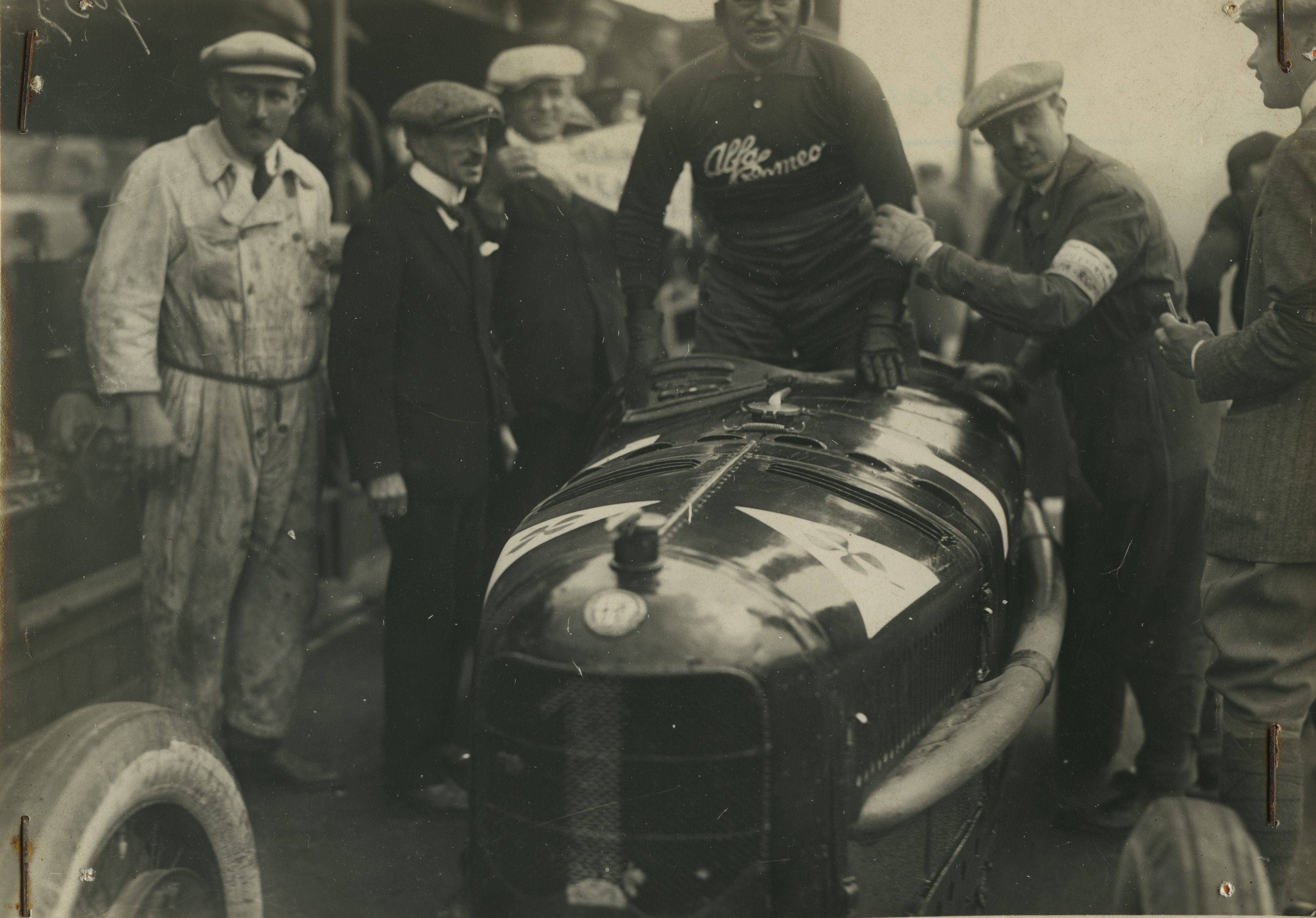
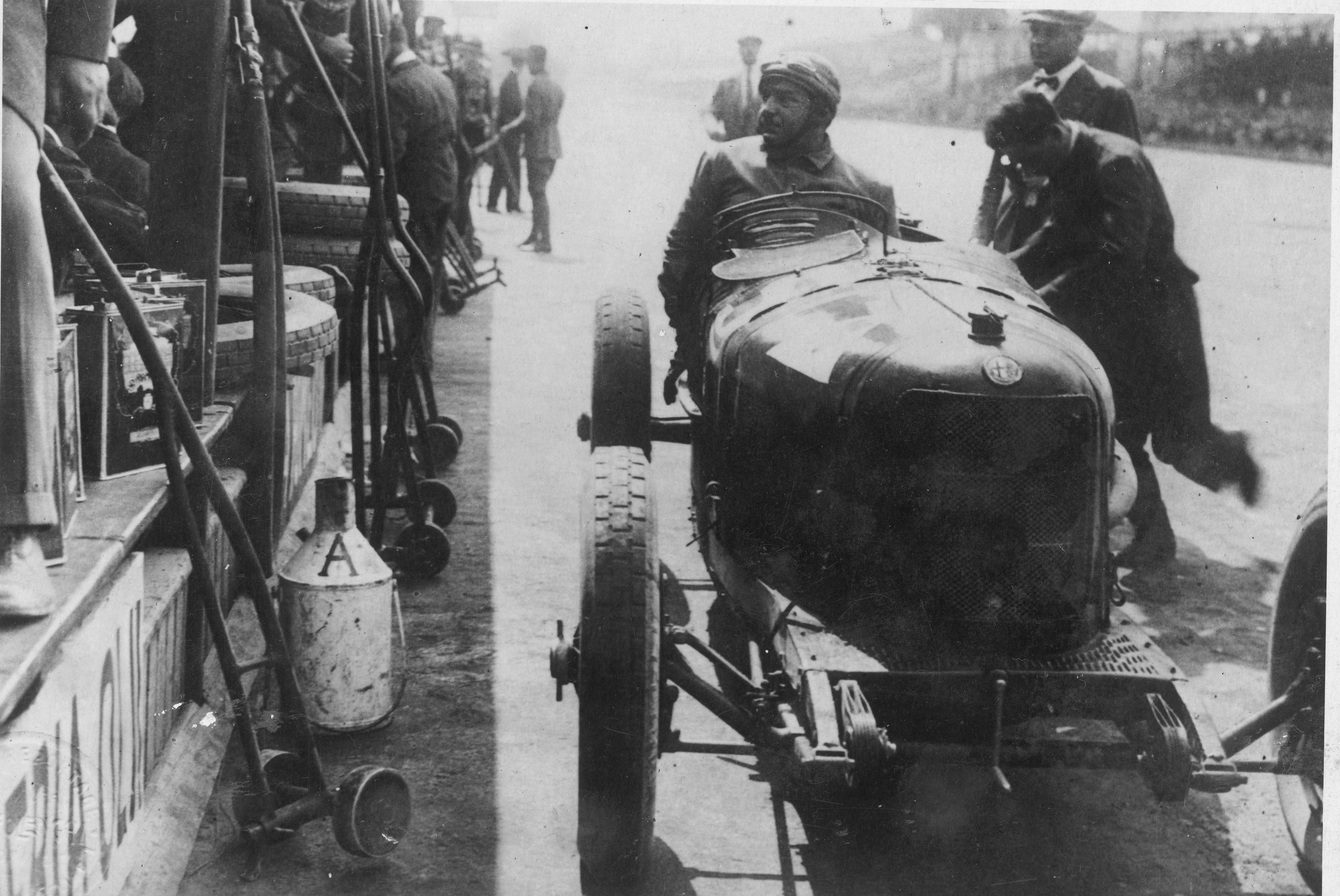
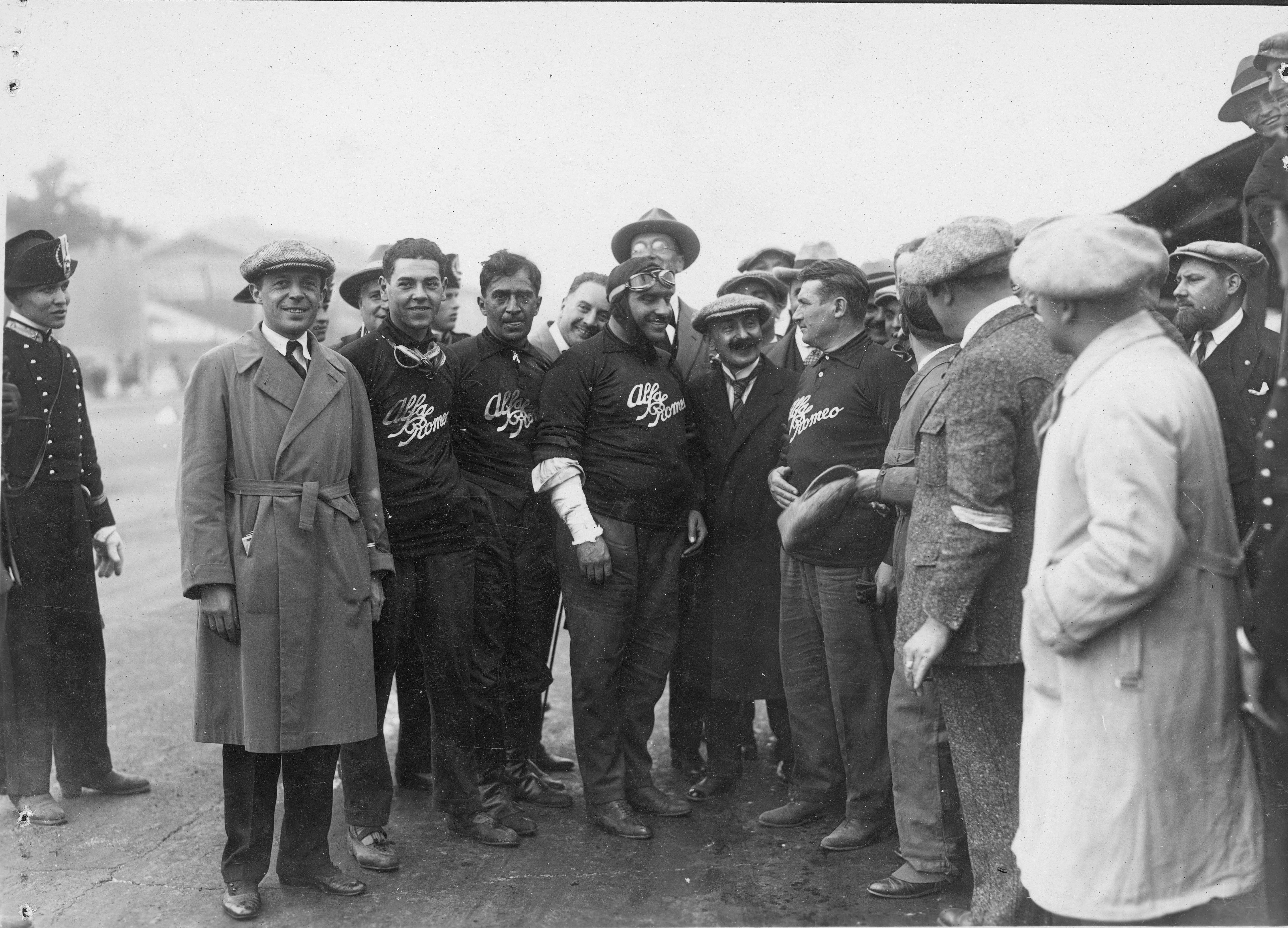
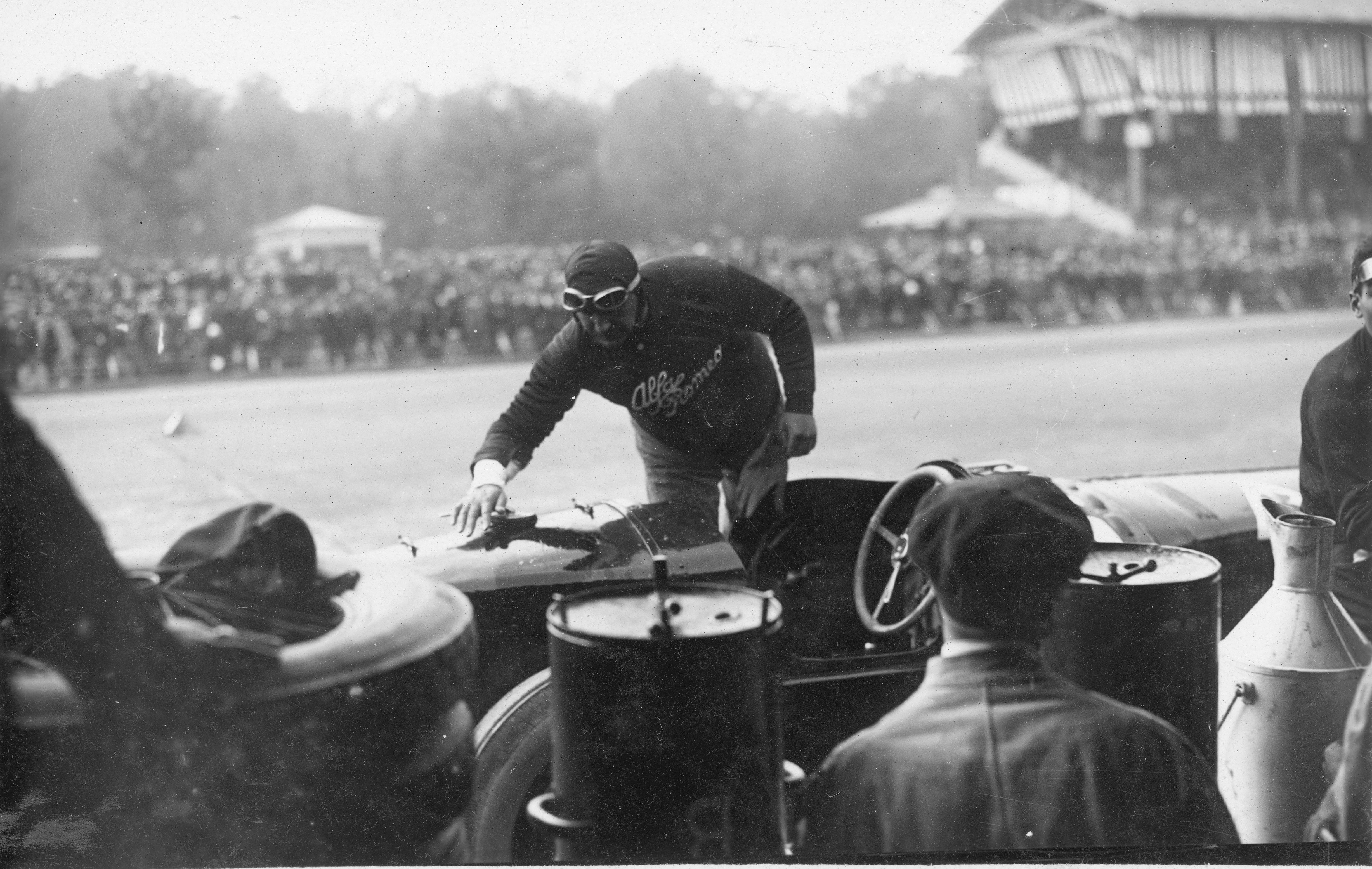
The cars sped off at eight in the morning on 26 March 1927. The brainchild of Aymo Maggi, Renzo Castagneto, Franco Mazzotti, and Giovanni Canestrini – collectively nicknamed “The Four Musketeers” – the Mille Miglia started from the Rebuffone gardens in Brescia and headed for Rome, crossing the Apennines. They then headed back towards the Adriatic, finally ending in Brescia without any stops. On the map, it was just over sixteen hundred kilometres – in other words, mille miglia, or one thousand miles. That morning of ninety-three years ago saw the start of “the most beautiful race in the world”, as Enzo Ferrari called it. Pirelli could hardly not be there – and it could hardly fail to win. Because, by then, the Pirelli Cord had already become known as “the victory tyre”: Having become world champions with Alfa Romeo in the 1925 Grand Prix, Cord tyres were the winning card for the Italian automotive industry around the world, both for speed racing on circuits and for classic endurance racing on road.

The very best in 1920s sports car racing lined up at the start of the first Mille Miglia: the Alfa Romeo RL Super Sports, which dominated the Targa Florio, the glorious Itala cars, the magnificent Lancia Lambdas, and the Bugatti T40s that had come over from France. And then there were the OM 665 Superbas, back from great performances with the driver Renato Balestrero and later with the brothers Tino and Mario Danieli at the 24 Hours of Le Mans. The gruelling sixteen-hundred-kilometre race was one of dust and gales, fog, dirt roads and cobblestones in urban centres. And the first to enter Brescia, shortly after six on the morning of 27 March, was indeed an OM Superba driven by Nando Minoja and Giuseppe Morandi, at an astonishing average speed of over 77 km/h. Behind them were two more Superbas – Tino Danieli and Renato Balestrero’s no. 13 and Mario Danieli and Archimede Rosa’s no. 12. A triumph for the people of Brescia, and for the city that had launched “the most beautiful race in the world”. One of the rare photographs that appeared in the newspapers at the time shows part of the tyre on the winning car: it bears the word “Cord”, and next to it “Milan” – another trophy for Pirelli.

Then, for twenty years, the Mille Miglia was monopolised first by Alfa Romeo and later, after the war, by Ferrari. Giuseppe Campari, Tazio Nuvolari, Achille Varzi, and Carlo Pintacuda were the pre-war heroes aboard the red racers of the Cloverleaf: the authentic creators of a legend. Under the banner of the Prancing Horse, Clemente Biondetti, Giannino Marzotto, Gigi Villoresi, and Giovanni Bracco found stardom in the new world that was taking shape in the 1950s. Alberto Ascari drove to a thrilling victory in 1954 at the wheel of his Lancia D24, again with Pirelli Stella Bianca- and Stelvio-shod wheels, keeping alive the legend of the “victory tyres”. The driver-engineer Piero Taruffi promised his wife that he would stop racing only after he had won a Mille Miglia. And he did so, in 1957, in a Ferrari. He was true to his word, and stopped racing. And the Mille Miglia ended with him.

The cars sped off at eight in the morning on 26 March 1927. The brainchild of Aymo Maggi, Renzo Castagneto, Franco Mazzotti, and Giovanni Canestrini – collectively nicknamed “The Four Musketeers” – the Mille Miglia started from the Rebuffone gardens in Brescia and headed for Rome, crossing the Apennines. They then headed back towards the Adriatic, finally ending in Brescia without any stops. On the map, it was just over sixteen hundred kilometres – in other words, mille miglia, or one thousand miles. That morning of ninety-three years ago saw the start of “the most beautiful race in the world”, as Enzo Ferrari called it. Pirelli could hardly not be there – and it could hardly fail to win. Because, by then, the Pirelli Cord had already become known as “the victory tyre”: Having become world champions with Alfa Romeo in the 1925 Grand Prix, Cord tyres were the winning card for the Italian automotive industry around the world, both for speed racing on circuits and for classic endurance racing on road.

The very best in 1920s sports car racing lined up at the start of the first Mille Miglia: the Alfa Romeo RL Super Sports, which dominated the Targa Florio, the glorious Itala cars, the magnificent Lancia Lambdas, and the Bugatti T40s that had come over from France. And then there were the OM 665 Superbas, back from great performances with the driver Renato Balestrero and later with the brothers Tino and Mario Danieli at the 24 Hours of Le Mans. The gruelling sixteen-hundred-kilometre race was one of dust and gales, fog, dirt roads and cobblestones in urban centres. And the first to enter Brescia, shortly after six on the morning of 27 March, was indeed an OM Superba driven by Nando Minoja and Giuseppe Morandi, at an astonishing average speed of over 77 km/h. Behind them were two more Superbas – Tino Danieli and Renato Balestrero’s no. 13 and Mario Danieli and Archimede Rosa’s no. 12. A triumph for the people of Brescia, and for the city that had launched “the most beautiful race in the world”. One of the rare photographs that appeared in the newspapers at the time shows part of the tyre on the winning car: it bears the word “Cord”, and next to it “Milan” – another trophy for Pirelli.

Then, for twenty years, the Mille Miglia was monopolised first by Alfa Romeo and later, after the war, by Ferrari. Giuseppe Campari, Tazio Nuvolari, Achille Varzi, and Carlo Pintacuda were the pre-war heroes aboard the red racers of the Cloverleaf: the authentic creators of a legend. Under the banner of the Prancing Horse, Clemente Biondetti, Giannino Marzotto, Gigi Villoresi, and Giovanni Bracco found stardom in the new world that was taking shape in the 1950s. Alberto Ascari drove to a thrilling victory in 1954 at the wheel of his Lancia D24, again with Pirelli Stella Bianca- and Stelvio-shod wheels, keeping alive the legend of the “victory tyres”. The driver-engineer Piero Taruffi promised his wife that he would stop racing only after he had won a Mille Miglia. And he did so, in 1957, in a Ferrari. He was true to his word, and stopped racing. And the Mille Miglia ended with him.

Multimedia

Images

I musei d’impresa invitano a visite virtuali

Fondazione Pirelli rimane “aperta” con un tour virtuale

The path of our country

A book on economic history outlines the path taken by the Italian community


Getting to know the past in order to better understand the present, and above all to enable us to face the future in an effective manner. While the concept is not a new one, it should nonetheless be borne in mind. It’s a story that is always relevant, not least for companies which can use their knowledge of the path they have traversed in the past in order to guide them into a future that enables them to grow their culture of production. Within this context, “La strada smarrita. Breve storia dell’economia italiana” (The lost road. A short history of the Italian economy), a book written jointly by Carlo Bastasin and Gianni Toniolo, could prove a useful read.

This short text by two of the best historians currently working in Italy retraces the economic history of the country from unification to the present day, taking a clear, incisive approach and reflecting on the journey that has led the Italian people from poverty to affluence and then back into a challenging situation like the one we are facing today. The book sends a message: despite the current risks, recent history shows us that Italy is not doomed. Of course, we need to dedicate ourselves to the cause, and particularly in these days, our efforts must be redoubled.

Bastasin and Toniolo explain how in the last decade of the nineteenth century, Italy began its pursuit of the most advanced countries in the world, and by the end of the twentieth century it managed to achieve an income per capita not unlike that of Germany, France and the United Kingdom: a story of resounding success for an economy that was truly on its knees when unification occurred. However, as the two authors go on to explain, for a quarter of a century the Italian economy has grown much less than the European average. In other words, Bastasin and Toniolo suggest that the factors that had proved so crucial to development in the post-war era have proved to be poorly suited to the modern global economy. The income lost in the crisis from 2008-2013 has not yet been recovered, and the difference in the economic well-being of Italians and other Europeans and North Americans has regressed to the levels seen in the 1960s. This is the result of a number of factors, above all the climate of political, financial and institutional uncertainty which discourages investment, creating an environment that is hostile to growth and that is at risk of causing the economy to spiral. The events that are currently unfolding could serve to further aggravate this condition.

And yet, the book outlines a path that is in line with the positive progress achieved a few decades ago, provided that we make a serious, concerted effort to focus on training and education, on debt, and on the creation of a policy that can “lengthen time and broaden horizons”.

Bastasin and Toniolo have written a useful and interesting story, not least for entrepreneurs or managers seeking to gain a deeper, clearer understanding of the backdrop and context of their corporate activity.

La strada smarrita. Breve storia dell’economia italiana” (The lost road. A short history of the Italian economy)

Carlo Bastasin, Gianni Toniolo

Laterza, 2020


A book on economic history outlines the path taken by the Italian community


Getting to know the past in order to better understand the present, and above all to enable us to face the future in an effective manner. While the concept is not a new one, it should nonetheless be borne in mind. It’s a story that is always relevant, not least for companies which can use their knowledge of the path they have traversed in the past in order to guide them into a future that enables them to grow their culture of production. Within this context, “La strada smarrita. Breve storia dell’economia italiana” (The lost road. A short history of the Italian economy), a book written jointly by Carlo Bastasin and Gianni Toniolo, could prove a useful read.

This short text by two of the best historians currently working in Italy retraces the economic history of the country from unification to the present day, taking a clear, incisive approach and reflecting on the journey that has led the Italian people from poverty to affluence and then back into a challenging situation like the one we are facing today. The book sends a message: despite the current risks, recent history shows us that Italy is not doomed. Of course, we need to dedicate ourselves to the cause, and particularly in these days, our efforts must be redoubled.

Bastasin and Toniolo explain how in the last decade of the nineteenth century, Italy began its pursuit of the most advanced countries in the world, and by the end of the twentieth century it managed to achieve an income per capita not unlike that of Germany, France and the United Kingdom: a story of resounding success for an economy that was truly on its knees when unification occurred. However, as the two authors go on to explain, for a quarter of a century the Italian economy has grown much less than the European average. In other words, Bastasin and Toniolo suggest that the factors that had proved so crucial to development in the post-war era have proved to be poorly suited to the modern global economy. The income lost in the crisis from 2008-2013 has not yet been recovered, and the difference in the economic well-being of Italians and other Europeans and North Americans has regressed to the levels seen in the 1960s. This is the result of a number of factors, above all the climate of political, financial and institutional uncertainty which discourages investment, creating an environment that is hostile to growth and that is at risk of causing the economy to spiral. The events that are currently unfolding could serve to further aggravate this condition.

And yet, the book outlines a path that is in line with the positive progress achieved a few decades ago, provided that we make a serious, concerted effort to focus on training and education, on debt, and on the creation of a policy that can “lengthen time and broaden horizons”.

Bastasin and Toniolo have written a useful and interesting story, not least for entrepreneurs or managers seeking to gain a deeper, clearer understanding of the backdrop and context of their corporate activity.

La strada smarrita. Breve storia dell’economia italiana” (The lost road. A short history of the Italian economy)

Carlo Bastasin, Gianni Toniolo

Laterza, 2020


The closed world, fear and the need to rebuild trust for politics, communities, corporate credit and work

“Closed” – this is the word that appears on a sign hanging across a picture of the world. It’s the very fitting and powerful cover of “The Economist”, on news-stands this week. Everything is closed. Many cities, both small and large, are now closed in Italy, in the rest of Europe and now also in the US, in the wake of the lengthy closures in China. Schools and universities are closed, as are most factories except for those producing medical and pharmaceutical products, foodstuffs and essential goods. Shops, except those selling medicine and food and a few others deemed essential, have shut their doors. They are joined by offices, both private and public, airlines, and tourism and sports facilities. Not to mention theatres, cinemas, music venues, as well as book shops, although not news-stands (quite rightly, as people need information). In short, everything that can be closed has been, in an attempt to stop or at least drastically slow the rate of coronavirus infection.

We are staying at home. In Italy, it is forbidden to travel from one municipality to another (this is the latest order from the Interior and Health Ministers, received last Sunday afternoon). And the overwhelming majority of Italian citizens have been meticulously following the instructions provided by the government, the unprecedented limitations on the vast majority of our freedoms. And Italy is being used as an example to almost all other Western countries who, albeit later than us, are experiencing the alarming spread of the disease first hand, along with high mortality rates. And so, everything is closed. Lockdown – this is the word used when referring to cities around the world.

This is the first time such measures have been imposed since the end of World War II. Empty streets and squares, echoing De Chirico’s unsettling paintings of metaphysical cities, or Sironi’s paintings of melancholy industrial suburbs. Deserted parks. Shutters down. Almost no passengers on trams and buses.

We are living in a state of deep uneasiness and intense anxiety, in an imposed and widely-accepted solitude, removed from the usual rhythms of life, affection, work and social relationships. And yet we forge ahead, struggling to find new ways of living, working, studying, and re-establishing relationships – at a distance. An unprecedented blend of isolation and sociability, almost entirely entrusted to conversations over the phone and words on social media (which is revealing itself as a surprising and vital tool).

One day after another, we continue on our “journey to the end of the night” (speaking of which: now that we have time, it is worth dedicating a little to rereading – or indeed discovering for the first time – one of the greatest novelists of the twentieth century, Louis-Ferdinand Céline: a doctor whose degree thesis dealt with the subject of infection and later a tormented writer, who conducted a rough and poetic quest for truth and the depths of the human soul). We fight through loneliness and fear – fear for our health and the health of those we love, fear of a lonely death, and fear of the difficulties presented by disappearing jobs that we don’t know whether we’ll be able to find again.

In short, we are confronted with the painful awareness of our own fragility. And precisely because we are coming to the realisation that we do not know when all this will end – how many weeks, how many months – beyond the social discipline of isolation, we need one thing above all:

faith.

Faith in the possibility of rebuilding a social capital that had become frayed with the passing of time, battered by selfishness, corporate privilege, heightened contrasts, and the poisons that are hate and social envy. And right in the depths of these difficult times, we are seeing clear signs that community spirit is beginning to recover; there is a strong and widespread desire to be useful, a moving drive to share in the possibility of offering help and salvation. Just two little examples of this, among many: the seven thousand-plus doctors who responded to the Presidency of the Council of Ministers’ request for 350 volunteers in Lombardy, and the charitable initiatives that have been rolled out (seven thousand hours of work donated by Pirelli employees to the Sacco Hospital, the value of which has been doubled by the company and added to other initiatives, with a total contribution of 750 thousand euros – just one of many ongoing activities). The “Closed” sign cannot be applied to the humanity of the majority of Italians.

Faith is what is required to finally nurture a good political stance and policy – one that will prove capable of tackling this extraordinary crisis with a sense of responsibility and competence, knowing that naturally, we may make mistakes in the timing and methods of application of some of the measures, but the general interest and that of the health and safety of all Italians cannot be up for discussion, and neither can the future; demagogy, a factional spirit and low-profile interests cannot be allowed to take precedence. A classic quote by Aldo Moro, one of the great statesmen of the Italian Republic, is currently doing the rounds on social media and in our personal conversations: “If it were possible to say: let’s skip today and go straight to tomorrow, I think we’d all agree to do it, but, dear friends, it’s not possible; today we must live, today is our responsibility. We must be simultaneously courageous and confident, we must live in the time that has been given to us, even with all its difficulties”. Courageous and confident, indeed.

Faith in Europe. In spite of everything: the delays, the mistakes, the misunderstandings, the mistrust, the short-sightedness. Thanks to the explicit statement given by the President of the EU Commission Ursula von der Leyen, we now finally know that the Stability and Growth Pact “is suspended” and “the Italian budget can manage the crisis. An end to selfishness”. Furthermore, the ECB has decided to introduce a massive quantitative easing programme, with the purchase of 750 billion euros of bonds in order to combat the economic crisis triggered by the coronavirus and strengthen the foundations of the euro, in the face of collapsing stock exchanges and the explosion of spreads: “Extraordinary times call for extraordinary actions”, explained ECB President Christine Lagarde. It is possible to conceive that, once the crisis is over and Eurobonds and other emergency instruments have been tested to positive effect, we can finally launch a major European development plan, providing substance – in the form of financial means and instruments – to the Green New Deal which has been so widely discussed, or to what has been referred to as “a new Marshall Plan”.

Faith in the future. The future of work, first and foremost. And the future of well-being, of certainty and of the social rights that we have built over time, through hard work, sacrifice and the desire to grow.

Following a drop in GDP that is currently difficult to calculate (-5% in Italy? -1.5 or 2% globally), the economic recovery will most likely not be “V-shaped”, i.e. with a rapid ascent, but rather “U-shaped”, with much longer periods in the lower section of the drop. As such, we face several months, perhaps a year, of hardship.

The picture we are seeing during these painful weeks is terrible, with a total halt or slowdown of the majority of the country’s economic activities, both in industry and across the service sector, in tourism, transport and throughout the endless list of gig-economy trades and professions. Tens of thousands of companies, in all sectors, are in danger of going bust, of closing their doors, never to reopen again, losing a wealth of relationships, skills and knowledge. So it is precisely to these companies – beginning with the smallest, weakest ones – that we must give a sense of faith, and a glimpse of the concrete possibility of a future.

The tool that we need in order to do this? Credit, first and foremost. The ECB’s funds, made available to national banking systems, can be used as extraordinary injections of liquidity for these very businesses. And now that it has been freed from the Stability and Growth Pact, and is thus able to dedicate huge resources to tackling the emergency, the Italian state can deliver loans to compensate for the difficulties faced by companies that need credit to move forward, without blowing the banks’ balance sheets out of the water (and indeed, the ratios also need to be radically altered in order to enable timely financing and refinancing to be granted). Fast, simple credit for businesses, with State loans, to restore faith in work and in the future. This is what is needed, in order to allow us to write a new sign for the cover of a future issue of the “The Economist”, as soon as possible: “Open for business”.

“Closed” – this is the word that appears on a sign hanging across a picture of the world. It’s the very fitting and powerful cover of “The Economist”, on news-stands this week. Everything is closed. Many cities, both small and large, are now closed in Italy, in the rest of Europe and now also in the US, in the wake of the lengthy closures in China. Schools and universities are closed, as are most factories except for those producing medical and pharmaceutical products, foodstuffs and essential goods. Shops, except those selling medicine and food and a few others deemed essential, have shut their doors. They are joined by offices, both private and public, airlines, and tourism and sports facilities. Not to mention theatres, cinemas, music venues, as well as book shops, although not news-stands (quite rightly, as people need information). In short, everything that can be closed has been, in an attempt to stop or at least drastically slow the rate of coronavirus infection.

We are staying at home. In Italy, it is forbidden to travel from one municipality to another (this is the latest order from the Interior and Health Ministers, received last Sunday afternoon). And the overwhelming majority of Italian citizens have been meticulously following the instructions provided by the government, the unprecedented limitations on the vast majority of our freedoms. And Italy is being used as an example to almost all other Western countries who, albeit later than us, are experiencing the alarming spread of the disease first hand, along with high mortality rates. And so, everything is closed. Lockdown – this is the word used when referring to cities around the world.

This is the first time such measures have been imposed since the end of World War II. Empty streets and squares, echoing De Chirico’s unsettling paintings of metaphysical cities, or Sironi’s paintings of melancholy industrial suburbs. Deserted parks. Shutters down. Almost no passengers on trams and buses.

We are living in a state of deep uneasiness and intense anxiety, in an imposed and widely-accepted solitude, removed from the usual rhythms of life, affection, work and social relationships. And yet we forge ahead, struggling to find new ways of living, working, studying, and re-establishing relationships – at a distance. An unprecedented blend of isolation and sociability, almost entirely entrusted to conversations over the phone and words on social media (which is revealing itself as a surprising and vital tool).

One day after another, we continue on our “journey to the end of the night” (speaking of which: now that we have time, it is worth dedicating a little to rereading – or indeed discovering for the first time – one of the greatest novelists of the twentieth century, Louis-Ferdinand Céline: a doctor whose degree thesis dealt with the subject of infection and later a tormented writer, who conducted a rough and poetic quest for truth and the depths of the human soul). We fight through loneliness and fear – fear for our health and the health of those we love, fear of a lonely death, and fear of the difficulties presented by disappearing jobs that we don’t know whether we’ll be able to find again.

In short, we are confronted with the painful awareness of our own fragility. And precisely because we are coming to the realisation that we do not know when all this will end – how many weeks, how many months – beyond the social discipline of isolation, we need one thing above all:

faith.

Faith in the possibility of rebuilding a social capital that had become frayed with the passing of time, battered by selfishness, corporate privilege, heightened contrasts, and the poisons that are hate and social envy. And right in the depths of these difficult times, we are seeing clear signs that community spirit is beginning to recover; there is a strong and widespread desire to be useful, a moving drive to share in the possibility of offering help and salvation. Just two little examples of this, among many: the seven thousand-plus doctors who responded to the Presidency of the Council of Ministers’ request for 350 volunteers in Lombardy, and the charitable initiatives that have been rolled out (seven thousand hours of work donated by Pirelli employees to the Sacco Hospital, the value of which has been doubled by the company and added to other initiatives, with a total contribution of 750 thousand euros – just one of many ongoing activities). The “Closed” sign cannot be applied to the humanity of the majority of Italians.

Faith is what is required to finally nurture a good political stance and policy – one that will prove capable of tackling this extraordinary crisis with a sense of responsibility and competence, knowing that naturally, we may make mistakes in the timing and methods of application of some of the measures, but the general interest and that of the health and safety of all Italians cannot be up for discussion, and neither can the future; demagogy, a factional spirit and low-profile interests cannot be allowed to take precedence. A classic quote by Aldo Moro, one of the great statesmen of the Italian Republic, is currently doing the rounds on social media and in our personal conversations: “If it were possible to say: let’s skip today and go straight to tomorrow, I think we’d all agree to do it, but, dear friends, it’s not possible; today we must live, today is our responsibility. We must be simultaneously courageous and confident, we must live in the time that has been given to us, even with all its difficulties”. Courageous and confident, indeed.

Faith in Europe. In spite of everything: the delays, the mistakes, the misunderstandings, the mistrust, the short-sightedness. Thanks to the explicit statement given by the President of the EU Commission Ursula von der Leyen, we now finally know that the Stability and Growth Pact “is suspended” and “the Italian budget can manage the crisis. An end to selfishness”. Furthermore, the ECB has decided to introduce a massive quantitative easing programme, with the purchase of 750 billion euros of bonds in order to combat the economic crisis triggered by the coronavirus and strengthen the foundations of the euro, in the face of collapsing stock exchanges and the explosion of spreads: “Extraordinary times call for extraordinary actions”, explained ECB President Christine Lagarde. It is possible to conceive that, once the crisis is over and Eurobonds and other emergency instruments have been tested to positive effect, we can finally launch a major European development plan, providing substance – in the form of financial means and instruments – to the Green New Deal which has been so widely discussed, or to what has been referred to as “a new Marshall Plan”.

Faith in the future. The future of work, first and foremost. And the future of well-being, of certainty and of the social rights that we have built over time, through hard work, sacrifice and the desire to grow.

Following a drop in GDP that is currently difficult to calculate (-5% in Italy? -1.5 or 2% globally), the economic recovery will most likely not be “V-shaped”, i.e. with a rapid ascent, but rather “U-shaped”, with much longer periods in the lower section of the drop. As such, we face several months, perhaps a year, of hardship.

The picture we are seeing during these painful weeks is terrible, with a total halt or slowdown of the majority of the country’s economic activities, both in industry and across the service sector, in tourism, transport and throughout the endless list of gig-economy trades and professions. Tens of thousands of companies, in all sectors, are in danger of going bust, of closing their doors, never to reopen again, losing a wealth of relationships, skills and knowledge. So it is precisely to these companies – beginning with the smallest, weakest ones – that we must give a sense of faith, and a glimpse of the concrete possibility of a future.

The tool that we need in order to do this? Credit, first and foremost. The ECB’s funds, made available to national banking systems, can be used as extraordinary injections of liquidity for these very businesses. And now that it has been freed from the Stability and Growth Pact, and is thus able to dedicate huge resources to tackling the emergency, the Italian state can deliver loans to compensate for the difficulties faced by companies that need credit to move forward, without blowing the banks’ balance sheets out of the water (and indeed, the ratios also need to be radically altered in order to enable timely financing and refinancing to be granted). Fast, simple credit for businesses, with State loans, to restore faith in work and in the future. This is what is needed, in order to allow us to write a new sign for the cover of a future issue of the “The Economist”, as soon as possible: “Open for business”.

Good industrial tourism

A thesis recently discussed takes a closer look at a particular aspect of spreading good corporate culture

Good business creates a good business culture that needs to make itself known. This is not about commercial promotion, but rather cultural promotion, which applies even when the companies themselves are no longer there.

These are the themes which Marco Foti’s work is focused upon, as discussed at the Università degli Studi Guglielmo Marconi, Faculty of Applied Sciences and Technologies. Culture and business experiences that are transformed into an opportunity for tourism, in order to spread knowledge that would otherwise not be accessible to many. “Patrimonio archeologico industriale e sviluppo turistico. Un’opportunità per la Valle Antigorio e Formazza” (Industrial archaeological heritage and tourism development. An opportunity for the Antigorio Valley and Formazza), Foti’s research project, addresses the theme of industrial tourism, first by means of a theoretical framework, and then through a series of case studies, before finishing with a proposal referring to a particular site.

Foti explains: “In this project, the goal was to examine the concepts of archaeology and industrial tourism in depth”. This is a theme that at first sight appears far removed from the current industrial system, yet it is in fact closely linked to the current structure of our manufacturing sector, composed of factories and offices.

Marco Foti thus begins with an attempt to find a theoretical approach to the subject, noting “the impossibility of reaching a singular definition of industrial archaeology” and drawing attention to “the multidisciplinary value” of a set of different approaches to the history of business. “Industrial archaeology”, the author goes on to explain, “has been considered to be the key to understanding the local territory, and the changes to which it has been subject over time”. Foti then turns his attention to industrial tourism, analysing its details and characteristics, interpreting it as a tool that can provide added value (economic and cultural) to many areas of Italy.

The research then takes a number of examples of successful industrial tourism into consideration, such as the recovery of the former hydroelectric power plant in Fies in the Trentino Alto Adige region, the cases seen in Alto Vicentino in the Veneto region, the experiences in Piedmont, the example of Autostadt Volkswagen, and the industrial sites recognised by UNESCO.  Foti concludes his work with an in-depth study of the industrial tourism initiative in the Antigorio Valley and Formazza, designed to promote and support the local region.

Corporate culture through corporate tourism: Marco Foti’s work is an interesting read precisely because it effectively describes the various aspects of this.

Patrimonio archeologico industriale e sviluppo turistico. Un’opportunità per la Valle Antigorio e Formazza” (Industrial archaeological heritage and tourism development. An opportunity for the Antigorio Valley and Formazza)

Marco Foti

A thesis recently discussed takes a closer look at a particular aspect of spreading good corporate culture

Good business creates a good business culture that needs to make itself known. This is not about commercial promotion, but rather cultural promotion, which applies even when the companies themselves are no longer there.

These are the themes which Marco Foti’s work is focused upon, as discussed at the Università degli Studi Guglielmo Marconi, Faculty of Applied Sciences and Technologies. Culture and business experiences that are transformed into an opportunity for tourism, in order to spread knowledge that would otherwise not be accessible to many. “Patrimonio archeologico industriale e sviluppo turistico. Un’opportunità per la Valle Antigorio e Formazza” (Industrial archaeological heritage and tourism development. An opportunity for the Antigorio Valley and Formazza), Foti’s research project, addresses the theme of industrial tourism, first by means of a theoretical framework, and then through a series of case studies, before finishing with a proposal referring to a particular site.

Foti explains: “In this project, the goal was to examine the concepts of archaeology and industrial tourism in depth”. This is a theme that at first sight appears far removed from the current industrial system, yet it is in fact closely linked to the current structure of our manufacturing sector, composed of factories and offices.

Marco Foti thus begins with an attempt to find a theoretical approach to the subject, noting “the impossibility of reaching a singular definition of industrial archaeology” and drawing attention to “the multidisciplinary value” of a set of different approaches to the history of business. “Industrial archaeology”, the author goes on to explain, “has been considered to be the key to understanding the local territory, and the changes to which it has been subject over time”. Foti then turns his attention to industrial tourism, analysing its details and characteristics, interpreting it as a tool that can provide added value (economic and cultural) to many areas of Italy.

The research then takes a number of examples of successful industrial tourism into consideration, such as the recovery of the former hydroelectric power plant in Fies in the Trentino Alto Adige region, the cases seen in Alto Vicentino in the Veneto region, the experiences in Piedmont, the example of Autostadt Volkswagen, and the industrial sites recognised by UNESCO.  Foti concludes his work with an in-depth study of the industrial tourism initiative in the Antigorio Valley and Formazza, designed to promote and support the local region.

Corporate culture through corporate tourism: Marco Foti’s work is an interesting read precisely because it effectively describes the various aspects of this.

Patrimonio archeologico industriale e sviluppo turistico. Un’opportunità per la Valle Antigorio e Formazza” (Industrial archaeological heritage and tourism development. An opportunity for the Antigorio Valley and Formazza)

Marco Foti

Production culture and selling culture

A doctoral thesis discusses the relationship between factories and distribution and explores new forms of business organisation

Producing and selling. Let’s think about the process of making raw materials into something concrete and usable, or how skills become a service. Then let’s ask what is the best route to bring it closer to the market. This is also a question about the culture of production organisation: how to combine what you do within the company, with what takes place outside it.

In his research, Lorenzo Nardi looked at relations between industry and distribution. Dai rapporti strategici industria/distribuzione alle reti industriali. L’analisi di un caso per una distribuzione in cambiamento (From strategic industry/distribution relations to industrial networks. Analysis of the case for changing distribution) was debated at the Università Politecnica delle Marche.

The work starts with the consideration that the relationship between industry and distribution has radically changed over the last few decades. Over the years, the role of the retailer has evolved from a passive one to becoming a real active business entity. This often creates a crisis in the production organisation of the industrial enterprise. Managing relations with distribution companies is becoming a critical factor for good performance, or, in many cases, even for survival. This is why many production companies have taken their cue to create solutions that differ to the normal production-distribution ratio. It is something that can change the very culture of factory production.

To develop this research path, Nardi begins by examining the different aspects of marketing, goes on to study industrial networks in their different forms and then the “direct distribution” mechanisms which are adopted by many companies.

As such, Lorenzo Nardi identifies a kind of new frontier in company organisation, a large part of which is still to be explored. Nardi’s findings help tidy up a theme that is both complex and indefinite: it’s a good guide to get some bearings.

Tesi_Nardi

Lorenzo Nardi

Doctoral thesis, Università Politecnica delle Marche, Faculty of Economics “Giorgio Fuà”, 2019

A doctoral thesis discusses the relationship between factories and distribution and explores new forms of business organisation

Producing and selling. Let’s think about the process of making raw materials into something concrete and usable, or how skills become a service. Then let’s ask what is the best route to bring it closer to the market. This is also a question about the culture of production organisation: how to combine what you do within the company, with what takes place outside it.

In his research, Lorenzo Nardi looked at relations between industry and distribution. Dai rapporti strategici industria/distribuzione alle reti industriali. L’analisi di un caso per una distribuzione in cambiamento (From strategic industry/distribution relations to industrial networks. Analysis of the case for changing distribution) was debated at the Università Politecnica delle Marche.

The work starts with the consideration that the relationship between industry and distribution has radically changed over the last few decades. Over the years, the role of the retailer has evolved from a passive one to becoming a real active business entity. This often creates a crisis in the production organisation of the industrial enterprise. Managing relations with distribution companies is becoming a critical factor for good performance, or, in many cases, even for survival. This is why many production companies have taken their cue to create solutions that differ to the normal production-distribution ratio. It is something that can change the very culture of factory production.

To develop this research path, Nardi begins by examining the different aspects of marketing, goes on to study industrial networks in their different forms and then the “direct distribution” mechanisms which are adopted by many companies.

As such, Lorenzo Nardi identifies a kind of new frontier in company organisation, a large part of which is still to be explored. Nardi’s findings help tidy up a theme that is both complex and indefinite: it’s a good guide to get some bearings.

Tesi_Nardi

Lorenzo Nardi

Doctoral thesis, Università Politecnica delle Marche, Faculty of Economics “Giorgio Fuà”, 2019

The Italy of merit exists

This book is a collection of ten stories, each giving an example of a life based on commitment and determination


Good examples of how to do better. The idea is not to copy them, but to gain an understanding in order to act with prudence and awareness of what surrounds us. It is also valuable for companies, and for the people who work there. At every level. Reading Questione di merito. Dieci proposte per l’Italia (Question of merit. Ten proposals for Italy), edited by Maria Cristina Origlia, is useful for both entrepreneurs and managers.

The editor is a socio-economic journalist with extensive experience in publishing magazines, blogs and book series: an important feature that led to the choice of ten cases, not from companies but from areas in which companies (and people who work there) can find inspiration.

As mentioned earlier, the book is a collection of ten stories of people (five women and five men) who have been successful in their field due to merit, that is the quality of what they have done and continue doing. In the first few pages, the editor clearly explains how the book collects “stories about prestigious figures from the Italian economic, philosophical and scientific world, who have built their careers on commitment, seriousness and respect for themselves, the community and the country. Narratives of life, which offer a perspective for the future of Italy, reaffirming the value of study, sacrifice and the importance of well-deserved achievements”.

Readers will discover a series of different stories, such as that of the virologist Ilaria Capua, with her revolutionary approach to health; Leonardo Becchetti, one of the main voices of Italy’s civil economy; and of Daniela Del Boca, a pioneer in women’s participation in the labour market. There are also: the trade unionist Marco Bentivogli, trailblazer of the 4.0 debate; Giovanna Melandri, the director of Maxxi, committed to promoting impact finance; Roberto Cingolani, the inventor of the Italian Institute of Technology; and Alessandra Perrazzelli, Deputy Director of the Bank of Italy, who asserts the female vision in finance; as well as Carlo Cottarelli, committed to the mission of spreading the culture of public spending in the country; and Federica Saliola, who works to develop policies dedicated to sustainable growth at the World Bank. Finally, we have Luciano Floridi, the philosopher engaged in the study of ethical aspects of digital technologies.

There is no rhetoric in Questione di merito, only much real-life experience.

Each real-life story delivers the same message, in its own way: the Italy of merit exists and can grow more and do even better. It’s a message of great culture and remarkable civilisation. It’s a message that applies to everyone, of course. One that needs to be translated into a positivity that we often lack. With this in mind, here is a beautiful phrase from one of the protagonists of the book: “First and foremost, all of my education was in Italy and I’m very proud of this”.

Questione di merito. Dieci proposte per l’Italia (Question of merit. Ten proposals for Italy)

Maria Cristina Origlia (editor)

Guerini e Associati, 2020

Maria Cristina Origlia, socio-economic journalist, with experience as an editorial director of magazines, blogs and book series, was lead editor of the monthly L’Impresa, the oldest Italian management culture magazine from the Sole 24 Ore Group, for eight years. She often participates as a speaker and chair at conferences, debates and talks. She contributes to the blog Alley Oop-Sole24Ore. Alumnus of ValoreD’s IntheBoardroom 2018/2019 and president of the Forum of Meritocracy.

This book is a collection of ten stories, each giving an example of a life based on commitment and determination


Good examples of how to do better. The idea is not to copy them, but to gain an understanding in order to act with prudence and awareness of what surrounds us. It is also valuable for companies, and for the people who work there. At every level. Reading Questione di merito. Dieci proposte per l’Italia (Question of merit. Ten proposals for Italy), edited by Maria Cristina Origlia, is useful for both entrepreneurs and managers.

The editor is a socio-economic journalist with extensive experience in publishing magazines, blogs and book series: an important feature that led to the choice of ten cases, not from companies but from areas in which companies (and people who work there) can find inspiration.

As mentioned earlier, the book is a collection of ten stories of people (five women and five men) who have been successful in their field due to merit, that is the quality of what they have done and continue doing. In the first few pages, the editor clearly explains how the book collects “stories about prestigious figures from the Italian economic, philosophical and scientific world, who have built their careers on commitment, seriousness and respect for themselves, the community and the country. Narratives of life, which offer a perspective for the future of Italy, reaffirming the value of study, sacrifice and the importance of well-deserved achievements”.

Readers will discover a series of different stories, such as that of the virologist Ilaria Capua, with her revolutionary approach to health; Leonardo Becchetti, one of the main voices of Italy’s civil economy; and of Daniela Del Boca, a pioneer in women’s participation in the labour market. There are also: the trade unionist Marco Bentivogli, trailblazer of the 4.0 debate; Giovanna Melandri, the director of Maxxi, committed to promoting impact finance; Roberto Cingolani, the inventor of the Italian Institute of Technology; and Alessandra Perrazzelli, Deputy Director of the Bank of Italy, who asserts the female vision in finance; as well as Carlo Cottarelli, committed to the mission of spreading the culture of public spending in the country; and Federica Saliola, who works to develop policies dedicated to sustainable growth at the World Bank. Finally, we have Luciano Floridi, the philosopher engaged in the study of ethical aspects of digital technologies.

There is no rhetoric in Questione di merito, only much real-life experience.

Each real-life story delivers the same message, in its own way: the Italy of merit exists and can grow more and do even better. It’s a message of great culture and remarkable civilisation. It’s a message that applies to everyone, of course. One that needs to be translated into a positivity that we often lack. With this in mind, here is a beautiful phrase from one of the protagonists of the book: “First and foremost, all of my education was in Italy and I’m very proud of this”.

Questione di merito. Dieci proposte per l’Italia (Question of merit. Ten proposals for Italy)

Maria Cristina Origlia (editor)

Guerini e Associati, 2020

Maria Cristina Origlia, socio-economic journalist, with experience as an editorial director of magazines, blogs and book series, was lead editor of the monthly L’Impresa, the oldest Italian management culture magazine from the Sole 24 Ore Group, for eight years. She often participates as a speaker and chair at conferences, debates and talks. She contributes to the blog Alley Oop-Sole24Ore. Alumnus of ValoreD’s IntheBoardroom 2018/2019 and president of the Forum of Meritocracy.

Patenting an Invention:
From Idea to Protection

Stories of innovation – #FondazionePirelliEducational

Discoveries and inventions have improved – and continue to improve – our everyday lives. From the wheel to writing, from printing to electricity, from cars to radio, from television to the Internet. Also in the field of rubber objects and tyres, countless innovations have brought great changes to the ways in which we move and travel. But what’s the difference between a discovery and an invention?

A discovery helps us find out about something that already exists in nature and is therefore the result of careful observation, as in the case of the engineer Georges de Mestral who created Velcro after studying vagrant plants that have their seeds travel on the fur of animals by using small hooks. A discovery can also be the result of some fortuitous event, which is what happened to Charles Goodyear who, after years of experiments with latex obtained from the rubber tree, managed to make the material strong and elastic by inadvertently dropping a solution of rubber and sulphur onto a hot stove, thus discovering the process of vulcanisation. Later on, it was inventions that allowed us to make the most of this amazing material. Some came to fill a need, as the case of hot water bottles, which started to be used in the early twentieth century, or for a purely economic advantage, such as the round heels designed by Pirelli between the wars, which could be reused simply by turning them round. And, of course, there are the great inventions, those that revolutionised the history of the whole world, such as the wheel, dating from over six thousand years ago. Over the centuries, wheels have been made of stone, then of wood and ultimately, but only in the late 1800s, they were covered with pieces of vulcanised rubber, becoming the first prototype tyres. First with an inner tube, and then without, and now with microchips that communicate data to the driver, tyres have undergone profound changes, helping us to travel in ever-greater safety.

Understanding the importance of research and experimentation in achieving innovation is key to understanding the importance of protecting it. As Maurizio Boiocchi, Executive Vice President of Pirelli, mentioned during a meeting with hundreds of students at the Pirelli Headquarters, “it doesn’t matter if you’re not as brilliant as Leonardo Da Vinci, for it’s only through constant research that you can achieve important results.”

Set up in 1872 as the first company in Italy for the manufacture of rubber products, Pirelli has a portfolio of about 6,500 patents that protect the inventions that have come out of its laboratories. Some of the documents relating to these inventions are now preserved in our Historical Archive: the 1901 patent for the Ercole, the first Pirelli car tyre, patents for compounds used for making tyres, patents for special fabrics for bicycle tyres dating back to the early twentieth century, and the patent of the famous Cinturato, as well as technical studies for the latest P Zero tyres.

The ability to patent an invention is essential for protecting a discovery: with 46 patent applications at the European Patent Office in 2019, Pirelli was one of the most active Italian companies in the sector, helping to make Italy one of the most innovative countries in the world.

It is a constant challenge carried out by about 1,900 people in Pirelli research and development centres around the world – people who carry out tests every day, ranging from raw materials through to the latest tests out on the track.

People who “invent the future”.

https://www.fondazionepirelli.org/it/laboratorio/storie-di-innovazione/

Stories of innovation – #FondazionePirelliEducational

Discoveries and inventions have improved – and continue to improve – our everyday lives. From the wheel to writing, from printing to electricity, from cars to radio, from television to the Internet. Also in the field of rubber objects and tyres, countless innovations have brought great changes to the ways in which we move and travel. But what’s the difference between a discovery and an invention?

A discovery helps us find out about something that already exists in nature and is therefore the result of careful observation, as in the case of the engineer Georges de Mestral who created Velcro after studying vagrant plants that have their seeds travel on the fur of animals by using small hooks. A discovery can also be the result of some fortuitous event, which is what happened to Charles Goodyear who, after years of experiments with latex obtained from the rubber tree, managed to make the material strong and elastic by inadvertently dropping a solution of rubber and sulphur onto a hot stove, thus discovering the process of vulcanisation. Later on, it was inventions that allowed us to make the most of this amazing material. Some came to fill a need, as the case of hot water bottles, which started to be used in the early twentieth century, or for a purely economic advantage, such as the round heels designed by Pirelli between the wars, which could be reused simply by turning them round. And, of course, there are the great inventions, those that revolutionised the history of the whole world, such as the wheel, dating from over six thousand years ago. Over the centuries, wheels have been made of stone, then of wood and ultimately, but only in the late 1800s, they were covered with pieces of vulcanised rubber, becoming the first prototype tyres. First with an inner tube, and then without, and now with microchips that communicate data to the driver, tyres have undergone profound changes, helping us to travel in ever-greater safety.

Understanding the importance of research and experimentation in achieving innovation is key to understanding the importance of protecting it. As Maurizio Boiocchi, Executive Vice President of Pirelli, mentioned during a meeting with hundreds of students at the Pirelli Headquarters, “it doesn’t matter if you’re not as brilliant as Leonardo Da Vinci, for it’s only through constant research that you can achieve important results.”

Set up in 1872 as the first company in Italy for the manufacture of rubber products, Pirelli has a portfolio of about 6,500 patents that protect the inventions that have come out of its laboratories. Some of the documents relating to these inventions are now preserved in our Historical Archive: the 1901 patent for the Ercole, the first Pirelli car tyre, patents for compounds used for making tyres, patents for special fabrics for bicycle tyres dating back to the early twentieth century, and the patent of the famous Cinturato, as well as technical studies for the latest P Zero tyres.

The ability to patent an invention is essential for protecting a discovery: with 46 patent applications at the European Patent Office in 2019, Pirelli was one of the most active Italian companies in the sector, helping to make Italy one of the most innovative countries in the world.

It is a constant challenge carried out by about 1,900 people in Pirelli research and development centres around the world – people who carry out tests every day, ranging from raw materials through to the latest tests out on the track.

People who “invent the future”.

https://www.fondazionepirelli.org/it/laboratorio/storie-di-innovazione/

Multimedia

Images

The Little Guzzi Rooster and Pirelli: Feeling the Wind in Your Face

Unveiled before the public in its prototype version on 16 March 1950, The Guzzi Galletto (literally, the “little rooster”) motorcycle was a marvel of practicality and style. With all the agility of a scooter, coupled with the “high wheels” typical of top-class motorcycles. Pirelli fitted it with its 17-inch Ciclomotore 275 tyre and it could race up to 80 km/h.
As we are told in Pirelli magazine no. 3 of 1950, the painter Domenico Cantatore, an inveterate “Guzzista”, went on a pilgrimage to Mandello Lario to attend the “robust cock-a-doodle-doo of the Galletto”: a race amid lake and mountains. Commendator Carlo Guzzi himself was waiting for him and, when the painter expressed his “desire to own a motorcycle”, he confessed that in his heart he was “very sensitive to the allure of art”.

In those days, it seemed that all Italians had a burning desire to own a motorcycle or a scooter to experience “the pleasure of feeling the wind in one’s face”. The Galletto was, of course, a luxury model, “aimed at a more affluent category of users”, as Vittorio Bonicelli pointed out in Pirelli magazine. But another world-famous two-wheeler was also racing on the 1950 market: the Vespa, manufactured by company Piaggio. It first came into being in 1946, creating the motor-scooter segment out of nothing. And, similarly, its Pirelli tyres went by the name of Motor Scooter: little 8-inch diameter wheels with a striped 120 Rigato tread pattern, which gave this “little two-wheeled marvel” – as the article published in 1949 in Pirelli magazine was titled – its superb handling.
In those days, the Innocenti Lambretta was already going wild, up and down the streets and squares of Italy. The “minuscule but heroic” Lambretta, as Pirelli magazine described it, was heading straight towards the gilded world of racing, fitted with streamlined fairings and windscreen, to smash speed records. The comment on the sporting feats of the Lambretta tyres was: “although they are subject to exceptional wear and tear due to the extremely high rotation speed of such small wheels, the Pirelli tyres behaved magnificently”.

In those years of post-war Reconstruction, an important page was being written in the history of mobility on two wheels.

Unveiled before the public in its prototype version on 16 March 1950, The Guzzi Galletto (literally, the “little rooster”) motorcycle was a marvel of practicality and style. With all the agility of a scooter, coupled with the “high wheels” typical of top-class motorcycles. Pirelli fitted it with its 17-inch Ciclomotore 275 tyre and it could race up to 80 km/h.
As we are told in Pirelli magazine no. 3 of 1950, the painter Domenico Cantatore, an inveterate “Guzzista”, went on a pilgrimage to Mandello Lario to attend the “robust cock-a-doodle-doo of the Galletto”: a race amid lake and mountains. Commendator Carlo Guzzi himself was waiting for him and, when the painter expressed his “desire to own a motorcycle”, he confessed that in his heart he was “very sensitive to the allure of art”.

In those days, it seemed that all Italians had a burning desire to own a motorcycle or a scooter to experience “the pleasure of feeling the wind in one’s face”. The Galletto was, of course, a luxury model, “aimed at a more affluent category of users”, as Vittorio Bonicelli pointed out in Pirelli magazine. But another world-famous two-wheeler was also racing on the 1950 market: the Vespa, manufactured by company Piaggio. It first came into being in 1946, creating the motor-scooter segment out of nothing. And, similarly, its Pirelli tyres went by the name of Motor Scooter: little 8-inch diameter wheels with a striped 120 Rigato tread pattern, which gave this “little two-wheeled marvel” – as the article published in 1949 in Pirelli magazine was titled – its superb handling.
In those days, the Innocenti Lambretta was already going wild, up and down the streets and squares of Italy. The “minuscule but heroic” Lambretta, as Pirelli magazine described it, was heading straight towards the gilded world of racing, fitted with streamlined fairings and windscreen, to smash speed records. The comment on the sporting feats of the Lambretta tyres was: “although they are subject to exceptional wear and tear due to the extremely high rotation speed of such small wheels, the Pirelli tyres behaved magnificently”.

In those years of post-war Reconstruction, an important page was being written in the history of mobility on two wheels.

Multimedia

Images

Sign up for the newsletter