Help with your research

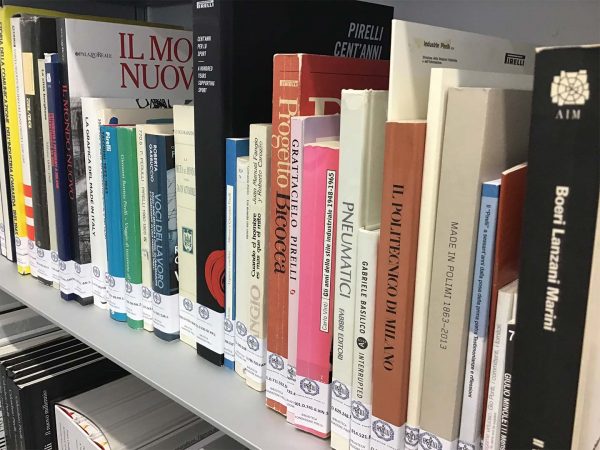
To request to view the materials in the Historical Archive and in the libraries of the Pirelli Foundation for study and research purposes and/or to find out how to request the use of materials for loans and exhibitions, please fill in the form below. You will receive an email confirming receipt of the request and you will be contacted.

Pirelli Foundation Educational Courses

Select the education level of the school

Visit the Foundation

For information about the Foundation's activities, guided tours and accessibility, please call +39 0264423971 or fill in the form below, providing details of your request in the notes field.

How the “occult partner” of the ‘ndrangheta and the Mafia corrupts the economy and drives good business into crisis

Without holding an official role, the “occult partner” is the true governor of business, influencing choices, connections and successes. A Mafioso partner. Il socio occulto (The occult partner) is an appropriate title for Marella Caramazza‘s most recent book. The author is a manager, a marketing and training expert, Director General of the ISTUD Foundation and a skilled investigator into the “black soul” of the economy in the North. Published by EGEA, Bocconi University’s publishing house, the book reconstructs the ties between corruption in the public administration and the rising economic weight of ‘ndrangheta, camorra and the Sicilian Cosa Nostra. It is worth reading to understand the new dimensions of organised crime, especially as the Anti-Mafia Investigation Directorate (DIA) and the Agency for the Administration and Destination of Assets Seized or Confiscated from the Mafia are feeding public opinion data on the presence of Mafia bosses in the business world. This alarming presence is found in many economic sectors, from public procurement to healthcare, from waste trafficking to commercial activities, not only where the criminal families live (Calabria, Sicily, Campania, Apulia), but even more so in the more economically dynamic areas of the country such as Lombardy, Emilia, Piedmont, Liguria and the entire North East. While it can no longer be referred to as an “infiltration”, many still use the term due to laziness. However, the presence is widespread and deep, it is dangerous pollution that is profoundly changing how markets, services and public works function.

“La mafia è ovunque” (The Mafia is Everywhere) is the title Il Sole24Ore (19 July) has given its account of the DIA reportthat traces the Mafia’s main business sectors (online games and betting, renewable energy, agriculture, catering, tourism and hospitality, supermarkets, health and public procurement, construction, art dealing and archaeological artefacts, waste collection and disposal ‒ the very last frontier of illegal business that the Public Prosecutor’s Office of Milan successfully operates) and demonstrates how the North is leading the ranks of suspicious operations (46.8%, almost 1 out of every 2). This weighs heaviest in Lombardy, the seat of Italy’s banking and finance.

“There is a lack of social alarm,” insists DIA, pointing out the so-called “grey area” that houses a network of accomplices(explained well in Il socio occulto): professionals, managers and businesspeople who organise, favour and cover Mafia business activity and laundered money from illicit trafficking. Worried about expanding Mafia interests, Assolombarda in Milan and other business organisations in Veneto have increased their activity related to legal issues and alerted the enterprises: never communicate with the clans and never leave the door open to an “occult partner”, otherwise the market economy and freedom of enterprise will reach crisis levels. This alarm is being listened to, however slowly.

“Society longs for a utilitarian Mafia”, says the Public Prosecutor of Palermo, Francesco Lo Voi, in the Il Sole24Ore article (18 July). Mr Lo Voi is coming off a brilliant police operation between Sicily and New York that put the bosses of the Inzerillo and Gambino families in handcuffs. These historic Mafia clans are always looking for new business. The Mafia has permeated the “energy and waste” sectors the most, says Mr Lo Voi. Also, besides Palermo, “Cosa Nostra invests abroad”. We have to follow the flow of interests and trace the money (as Giovanni Falcone and Paolo Borsellino taught us).

“Le mafie diversificano al Nord. Scoperte 2.243 imprese colluse” (Mafia clans diversify in the North. 2,243 businesses collude) is the title of an article in La Stampa (8 July). The article shares data collected from the prefectures and the Anti-Corruption Authority (ANAC), headed up by Raffaele Cantone, on the “disqualifications” or measures issued by the prefects after rapid investigations to remove companies suspected of Mafia ties from public procurement contracts (the latest was for the work on the Morandi Bridge in Genoa). These 2,243 colluding businesses demonstrate how worrisome the phenomenon is and how deeply rooted the Mafia is in the economy. It also shows how the state apparatus is moving to crush the criminal ravaging that is strangling business and the public administration.

The reorganisation and relaunch of the Agency for the Administration and Destination of Assets Seized or Confiscated(more resources, better organisation) is another important step towards fighting clan activity. There are currently 2,982 companies formally tied to the Mafia that the Agency manages. These need to be analysed to see if they can continue to thrive in legitimate, legal conditions falling outside the Mafia business model (easy credit, corruption, tax evasion, use of violence against competitors, illegal employment, etc.). In order to redevelop and return the businesses to the market, they have to be run by competent managers rather than managed by accountants and lawyers who serve as judicial custodians. Bruno Frattasi, Prefect and Director of the Agency says: “We plan to increase collaborations with associations of qualified professionals that can enter these companies and bring a managerial culture that focusses on respecting the rules,” and therefore contributes to a healthy, proper and efficient economy.

There is one condition that has to be reversed: of the companies seized from the Mafia (precautionary injunction), barely 34%, or one-third, continue to operate. At the end of the legal procedure, when the company is confiscated, only 19% of them survive, one out of five. The companies that were formally Mafia-run have to be redeveloped, relaunched and put in the right conditions to create wealth and jobs, just like any other company. This would also counter the rumour that under Mafia influence a company prospers and provides jobs, but when the state gets involved, the company dies and people lose jobs. It is a difficult challenge, but it’s not impossible.

The goal: legitimacy, efficiency and competitiveness to replace the damages caused by the “occult partner”. The Anti-Mafia also aims to grow a healthy, balanced economy.

Without holding an official role, the “occult partner” is the true governor of business, influencing choices, connections and successes. A Mafioso partner. Il socio occulto (The occult partner) is an appropriate title for Marella Caramazza‘s most recent book. The author is a manager, a marketing and training expert, Director General of the ISTUD Foundation and a skilled investigator into the “black soul” of the economy in the North. Published by EGEA, Bocconi University’s publishing house, the book reconstructs the ties between corruption in the public administration and the rising economic weight of ‘ndrangheta, camorra and the Sicilian Cosa Nostra. It is worth reading to understand the new dimensions of organised crime, especially as the Anti-Mafia Investigation Directorate (DIA) and the Agency for the Administration and Destination of Assets Seized or Confiscated from the Mafia are feeding public opinion data on the presence of Mafia bosses in the business world. This alarming presence is found in many economic sectors, from public procurement to healthcare, from waste trafficking to commercial activities, not only where the criminal families live (Calabria, Sicily, Campania, Apulia), but even more so in the more economically dynamic areas of the country such as Lombardy, Emilia, Piedmont, Liguria and the entire North East. While it can no longer be referred to as an “infiltration”, many still use the term due to laziness. However, the presence is widespread and deep, it is dangerous pollution that is profoundly changing how markets, services and public works function.

“La mafia è ovunque” (The Mafia is Everywhere) is the title Il Sole24Ore (19 July) has given its account of the DIA reportthat traces the Mafia’s main business sectors (online games and betting, renewable energy, agriculture, catering, tourism and hospitality, supermarkets, health and public procurement, construction, art dealing and archaeological artefacts, waste collection and disposal ‒ the very last frontier of illegal business that the Public Prosecutor’s Office of Milan successfully operates) and demonstrates how the North is leading the ranks of suspicious operations (46.8%, almost 1 out of every 2). This weighs heaviest in Lombardy, the seat of Italy’s banking and finance.

“There is a lack of social alarm,” insists DIA, pointing out the so-called “grey area” that houses a network of accomplices(explained well in Il socio occulto): professionals, managers and businesspeople who organise, favour and cover Mafia business activity and laundered money from illicit trafficking. Worried about expanding Mafia interests, Assolombarda in Milan and other business organisations in Veneto have increased their activity related to legal issues and alerted the enterprises: never communicate with the clans and never leave the door open to an “occult partner”, otherwise the market economy and freedom of enterprise will reach crisis levels. This alarm is being listened to, however slowly.

“Society longs for a utilitarian Mafia”, says the Public Prosecutor of Palermo, Francesco Lo Voi, in the Il Sole24Ore article (18 July). Mr Lo Voi is coming off a brilliant police operation between Sicily and New York that put the bosses of the Inzerillo and Gambino families in handcuffs. These historic Mafia clans are always looking for new business. The Mafia has permeated the “energy and waste” sectors the most, says Mr Lo Voi. Also, besides Palermo, “Cosa Nostra invests abroad”. We have to follow the flow of interests and trace the money (as Giovanni Falcone and Paolo Borsellino taught us).

“Le mafie diversificano al Nord. Scoperte 2.243 imprese colluse” (Mafia clans diversify in the North. 2,243 businesses collude) is the title of an article in La Stampa (8 July). The article shares data collected from the prefectures and the Anti-Corruption Authority (ANAC), headed up by Raffaele Cantone, on the “disqualifications” or measures issued by the prefects after rapid investigations to remove companies suspected of Mafia ties from public procurement contracts (the latest was for the work on the Morandi Bridge in Genoa). These 2,243 colluding businesses demonstrate how worrisome the phenomenon is and how deeply rooted the Mafia is in the economy. It also shows how the state apparatus is moving to crush the criminal ravaging that is strangling business and the public administration.

The reorganisation and relaunch of the Agency for the Administration and Destination of Assets Seized or Confiscated(more resources, better organisation) is another important step towards fighting clan activity. There are currently 2,982 companies formally tied to the Mafia that the Agency manages. These need to be analysed to see if they can continue to thrive in legitimate, legal conditions falling outside the Mafia business model (easy credit, corruption, tax evasion, use of violence against competitors, illegal employment, etc.). In order to redevelop and return the businesses to the market, they have to be run by competent managers rather than managed by accountants and lawyers who serve as judicial custodians. Bruno Frattasi, Prefect and Director of the Agency says: “We plan to increase collaborations with associations of qualified professionals that can enter these companies and bring a managerial culture that focusses on respecting the rules,” and therefore contributes to a healthy, proper and efficient economy.

There is one condition that has to be reversed: of the companies seized from the Mafia (precautionary injunction), barely 34%, or one-third, continue to operate. At the end of the legal procedure, when the company is confiscated, only 19% of them survive, one out of five. The companies that were formally Mafia-run have to be redeveloped, relaunched and put in the right conditions to create wealth and jobs, just like any other company. This would also counter the rumour that under Mafia influence a company prospers and provides jobs, but when the state gets involved, the company dies and people lose jobs. It is a difficult challenge, but it’s not impossible.

The goal: legitimacy, efficiency and competitiveness to replace the damages caused by the “occult partner”. The Anti-Mafia also aims to grow a healthy, balanced economy.

Teaching an entrepreneurial culture

A study conducted at University of Naples Federico II stresses how important entrepreneurship education is, so long as the teaching evolves

It is important to educate the young generations on entrepreneurship. Although this assumption may seem trivial, it is critical but it is not easy to put into practice. While it may be true that some people are born businesspeople, it is also true that in many other cases, a person can learn to be a businessperson. This is especially accurate in a complex, varied system such as the one enterprises are currently operating in.

Rosaria Capobianco (University of Naples Federico II) has contributed to the subject with her paper “L’educazione all’imprenditorialità per la formazione dei talenti. Un’esperienza didattica nella Scuola Secondaria” (Entrepreneurship education to train talent. A didactic experiment in secondary schools). She investigated the different pathways to teaching entrepreneurship the European Union has put forward on several occasions, studying how these are actually applied in the schools and distinguishing an entrepreneurial spirit from entrepreneurship education.

Capobianco explains: “Entrepreneurship is a concept that largely relates to the working world while an entrepreneurial spirit applies to the world of training and personal development. Thus, the word ‘entrepreneurship’ means the combination of skills and abilities needed to create and conduct a business, and the term ‘entrepreneurial spirit’ refers to the broader sense of acting pro-actively and applying specific entrepreneurial skills when facing the numerous challenges that arise in professional and personal development projects.” The concepts of entrepreneurship and entrepreneurial spirit are similar and they help and are useful to each other.  That said, the paper goes on to introduce the structure and results of a Learning Unit (UdA) experiment on entrepreneurial competence and entrepreneurship, which was carried out in a Technical Economic Institute (Administration, Finance and Marketing Course – AFM) in Caserta, where students were given the opportunity to shine light on their entrepreneurial talent. The simple experiment enabled the researchers to understand how important entrepreneurship education is for the future of the new generations and that there is a need to create a new training paradigm, which is the key point discussed in Capobianco’s paper. With a rapidly changing production and business system, it is necessary to use training methods that can evolve just as quickly, otherwise they will fail. Just as the business culture is changing much more quickly than before, entrepreneurship education must follow suit.

L’educazione all’imprenditorialità per la formazione dei talenti. Un’esperienza didattica nella Scuola Secondaria

Rosaria Capobianco

Formazione & Insegnamento X VII – 1 – 2019 Supplement

Click here to download PDF

A study conducted at University of Naples Federico II stresses how important entrepreneurship education is, so long as the teaching evolves

It is important to educate the young generations on entrepreneurship. Although this assumption may seem trivial, it is critical but it is not easy to put into practice. While it may be true that some people are born businesspeople, it is also true that in many other cases, a person can learn to be a businessperson. This is especially accurate in a complex, varied system such as the one enterprises are currently operating in.

Rosaria Capobianco (University of Naples Federico II) has contributed to the subject with her paper “L’educazione all’imprenditorialità per la formazione dei talenti. Un’esperienza didattica nella Scuola Secondaria” (Entrepreneurship education to train talent. A didactic experiment in secondary schools). She investigated the different pathways to teaching entrepreneurship the European Union has put forward on several occasions, studying how these are actually applied in the schools and distinguishing an entrepreneurial spirit from entrepreneurship education.

Capobianco explains: “Entrepreneurship is a concept that largely relates to the working world while an entrepreneurial spirit applies to the world of training and personal development. Thus, the word ‘entrepreneurship’ means the combination of skills and abilities needed to create and conduct a business, and the term ‘entrepreneurial spirit’ refers to the broader sense of acting pro-actively and applying specific entrepreneurial skills when facing the numerous challenges that arise in professional and personal development projects.” The concepts of entrepreneurship and entrepreneurial spirit are similar and they help and are useful to each other.  That said, the paper goes on to introduce the structure and results of a Learning Unit (UdA) experiment on entrepreneurial competence and entrepreneurship, which was carried out in a Technical Economic Institute (Administration, Finance and Marketing Course – AFM) in Caserta, where students were given the opportunity to shine light on their entrepreneurial talent. The simple experiment enabled the researchers to understand how important entrepreneurship education is for the future of the new generations and that there is a need to create a new training paradigm, which is the key point discussed in Capobianco’s paper. With a rapidly changing production and business system, it is necessary to use training methods that can evolve just as quickly, otherwise they will fail. Just as the business culture is changing much more quickly than before, entrepreneurship education must follow suit.

L’educazione all’imprenditorialità per la formazione dei talenti. Un’esperienza didattica nella Scuola Secondaria

Rosaria Capobianco

Formazione & Insegnamento X VII – 1 – 2019 Supplement

Click here to download PDF

Working towards the future

Methods and techniques to face what lies ahead, written in clear, readable language

The secret lies in the ability to respond quickly to unforeseen events. This is required of all successful entrepreneurs and good business managers. Another basic requirement is to manage situations that are increasingly uncertain and confused by learning to anticipate the future. This was the basis for Roberto Poli’s book “Lavorare con il futuro. Idee e strumenti per governare l’incertezza” (Working towards the future. Ideas and tools to govern uncertainty)

The author – who teaches Social Foresight and Epistemology of Social Sciences at the University of Trento – explains that he isn’t talking about predicting what will happen, but rather knowing how to work with measurement tools that were created “to visualise possible futures and develop scenarios to guide decisions taken in the present”.

It is therefore necessary to know how to measure risks and identify changes; we have to distinguish between what is complicated and what is actually complex. A lot of practice is needed. It is precisely for this reason that you should read Poli’s book, which confronts the subject in several stages, each one with its own tools and methods. The resources used to practice – and then to work – are specific approaches such as those related to collective intelligence, military tactics and strategies for building resilience.

The book comprises a series of 10 chapters. It begins by bringing order to the definitions and then clarifies the concepts of mega-trends and anticipation. Poli then delves into the binomial risk-uncertainty and complicated-complex issues followed by an examination of the toolbox for those who “work towards the future”.

Roberto Poli’s book is interesting and merits being read from top to bottom: it is not always easy but it is definitely a good read. The closing is fantastic: a commemoration to Aurelio Peccei and the inseparability of the future from the quality of being human.

Lavorare con il futuro. Idee e strumenti per governare l’incertezza

Roberto Poli

EGEA, 2019

Methods and techniques to face what lies ahead, written in clear, readable language

The secret lies in the ability to respond quickly to unforeseen events. This is required of all successful entrepreneurs and good business managers. Another basic requirement is to manage situations that are increasingly uncertain and confused by learning to anticipate the future. This was the basis for Roberto Poli’s book “Lavorare con il futuro. Idee e strumenti per governare l’incertezza” (Working towards the future. Ideas and tools to govern uncertainty)

The author – who teaches Social Foresight and Epistemology of Social Sciences at the University of Trento – explains that he isn’t talking about predicting what will happen, but rather knowing how to work with measurement tools that were created “to visualise possible futures and develop scenarios to guide decisions taken in the present”.

It is therefore necessary to know how to measure risks and identify changes; we have to distinguish between what is complicated and what is actually complex. A lot of practice is needed. It is precisely for this reason that you should read Poli’s book, which confronts the subject in several stages, each one with its own tools and methods. The resources used to practice – and then to work – are specific approaches such as those related to collective intelligence, military tactics and strategies for building resilience.

The book comprises a series of 10 chapters. It begins by bringing order to the definitions and then clarifies the concepts of mega-trends and anticipation. Poli then delves into the binomial risk-uncertainty and complicated-complex issues followed by an examination of the toolbox for those who “work towards the future”.

Roberto Poli’s book is interesting and merits being read from top to bottom: it is not always easy but it is definitely a good read. The closing is fantastic: a commemoration to Aurelio Peccei and the inseparability of the future from the quality of being human.

Lavorare con il futuro. Idee e strumenti per governare l’incertezza

Roberto Poli

EGEA, 2019

Discovering Bicocca: 1450-2013

For a period of two weeks, from 4 to 19 May, the Pirelli Foundation and HangarBicocca are transforming the Bicocca district into a territory to be explored in space and time.

Discovering Bicocca 1450-2013 is a project that includes bicycle tours, guided tours, screenings of previously unseen films from the Pirelli Historical Archive, and activities and games for adults and children. It involves the inhabitants of the city in an exciting journey that will offer new a new vision of an area of Milan that still has not been fully explored.

The history of the Bicocca district dates back over 500 years: from the construction of the Bicocca degli Arcimboldi, which gave its name to the area, through to the transformation brought about by the industrial and post-industrial age, which have turned this part of the city into a district that offers services, culture, and inspiration. Tens of thousands of people come to and experience the Bicocca district every day, attracted by the presence of a major contemporary art centre, HangarBicocca, and the Pirelli Foundation, which preserves and promotes the memory of the places and of the company, as well as the University and the Teatro degli Arcimboldi. Not everyone, however, really knows its true identity and history.

All the activities are absolutely free of charge.

For a period of two weeks, from 4 to 19 May, the Pirelli Foundation and HangarBicocca are transforming the Bicocca district into a territory to be explored in space and time.

Discovering Bicocca 1450-2013 is a project that includes bicycle tours, guided tours, screenings of previously unseen films from the Pirelli Historical Archive, and activities and games for adults and children. It involves the inhabitants of the city in an exciting journey that will offer new a new vision of an area of Milan that still has not been fully explored.

The history of the Bicocca district dates back over 500 years: from the construction of the Bicocca degli Arcimboldi, which gave its name to the area, through to the transformation brought about by the industrial and post-industrial age, which have turned this part of the city into a district that offers services, culture, and inspiration. Tens of thousands of people come to and experience the Bicocca district every day, attracted by the presence of a major contemporary art centre, HangarBicocca, and the Pirelli Foundation, which preserves and promotes the memory of the places and of the company, as well as the University and the Teatro degli Arcimboldi. Not everyone, however, really knows its true identity and history.

All the activities are absolutely free of charge.

The Moon Viewed from the Tower

“Okay, it won’t take you to the moon!” were the words that launched the advertisement for the Pirelli Cinturato, created in the summer of 1969 by Centro, the Group’s in-house communication agency, which had its office on the 25th floor of the Pirelli Tower. “But here on Earth, the Cinturato will take you wherever you want, on any road, in any weather…” Next to the advertisement was the outline of the Moon that, in July fifty years ago, burst into the popular imagination, with Neil Armstrong’s small step and our great leap, to the exclamation “He’s touched it!” from the commentator Tito Stagno live on RAI television.

The Pirelli house organ Fatti e Notizie devoted the cover of its July-August issue to the Apollo 11 landing, celebrating “a human endeavour that opens up for all mankind a new hope for peace and brotherhood”. In this issue, it explains how some components of the highly sophisticated count-down system were supplied by Solari, a Pirelli subsidiary based in Udine. Throughout the first half of 1969, a series of commercials called “The Adventures of Man” was aired in the Carosello advertising break broadcast by RAI in the early evening slot. Made by Gamma Film and directed by Roberto Gavioli, the commercials, which started with the Pirelli Cinturato, reminded the Italians of the great steps achieved in the space race, from the Sputnik satellite in 1957 to the first cosmonaut Yuri Gagarin in 1961, and the Gemini 6 mission in 1965. And in December 1968, the Apollo 8 mission blasted off: the Moon was getting closer. The race to the Moon had a huge impact on public opinion: Pirelli magazine could hardly fail to convey this climate of immense enthusiasm but also of ethical doubts. The magazine had already begun to deal with outer space back in 1956, when Sir George Thompson, Nobel Laureate in Physics in 1937, had his say on “What I think of interplanetary travel”: a first assurance that the conquest of space would be a far remove from comic-book science fiction. In 1965 Ugo Maraldi wrote “A spaceship to the Moon”, a report on the mission by the American astronauts LeRoy Gordon Cooper and Charles Pete Conrad: eight days in orbit and 120 times around the Earth, covering five and a half million kilometres.

By now the Moon was really close: also in 1965, Riccardo Musatti published an article entitled “Design for the Moon”, ”, which started from the design of the astronauts’ space helmet to introduce “the work of hundreds of American designers involved in the Apollo space project”. In March 1969 came “The Brain of Houston”, an article by Antonio De Falco, which explained how “Three men have been around the Moon, and another three are preparing to set foot on the lunar surface”: the race was on. Apollo 9 had just embarked on the penultimate stage of approaching the lunar orbit: soon Apollo 10 would be on its way, and the Moon would be within reach. The departure of Apollo 11, scheduled for 20 July that year, reminded us that “the world trembled, thrilled and inspired, day after day, hour after hour”.

“Okay, it won’t take you to the moon!” were the words that launched the advertisement for the Pirelli Cinturato, created in the summer of 1969 by Centro, the Group’s in-house communication agency, which had its office on the 25th floor of the Pirelli Tower. “But here on Earth, the Cinturato will take you wherever you want, on any road, in any weather…” Next to the advertisement was the outline of the Moon that, in July fifty years ago, burst into the popular imagination, with Neil Armstrong’s small step and our great leap, to the exclamation “He’s touched it!” from the commentator Tito Stagno live on RAI television.

The Pirelli house organ Fatti e Notizie devoted the cover of its July-August issue to the Apollo 11 landing, celebrating “a human endeavour that opens up for all mankind a new hope for peace and brotherhood”. In this issue, it explains how some components of the highly sophisticated count-down system were supplied by Solari, a Pirelli subsidiary based in Udine. Throughout the first half of 1969, a series of commercials called “The Adventures of Man” was aired in the Carosello advertising break broadcast by RAI in the early evening slot. Made by Gamma Film and directed by Roberto Gavioli, the commercials, which started with the Pirelli Cinturato, reminded the Italians of the great steps achieved in the space race, from the Sputnik satellite in 1957 to the first cosmonaut Yuri Gagarin in 1961, and the Gemini 6 mission in 1965. And in December 1968, the Apollo 8 mission blasted off: the Moon was getting closer. The race to the Moon had a huge impact on public opinion: Pirelli magazine could hardly fail to convey this climate of immense enthusiasm but also of ethical doubts. The magazine had already begun to deal with outer space back in 1956, when Sir George Thompson, Nobel Laureate in Physics in 1937, had his say on “What I think of interplanetary travel”: a first assurance that the conquest of space would be a far remove from comic-book science fiction. In 1965 Ugo Maraldi wrote “A spaceship to the Moon”, a report on the mission by the American astronauts LeRoy Gordon Cooper and Charles Pete Conrad: eight days in orbit and 120 times around the Earth, covering five and a half million kilometres.

By now the Moon was really close: also in 1965, Riccardo Musatti published an article entitled “Design for the Moon”, ”, which started from the design of the astronauts’ space helmet to introduce “the work of hundreds of American designers involved in the Apollo space project”. In March 1969 came “The Brain of Houston”, an article by Antonio De Falco, which explained how “Three men have been around the Moon, and another three are preparing to set foot on the lunar surface”: the race was on. Apollo 9 had just embarked on the penultimate stage of approaching the lunar orbit: soon Apollo 10 would be on its way, and the Moon would be within reach. The departure of Apollo 11, scheduled for 20 July that year, reminded us that “the world trembled, thrilled and inspired, day after day, hour after hour”.

Multimedia

Images

Learning… What a Business! A Dialogue between Science and Humanism

Environmental sustainability and smart cities, art and graphic design, science and technological innovation, literature and journalism, business history and the history of inventions – these are just some of the topics that will be examined in the training courses and workshops put on by Pirelli Foundation Educational this coming school year.

The educational project, which has been offering free activities for schools since 2013, is designed to introduce young people to the world of production, and to the company’s corporate values. It provides them with the instruments they need to understand today’s topical issues, while also trying to imagine their future developments.

In particular, the close interaction between scientific and technical research and the humanistic dimension that underpins Pirelli’s corporate culture will be at the heart of the programme for the 2019-2020 school year. The bond between art and science will have the additional collaboration of experts from different company departments, including those of Industrial Property, Innovative Machinery Automation, and Research and Development, who will illustrate their own personal experiences.

Liberal culture and science also brought to life the pages of Pirelli magazine during the years of the economic boom, with contributions from top names in Italy: Dino Buzzati, Camilla Cederna, Umberto Eco, Carlo Emilio Gadda, Giulio Minoletti, Giulio Natta, Salvatore Quasimodo, Leonardo Sinisgalli, Umberto Veronesi, and many more besides. Starting out from copies of the magazine and from the company’s vast historical heritage, the students will play the lead role in stories of innovation, creating transversal projects linking their school subjects to contemporary issues.

Guided tours of the Research and Development Centre will also continue for higher secondary school students. In this centre of excellence, they will be given a close-up look at the instruments used for chemical analyses of the materials used to make tyres, as well as tests performed on rubber and on prototypes.

Finally, students in the last year of upper secondary school will be able to follow the tyre production lines in the Milano Bicocca factory and in the Pirelli Industrial Centre in Settimo Torinese.

On Tuesday, 10 September 2019 at 6 p.m. the new educational courses will be presented at the Pirelli Foundation. On this occasion, teachers will find out how the educational activities will be held, and they will be able to visit the Pirelli Foundation.

To register for the meeting on Tuesday 10 September, please fill in the form here: www.fondazionepirelli.org/prenotazioni-registrazione

For more information:

Pirelli Foundation Educational
+39 – 02644249145

Environmental sustainability and smart cities, art and graphic design, science and technological innovation, literature and journalism, business history and the history of inventions – these are just some of the topics that will be examined in the training courses and workshops put on by Pirelli Foundation Educational this coming school year.

The educational project, which has been offering free activities for schools since 2013, is designed to introduce young people to the world of production, and to the company’s corporate values. It provides them with the instruments they need to understand today’s topical issues, while also trying to imagine their future developments.

In particular, the close interaction between scientific and technical research and the humanistic dimension that underpins Pirelli’s corporate culture will be at the heart of the programme for the 2019-2020 school year. The bond between art and science will have the additional collaboration of experts from different company departments, including those of Industrial Property, Innovative Machinery Automation, and Research and Development, who will illustrate their own personal experiences.

Liberal culture and science also brought to life the pages of Pirelli magazine during the years of the economic boom, with contributions from top names in Italy: Dino Buzzati, Camilla Cederna, Umberto Eco, Carlo Emilio Gadda, Giulio Minoletti, Giulio Natta, Salvatore Quasimodo, Leonardo Sinisgalli, Umberto Veronesi, and many more besides. Starting out from copies of the magazine and from the company’s vast historical heritage, the students will play the lead role in stories of innovation, creating transversal projects linking their school subjects to contemporary issues.

Guided tours of the Research and Development Centre will also continue for higher secondary school students. In this centre of excellence, they will be given a close-up look at the instruments used for chemical analyses of the materials used to make tyres, as well as tests performed on rubber and on prototypes.

Finally, students in the last year of upper secondary school will be able to follow the tyre production lines in the Milano Bicocca factory and in the Pirelli Industrial Centre in Settimo Torinese.

On Tuesday, 10 September 2019 at 6 p.m. the new educational courses will be presented at the Pirelli Foundation. On this occasion, teachers will find out how the educational activities will be held, and they will be able to visit the Pirelli Foundation.

To register for the meeting on Tuesday 10 September, please fill in the form here: www.fondazionepirelli.org/prenotazioni-registrazione

For more information:

Pirelli Foundation Educational
+39 – 02644249145

Multimedia

Images

The Italian hi-tech industry is searching for tens of thousands of technicians but the government focuses solely on the earnings of citizens and on the minimum wage

469,000 technicians: an impressive number. By rounding up just slightly, we could say half a million people. Between now and 2022, Italian businesses are ready to offer jobs to this many technicians, people with a technical school diploma and graduates in STEM (Science, Technology, Engineering and Mathematics) disciplines, but they are unable or have great difficulty finding these people in at least a third of the cases. Here is the point: our most dynamic industries invest in research, innovations, digital transformations, Industry 4.0 production and hi-tech services, doing whatever it takes to cope with the new dimensions of international competitiveness, but they come up against a limited labour market that does not sufficiently meet the challenges of development.

Other data from different industry sectors give rise to the concerning number of jobs available that cannot be filled in Italy, a country bogged down by zero growth (+0.1% of the GDP in 2019 as confirmed by the Bank of Italy just days ago) and a record level of unemployment for the EU area, especially among young people. “Fincantieri is looking for 6,000 professionals, technicians, carpenters and welders, but we don’t know where to find them”, says the Group’s CEO, Giuseppe Bono (Corriere della Sera and Il Sole24Ore, 11 July), in reference to development prospects deriving from orders that extend beyond the next ten years due to the acquisition of the French company, STX.

Even the clothing and luxury industries have stated that from now until 2023, they expect to hire 48,000 technicians earning between 1,700 and 3,000 euros net, but for one-third of these positions, there are no specialists available.

“The hi-tech industry is looking for 45,00 developers, analysts and telecommunication system designers”, is the title of the article in Il Sole24Ore (12 July). Information was gathered from ICT companies that claims the digital world is essential for the growth of manufacturing and service companies in order to remain competitive in the Industry 4.0 paradigm. The numbers are even higher if considering the automated sector, mechanical industry and mechatronics. “Robotics is looking for 96,000 professionals but one out of three can’t be found”, is the title of another article in Il Sole24Ore (13 July). The labour market isn’t ready now and it won’t be ready in upcoming years if only 17,000 people are registered at the technical colleges (technology) and are studying subjects linked to mechatronics.

The best businesses are going in one direction and the schools in another. This is where all the issues related to technical colleges re-surface, as these schools are snubbed by both families and governmental bodies. Just over 10,000 students are enrolled in technical colleges compared to the 800,000 that fuel the German production machine, which leads European manufacturing. Italy is struggling more and more to stay in second place with France trailing close behind after investing in industrial policies and therefore focusing more on training processes.

There is a direct correlation between digitalisation and economic growth, as documented for Europe by Osservatorio Agenda Digitale of the Politecnico di Milano (Corriere della Sera, 14 July). It has developed a chart showing the relationship between the annual GDP per capita growth rate and data from the Digital Economy and Social Index. Italy is below the line, just ahead of Bulgaria, Romania, Greece and Poland whilst Holland, Denmark, Sweden and Finland lead the way, followed by the United Kingdom, Belgium and Germany. Even Spain is doing better than we are.

So, let’s get back to the subject of training and public investments. Do schools look to industry, productivity and technical professions? No. The educational subjects chosen by the current government confirm this negative trend. For example: the work-related learning programme has undergone significant change and the new name eliminates the word ‘work’, as if it were something negative, an error, something to be ashamed of.

On the other hand, the political parties currently running the country jointly (Five Stars and Lega) are not new to making choices that are hostile to business, science, production infrastructure and competitiveness. Public spending is oriented towards welfare (earnings of citizens, “quota 100” for pensions) and insists on minimum wage (regardless of the damage the increased labour costs will do to businesses). There is increasing confusion about the flat tax but there is no talk of tax strategies to support innovation (as the previous governments did, both centre-right and centre-left, with excellent results in growth and competitiveness). And public investments are twisted to increase political power over companies in difficulty, such as with Alitalia, which is now back in public hands.

To sum up: the government is incompetent in economy, inattentive to productivity and oblivious to the need to make choices that strengthen our industry in the EU context.

All this leads to an additional problem: many of our most competent, well-trained and resourceful young people are fleeing Italy (we’ve addressed this issue many times in this blog). It’s true, there are initiatives to keep our “young brains” at home or bring some of them back to Italy, such as Talents in Motion, which was launched in the beginning of July in Milan by a dynamic head hunter, Patrizia Fontana, with the support of Price Waterhouse Cooper, a multinational consultancy firm, and numerous private businesses looking to hire qualified people. But the exodus continues regardless. Opportunities for professional success are greater and better abroad. And, in the absence of clear policy choices by the government as regards the economy, industry and taxation that favours business and competitiveness, the situation can only get worse.

469,000 technicians: an impressive number. By rounding up just slightly, we could say half a million people. Between now and 2022, Italian businesses are ready to offer jobs to this many technicians, people with a technical school diploma and graduates in STEM (Science, Technology, Engineering and Mathematics) disciplines, but they are unable or have great difficulty finding these people in at least a third of the cases. Here is the point: our most dynamic industries invest in research, innovations, digital transformations, Industry 4.0 production and hi-tech services, doing whatever it takes to cope with the new dimensions of international competitiveness, but they come up against a limited labour market that does not sufficiently meet the challenges of development.

Other data from different industry sectors give rise to the concerning number of jobs available that cannot be filled in Italy, a country bogged down by zero growth (+0.1% of the GDP in 2019 as confirmed by the Bank of Italy just days ago) and a record level of unemployment for the EU area, especially among young people. “Fincantieri is looking for 6,000 professionals, technicians, carpenters and welders, but we don’t know where to find them”, says the Group’s CEO, Giuseppe Bono (Corriere della Sera and Il Sole24Ore, 11 July), in reference to development prospects deriving from orders that extend beyond the next ten years due to the acquisition of the French company, STX.

Even the clothing and luxury industries have stated that from now until 2023, they expect to hire 48,000 technicians earning between 1,700 and 3,000 euros net, but for one-third of these positions, there are no specialists available.

“The hi-tech industry is looking for 45,00 developers, analysts and telecommunication system designers”, is the title of the article in Il Sole24Ore (12 July). Information was gathered from ICT companies that claims the digital world is essential for the growth of manufacturing and service companies in order to remain competitive in the Industry 4.0 paradigm. The numbers are even higher if considering the automated sector, mechanical industry and mechatronics. “Robotics is looking for 96,000 professionals but one out of three can’t be found”, is the title of another article in Il Sole24Ore (13 July). The labour market isn’t ready now and it won’t be ready in upcoming years if only 17,000 people are registered at the technical colleges (technology) and are studying subjects linked to mechatronics.

The best businesses are going in one direction and the schools in another. This is where all the issues related to technical colleges re-surface, as these schools are snubbed by both families and governmental bodies. Just over 10,000 students are enrolled in technical colleges compared to the 800,000 that fuel the German production machine, which leads European manufacturing. Italy is struggling more and more to stay in second place with France trailing close behind after investing in industrial policies and therefore focusing more on training processes.

There is a direct correlation between digitalisation and economic growth, as documented for Europe by Osservatorio Agenda Digitale of the Politecnico di Milano (Corriere della Sera, 14 July). It has developed a chart showing the relationship between the annual GDP per capita growth rate and data from the Digital Economy and Social Index. Italy is below the line, just ahead of Bulgaria, Romania, Greece and Poland whilst Holland, Denmark, Sweden and Finland lead the way, followed by the United Kingdom, Belgium and Germany. Even Spain is doing better than we are.

So, let’s get back to the subject of training and public investments. Do schools look to industry, productivity and technical professions? No. The educational subjects chosen by the current government confirm this negative trend. For example: the work-related learning programme has undergone significant change and the new name eliminates the word ‘work’, as if it were something negative, an error, something to be ashamed of.

On the other hand, the political parties currently running the country jointly (Five Stars and Lega) are not new to making choices that are hostile to business, science, production infrastructure and competitiveness. Public spending is oriented towards welfare (earnings of citizens, “quota 100” for pensions) and insists on minimum wage (regardless of the damage the increased labour costs will do to businesses). There is increasing confusion about the flat tax but there is no talk of tax strategies to support innovation (as the previous governments did, both centre-right and centre-left, with excellent results in growth and competitiveness). And public investments are twisted to increase political power over companies in difficulty, such as with Alitalia, which is now back in public hands.

To sum up: the government is incompetent in economy, inattentive to productivity and oblivious to the need to make choices that strengthen our industry in the EU context.

All this leads to an additional problem: many of our most competent, well-trained and resourceful young people are fleeing Italy (we’ve addressed this issue many times in this blog). It’s true, there are initiatives to keep our “young brains” at home or bring some of them back to Italy, such as Talents in Motion, which was launched in the beginning of July in Milan by a dynamic head hunter, Patrizia Fontana, with the support of Price Waterhouse Cooper, a multinational consultancy firm, and numerous private businesses looking to hire qualified people. But the exodus continues regardless. Opportunities for professional success are greater and better abroad. And, in the absence of clear policy choices by the government as regards the economy, industry and taxation that favours business and competitiveness, the situation can only get worse.

Creating shared value

The different forms of circular economy

Create and share value: this concept captures the essence of the circular economy, a unique approach to production and the market that has become more widespread in western economies since the financial crisis of 2008. As a manifestation of a new development model running parallel to pre-crisis capitalism and of an economy “incorporated into society after decades of separation”, the circular economy must be well understood in order to be used properly. For this reason, it is important to read “Perché parlare di economia circolare?” (Why should we talk about circular economy?), a recently published article written by Laura Gherardi for Equilibri.

The article aptly summarises the concept and its applications from different points of view, both business and family: residents, producers, “contributors”. Thus, the circular economy is described from a social standpoint and from a perspective of both the production material and the environment. Gherardi successfully deals with the topic’s complexity, breaking down the different aspects and critical issues. In other words, the circular economy is explained as an approach that creates not only economic value, but also social, environmental and human value, all rolled into one.

This is done whilst accounting for the ultimate goal of this approach: to make the planet more liveable. At the same time, the author attempts to visualise results related to day-to-day production and social relationships. In doing so, a subject emerges that is suspended between the economy and a more general study of society, between production organisation and a new, more complete business culture.

Laura Gherardi’s article, which is written in clear, concrete language, is a useful synthesis of a subject that is complex and in continuous evolution. It is worthwhile to read it together with other articles on the same subject.

Perché parlare di economia circolare?

Laura Gherardi

Equilibri, 1, 2019

Perché parlare di economia circolare?

Laura Gherardi

Equilibri, 1, 2019

The different forms of circular economy

Create and share value: this concept captures the essence of the circular economy, a unique approach to production and the market that has become more widespread in western economies since the financial crisis of 2008. As a manifestation of a new development model running parallel to pre-crisis capitalism and of an economy “incorporated into society after decades of separation”, the circular economy must be well understood in order to be used properly. For this reason, it is important to read “Perché parlare di economia circolare?” (Why should we talk about circular economy?), a recently published article written by Laura Gherardi for Equilibri.

The article aptly summarises the concept and its applications from different points of view, both business and family: residents, producers, “contributors”. Thus, the circular economy is described from a social standpoint and from a perspective of both the production material and the environment. Gherardi successfully deals with the topic’s complexity, breaking down the different aspects and critical issues. In other words, the circular economy is explained as an approach that creates not only economic value, but also social, environmental and human value, all rolled into one.

This is done whilst accounting for the ultimate goal of this approach: to make the planet more liveable. At the same time, the author attempts to visualise results related to day-to-day production and social relationships. In doing so, a subject emerges that is suspended between the economy and a more general study of society, between production organisation and a new, more complete business culture.

Laura Gherardi’s article, which is written in clear, concrete language, is a useful synthesis of a subject that is complex and in continuous evolution. It is worthwhile to read it together with other articles on the same subject.

Perché parlare di economia circolare?

Laura Gherardi

Equilibri, 1, 2019

Perché parlare di economia circolare?

Laura Gherardi

Equilibri, 1, 2019

A culture of Artificial Intelligence

A recently published book in Italian describes and analyses the role of AI and how it affects work

To understand the present and have a reasonable idea of the future: in the end this is the “formula” for conscious behaviour. This also applies, and perhaps is even more applicable, to business. Knowing where you stand and where you are going is not however a new approach for astute entrepreneurs and managers. It is precisely what changes and complicates the situation that has to be understood and foreseen. This is where Artificial Intelligence (AI) comes in. No longer an abstract concept, AI must be understood and used properly rather than vilified. Read Human + Machine. Ripensare il lavoro nell’età dell’intelligenza artificiale (Human + Machine: rethinking work in the age of artificial intelligence) by Paul R. Daugherty and H. James Wilson to get a good knowledge base on the subject.

The initial premise of the book is two-fold. Firstly, it points out that Artificial Intelligence is no longer a futuristic notion. Secondly, the two authors explain: “Intelligent systems are not limited to automating numerous processes in order to make them more efficient; on the contrary, they enable people and machines to work collaboratively and in unconventional ways”. The book’s key word is therefore not contra-position but collaboration: humans and machines with work in common.

Daugherty and Wilson begin addressing the subject by explaining what AI is today from different aspects: manufacturing automation, customer service and marketing activity, research, innovation and development. The second part of the book discusses the complex issue of how to adapt the potential and the work mode of Artificial Intelligence to current production processes and work in general. This step is quite delicate and training is essential.

Daugherty and Wilson end the book with: “When talking about Artificial Intelligence, a large part of the conversation tends to concentrate on replacing jobs and the fear that computers will one day take over the world. The implicit assumption is that people and machines are in competition, and that intelligent systems will eventually replace us in companies and perhaps even outside the corporate world given their superior speed, processing capacity and stamina in a wide variety of situations.” The message delivered in the book is different. There is a different space now where new work and production opportunities can develop. The book illustrates an example of research results: “The concept of ‘fusion skills’: humans and machines working together to form new types of work and professional experiences. This constitutes a ‘ghost space’ unaffected by the polarising work debate that positions humans against machines. Cutting-edge companies have reinvented their work processes here in this centralised ghost space.”

The general conclusion of Human + Machine is: “Organisations that take advantage of the potential will move forward, those that do not are destined to close.” The book by Daugherty and Wilson is a good read, especially because it provides tools to think about and analyse what goes on inside and outside factories and offices.

Human + Machine. Ripensare il lavoro nell’età dell’intelligenza artificiale

Daugherty Paul R., Wilson H. James

GueriniNEXT, 2019

A recently published book in Italian describes and analyses the role of AI and how it affects work

To understand the present and have a reasonable idea of the future: in the end this is the “formula” for conscious behaviour. This also applies, and perhaps is even more applicable, to business. Knowing where you stand and where you are going is not however a new approach for astute entrepreneurs and managers. It is precisely what changes and complicates the situation that has to be understood and foreseen. This is where Artificial Intelligence (AI) comes in. No longer an abstract concept, AI must be understood and used properly rather than vilified. Read Human + Machine. Ripensare il lavoro nell’età dell’intelligenza artificiale (Human + Machine: rethinking work in the age of artificial intelligence) by Paul R. Daugherty and H. James Wilson to get a good knowledge base on the subject.

The initial premise of the book is two-fold. Firstly, it points out that Artificial Intelligence is no longer a futuristic notion. Secondly, the two authors explain: “Intelligent systems are not limited to automating numerous processes in order to make them more efficient; on the contrary, they enable people and machines to work collaboratively and in unconventional ways”. The book’s key word is therefore not contra-position but collaboration: humans and machines with work in common.

Daugherty and Wilson begin addressing the subject by explaining what AI is today from different aspects: manufacturing automation, customer service and marketing activity, research, innovation and development. The second part of the book discusses the complex issue of how to adapt the potential and the work mode of Artificial Intelligence to current production processes and work in general. This step is quite delicate and training is essential.

Daugherty and Wilson end the book with: “When talking about Artificial Intelligence, a large part of the conversation tends to concentrate on replacing jobs and the fear that computers will one day take over the world. The implicit assumption is that people and machines are in competition, and that intelligent systems will eventually replace us in companies and perhaps even outside the corporate world given their superior speed, processing capacity and stamina in a wide variety of situations.” The message delivered in the book is different. There is a different space now where new work and production opportunities can develop. The book illustrates an example of research results: “The concept of ‘fusion skills’: humans and machines working together to form new types of work and professional experiences. This constitutes a ‘ghost space’ unaffected by the polarising work debate that positions humans against machines. Cutting-edge companies have reinvented their work processes here in this centralised ghost space.”

The general conclusion of Human + Machine is: “Organisations that take advantage of the potential will move forward, those that do not are destined to close.” The book by Daugherty and Wilson is a good read, especially because it provides tools to think about and analyse what goes on inside and outside factories and offices.

Human + Machine. Ripensare il lavoro nell’età dell’intelligenza artificiale

Daugherty Paul R., Wilson H. James

GueriniNEXT, 2019

Conversazioni sulla gomma sotto i ciliegi

Sign up for the newsletter