Access the Online Archive
Search the Historical Archive of the Pirelli Foundation for sources and materials. Select the type of support you are interested in and write the keywords of your research.
    Select one of the following categories
  • Documents
  • Photographs
  • Drawings and posters
  • Audio-visuals
  • Publications and magazines
  • All
Help with your research
To request to view the materials in the Historical Archive and in the libraries of the Pirelli Foundation for study and research purposes and/or to find out how to request the use of materials for loans and exhibitions, please fill in the form below. You will receive an email confirming receipt of the request and you will be contacted.
Pirelli Foundation Educational Courses

Select the education level of the school
Back
Primary schools
Pirelli Foundation Educational Courses
Please fill in your details and the staff of Pirelli Foundation Educational will contact you to arrange the dates of the course.

I declare I have read  the privacy policy, and authorise the Pirelli Foundation to process my personal data in order to send communications, also by email, about initiatives/conferences organised by the Pirelli Foundation.

Back
Lower secondary school
Pirelli Foundation Educational Courses
Please fill in your details and the staff of Pirelli Foundation Educational will contact you to arrange the dates of the course.
Back
Upper secondary school
Pirelli Foundation Educational Courses
Please fill in your details and the staff of Pirelli Foundation Educational will contact you to arrange the dates of the course.
Back
University
Pirelli Foundation Educational Courses

Do you want to organize a training programme with your students? For information and reservations, write to universita@fondazionepirelli.org

Visit the Foundation
For information about the Foundation’s activities, guided tours and accessibility,
please call +39 0264423971 or fill in the form below, providing details of your request in the notes field.

Music a Staple at the Pirelli Cultural Centre

The publication by the Pirelli Foundation of the book Il Canto della Fabbrica – which was the subject of debate on 6 July 2018 at the Il Libro Possibile Festival in Polignano a Mare – brings us to talk about the many times that music has been part of the cultural life of Pirelli. One key meeting place was the Pirelli Cultural Centre, which was set up in 1947 and directed for many years by Silvestro Severgnini. The Cultural Centre had its home in the premises of the Ritrovo in the old Brusada factory, which emerged unscathed from the 1943 bombing raids. It maintained that “culture is a staple”, as its founder himself wrote in an article published in Pirelli magazine no. 1 of 1951. “A new formula, and a pretty successful one at that, to increase workers’ interest in culture”. The company “provides the means for those of its employees who so wish to take part in the liveliest and most dynamic manifestations of knowledge”. Silvestro Severgnini joined the company in 1939 as a tyre salesman, but soon he found himself playing a key role in promoting Pirelli’s corporate culture, which acquired ever greater importance in the post-war period.

For Severgnini, music was naturally one of the “dynamic manifestations of knowledge”. In a meeting at the Ritrovo in 1950, there was talk of music inspired by machines, and the connection to today’s Canto della Fabbrica – the song of the factory – is quite amazing. Severgnini himself wrote about this in Pirelli magazine no. 4 of 1949, talking of the “mechanical” music inspired by the Pacific 231 train in the work of the Swiss composer Arthur Honegger in 1923, and music inspired by steel foundries in that of the Russian musician Alexander Vasilyevich Mosolov in 1927. Thanks to the work of the Cultural Centre, year after year Stravinsky and Debussy became “culture as a staple” amid the vulcanisers and mixers. The company did all it could to facilitate access to music by its employees, and subscriptions to the “Musical Afternoons” in Milan went up tenfold in three years, and those to the La Scala opera house went from 15 to 130 in 1950. A “concert of the month” was put on, for Pirelliani only, at the Piccolo Teatro di Milano and a music hour – L’Ora della Musica – was held regularly at 5.45 on Friday afternoons at the Ritrovo. It was led by none other than Silvestro Severgnini, who by this time was known in Milan as the man who had “opened La Scala to the people”. Taking up this long tradition of promoting and disseminating culture, still today Pirelli works as a partner with these prestigious cultural institutions, also for conferences for company employees.

The Music Club – the Circolo della Musica – was set up in 1953 with the brilliant idea of putting on a series of tributes to living musicians in the new premises of the Ritrovo, which at this point moved to Corso Venezia. As the old Brusada was making way for the Tower, composers were invited to meet with an audience of Pirelli workers and office staff “who always present such a fine show of rapt attention and intense understanding as to become themselves worthy every time of the most open and unconditional applause”. Thus it was that a worker in a great company could personally meet composers of the calibre of Vladimir Vogel or Roman Vlad.

Another idea came the following year, with an opening up to “electronic music”. The transition from Stockhausen to John Cage was brief: “During his first European tour”, we read in the November 1954 edition of the Fatti e Notizie house organ, “the American musician John Cage performed his only concert in Italy, on the initiative of our Cultural Centre, with music pieces composed for ‘prepared pianos’.” The event, which was presented to an almost incredulous audience by the composer and musicologist Riccardo Malipiero, was destined to become part of the history of modern corporate culture: a Milan-based newspaper at the time declared that “the Pirelli Culture Centre increasingly runs the risk of becoming one of the liveliest cultural venues in the city”. The worker who listened that Friday evening on 5 November 1954 to the Concerto for Prepared Piano by John Cage – “Music? Maybe, or maybe something different”, said Malpierio – would never have imagined that, sixty years later, another worker at the Industrial Centre in Settimo Torinese would be on the factory floor listening to Francesco Fiore’s Canto della Fabbrica with Salvatore Accardo’s violin. But this is neither a coincidence, nor is it “another story”: it’s “corporate culture”.

The publication by the Pirelli Foundation of the book Il Canto della Fabbrica – which was the subject of debate on 6 July 2018 at the Il Libro Possibile Festival in Polignano a Mare – brings us to talk about the many times that music has been part of the cultural life of Pirelli. One key meeting place was the Pirelli Cultural Centre, which was set up in 1947 and directed for many years by Silvestro Severgnini. The Cultural Centre had its home in the premises of the Ritrovo in the old Brusada factory, which emerged unscathed from the 1943 bombing raids. It maintained that “culture is a staple”, as its founder himself wrote in an article published in Pirelli magazine no. 1 of 1951. “A new formula, and a pretty successful one at that, to increase workers’ interest in culture”. The company “provides the means for those of its employees who so wish to take part in the liveliest and most dynamic manifestations of knowledge”. Silvestro Severgnini joined the company in 1939 as a tyre salesman, but soon he found himself playing a key role in promoting Pirelli’s corporate culture, which acquired ever greater importance in the post-war period.

For Severgnini, music was naturally one of the “dynamic manifestations of knowledge”. In a meeting at the Ritrovo in 1950, there was talk of music inspired by machines, and the connection to today’s Canto della Fabbrica – the song of the factory – is quite amazing. Severgnini himself wrote about this in Pirelli magazine no. 4 of 1949, talking of the “mechanical” music inspired by the Pacific 231 train in the work of the Swiss composer Arthur Honegger in 1923, and music inspired by steel foundries in that of the Russian musician Alexander Vasilyevich Mosolov in 1927. Thanks to the work of the Cultural Centre, year after year Stravinsky and Debussy became “culture as a staple” amid the vulcanisers and mixers. The company did all it could to facilitate access to music by its employees, and subscriptions to the “Musical Afternoons” in Milan went up tenfold in three years, and those to the La Scala opera house went from 15 to 130 in 1950. A “concert of the month” was put on, for Pirelliani only, at the Piccolo Teatro di Milano and a music hour – L’Ora della Musica – was held regularly at 5.45 on Friday afternoons at the Ritrovo. It was led by none other than Silvestro Severgnini, who by this time was known in Milan as the man who had “opened La Scala to the people”. Taking up this long tradition of promoting and disseminating culture, still today Pirelli works as a partner with these prestigious cultural institutions, also for conferences for company employees.

The Music Club – the Circolo della Musica – was set up in 1953 with the brilliant idea of putting on a series of tributes to living musicians in the new premises of the Ritrovo, which at this point moved to Corso Venezia. As the old Brusada was making way for the Tower, composers were invited to meet with an audience of Pirelli workers and office staff “who always present such a fine show of rapt attention and intense understanding as to become themselves worthy every time of the most open and unconditional applause”. Thus it was that a worker in a great company could personally meet composers of the calibre of Vladimir Vogel or Roman Vlad.

Another idea came the following year, with an opening up to “electronic music”. The transition from Stockhausen to John Cage was brief: “During his first European tour”, we read in the November 1954 edition of the Fatti e Notizie house organ, “the American musician John Cage performed his only concert in Italy, on the initiative of our Cultural Centre, with music pieces composed for ‘prepared pianos’.” The event, which was presented to an almost incredulous audience by the composer and musicologist Riccardo Malipiero, was destined to become part of the history of modern corporate culture: a Milan-based newspaper at the time declared that “the Pirelli Culture Centre increasingly runs the risk of becoming one of the liveliest cultural venues in the city”. The worker who listened that Friday evening on 5 November 1954 to the Concerto for Prepared Piano by John Cage – “Music? Maybe, or maybe something different”, said Malpierio – would never have imagined that, sixty years later, another worker at the Industrial Centre in Settimo Torinese would be on the factory floor listening to Francesco Fiore’s Canto della Fabbrica with Salvatore Accardo’s violin. But this is neither a coincidence, nor is it “another story”: it’s “corporate culture”.

Multimedia

Images

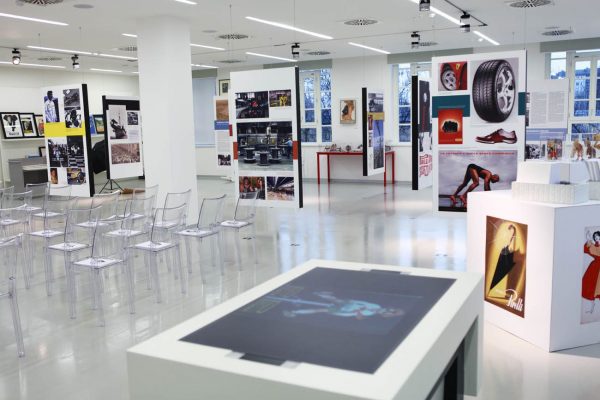
Advertising: A Single, Extended Story of Image and Communication

Since its inception ten years ago, the Fondazione Pirelli has worked tirelessly to develop the corporate culture of the Pirelli Group: this has given it the chance to enjoy a broader view of some of the activities which the company has been involved in – often in myriad ways – over more than a century of history

Advertising is certainly one of those areas, extending from the first steps taken by the company founded by Giovanni Battista Pirelli at the end of the nineteenth century through the present day. When it comes to advertising, the work of the Historical Archive has enabled the Foundation to construct a continuous and comprehensive narrative of the marketing of the Pirelli brand: a single story capable of absorbing a range of styles and languages in constant evolution, featuring materials and artistic forms that have seen huge changes over the years and messages and images that have been adapted over time to an ever-increasing globalisation. The result of this work can now be enjoyed in two books: Una musa tra le ruote (The Muse in the Wheels, 2015) and La Pubblicità con la P maiuscola (Advertising with a Capital P, 2017), edited by the Pirelli Foundation and published by Corraini: a multiform narrative journey that seeks to offer a unique vision of a world – that of advertising – necessarily dominated by complexity and change.

Hundreds of advertising designs are conserved in the Historical Archive: unique, original documents featuring the work of some of the greatest designers of the twentieth century. Documents from the 1920s to the 1960s enable us to reconstruct what was probably the most vibrant period in terms of the company’s visual communication and the moment in which the very concept of advertising was itself created. At that time, it was usually known as “propaganda“. In this period, however, the artist’s freedom of expression was limited to reproducing an image of a tyre, which had to be immediately recognisable to the public. Which brings us to another important source preserved at the Historical Archive: more than 300 technical drawings, created by factory engineers and used to “photograph” the tyre for designs, posters, product lists, window displays, catalogues and brochures. An extensive journey through print advertising, which – at the Fondazione Pirelli – provides information on all the things that have formed part of the core business of the company over the years, allowing us to trace its industrial and commercial history.

This collection of sketches is accompanied by the thousands of final designs, which means we have can continue the narrative from the 1970s to the start of the 2000s. This is the period of advertising agencies – the internal agency at Pirelli was known as Centro – and of an image scientifically constructed in marketing departments to then be reproduced time and time again. All with different languages and techniques. These were years in which photography took centre stage: a special section of the Historical Archive is devoted to the countless works made for Pirelli by highly acclaimed international photographers. There are also other photographs that help to tell the story of advertising from another angle – shots created for the exhibitions and trade fairs that Pirelli has been involved in right from the outset. Pictures that change over the years, providing examples of an uninterrupted flow in constant evolution.

The first advertising film dates from 1951, an animated cartoon by Nino Pagot for the Pirelli Stelvio tyre: from that moment on, cinema and television would delve deeper into the complexities of Pirelli’s message. Today, there are miles and miles of film completely digitased and available for consultation online from the glorious years of Carosello (an Italian TV advertising show), as well as films and historical documentaries.

And it is here, with digital, that a new challenge is just getting under way: to understand, interpret and include yet another form of visual language into this single, unique process.

Since its inception ten years ago, the Fondazione Pirelli has worked tirelessly to develop the corporate culture of the Pirelli Group: this has given it the chance to enjoy a broader view of some of the activities which the company has been involved in – often in myriad ways – over more than a century of history

Advertising is certainly one of those areas, extending from the first steps taken by the company founded by Giovanni Battista Pirelli at the end of the nineteenth century through the present day. When it comes to advertising, the work of the Historical Archive has enabled the Foundation to construct a continuous and comprehensive narrative of the marketing of the Pirelli brand: a single story capable of absorbing a range of styles and languages in constant evolution, featuring materials and artistic forms that have seen huge changes over the years and messages and images that have been adapted over time to an ever-increasing globalisation. The result of this work can now be enjoyed in two books: Una musa tra le ruote (The Muse in the Wheels, 2015) and La Pubblicità con la P maiuscola (Advertising with a Capital P, 2017), edited by the Pirelli Foundation and published by Corraini: a multiform narrative journey that seeks to offer a unique vision of a world – that of advertising – necessarily dominated by complexity and change.

Hundreds of advertising designs are conserved in the Historical Archive: unique, original documents featuring the work of some of the greatest designers of the twentieth century. Documents from the 1920s to the 1960s enable us to reconstruct what was probably the most vibrant period in terms of the company’s visual communication and the moment in which the very concept of advertising was itself created. At that time, it was usually known as “propaganda“. In this period, however, the artist’s freedom of expression was limited to reproducing an image of a tyre, which had to be immediately recognisable to the public. Which brings us to another important source preserved at the Historical Archive: more than 300 technical drawings, created by factory engineers and used to “photograph” the tyre for designs, posters, product lists, window displays, catalogues and brochures. An extensive journey through print advertising, which – at the Fondazione Pirelli – provides information on all the things that have formed part of the core business of the company over the years, allowing us to trace its industrial and commercial history.

This collection of sketches is accompanied by the thousands of final designs, which means we have can continue the narrative from the 1970s to the start of the 2000s. This is the period of advertising agencies – the internal agency at Pirelli was known as Centro – and of an image scientifically constructed in marketing departments to then be reproduced time and time again. All with different languages and techniques. These were years in which photography took centre stage: a special section of the Historical Archive is devoted to the countless works made for Pirelli by highly acclaimed international photographers. There are also other photographs that help to tell the story of advertising from another angle – shots created for the exhibitions and trade fairs that Pirelli has been involved in right from the outset. Pictures that change over the years, providing examples of an uninterrupted flow in constant evolution.

The first advertising film dates from 1951, an animated cartoon by Nino Pagot for the Pirelli Stelvio tyre: from that moment on, cinema and television would delve deeper into the complexities of Pirelli’s message. Today, there are miles and miles of film completely digitased and available for consultation online from the glorious years of Carosello (an Italian TV advertising show), as well as films and historical documentaries.

And it is here, with digital, that a new challenge is just getting under way: to understand, interpret and include yet another form of visual language into this single, unique process.

Multimedia

Images

When Lancia and Pirelli Competed in Endurance Racing

The third round of the Blancpain GT Series championship, one of the most important endurance and speed competitions on a racing circuit, was held on the last weekend of June 2018 on the track at Misano Adriatico. The next leg was the classic Spa 24 Hours in Belgium at the end of July, followed by the Hungaroring event and the Nürburgring race in Germany. In 2018, Pirelli was once again the sole supplier of P Zero tyres for supercars such as the Aston Martin V12 Vantage, Audi R8, Ferrari 488, Lamborghini Huracán, and McLaren 650S, as well as for other superstars of today’s motor racing.

Pirelli has always had a great interest in touring car racing, for the tyres need to have a perfect blend of high-speed performance coupled with reliability under prolonged stress. It is a very important test bed for road tyres, bearing in mind that the racing vehicles are derived from standard production models. One chapter in Pirelli’s long history of endurance races proved to be highly consequential for sports car racing: the car was the Lancia Beta Montecarlo Turbo, and the tyres Pirelli P7.

The announcement came in the last few days of 1978, in Pirelli’s Fatti e Notizie house organ: “After playing a lead role for 15 years, Lancia is officially leaving rallying and moving over to track racing. The company will be taking part in the World Championship for Makes in the Silhouette Group 5 with the Beta Montecarlo Turbo. The car, with Pininfarina body and Pirelli tyres, will be driven by Riccardo Patrese and Walter Röhrl.” The car was unveiled on the Vallelunga racetrack in Rome in April 1979, and all motor racing enthusiasts agreed that it was “splendid”, with its compact body and black-and-white tiger stripes: “one of the most beautiful ever to emerge from Pininfarina’s pencil”. Victory came instantly in the World Championship for Makes, after warming up in the Silverstone and Brands Hatch races, with an excellent second place at the Nürburgring, an absolute first came on the Sicilian circuit of Pergusa, which is now used for testing Pirelli motorcycle tyres. All without a single mid-race change of tyres, as has always been the norm in the 6 Hours. The wonderful adventure of the Lancia Beta Montecarlo continued for a couple of years, winning the World Championship again in 1980.

The Lancia Racing team was further boosted with the arrival of Michele Alboreto and Eddie Cheever, who joined the historic duo Carlo Facetti-Martino Finotto, masters of touring car racing, who won no less a victory than the 24 Hours of Le Mans. For Pirelli, this was a triumph not seen since the one in 1954 with Ferrari, with José Froilán González and Maurice Trintignant at the wheel. And then came victory in the World Championship in 1981 with the car decked out in the classic white, red, and blue livery of the Martini Racing team. In 1982, Lancia made its entry in the World Sportscar Prototypes Championship with the new LC1 silhouette in Group 6, entrusted to the by now customary Michele Alboreto, Riccardo Patrese, Teo Fabi, and Piercarlo Ghinzani. Victory was ultimately snatched from them by just 2 seconds, as the Belgian driver Jacky Ickx sped past in his Porsche. Yet another thrilling season, yet again with Pirelli radials.

The third round of the Blancpain GT Series championship, one of the most important endurance and speed competitions on a racing circuit, was held on the last weekend of June 2018 on the track at Misano Adriatico. The next leg was the classic Spa 24 Hours in Belgium at the end of July, followed by the Hungaroring event and the Nürburgring race in Germany. In 2018, Pirelli was once again the sole supplier of P Zero tyres for supercars such as the Aston Martin V12 Vantage, Audi R8, Ferrari 488, Lamborghini Huracán, and McLaren 650S, as well as for other superstars of today’s motor racing.

Pirelli has always had a great interest in touring car racing, for the tyres need to have a perfect blend of high-speed performance coupled with reliability under prolonged stress. It is a very important test bed for road tyres, bearing in mind that the racing vehicles are derived from standard production models. One chapter in Pirelli’s long history of endurance races proved to be highly consequential for sports car racing: the car was the Lancia Beta Montecarlo Turbo, and the tyres Pirelli P7.

The announcement came in the last few days of 1978, in Pirelli’s Fatti e Notizie house organ: “After playing a lead role for 15 years, Lancia is officially leaving rallying and moving over to track racing. The company will be taking part in the World Championship for Makes in the Silhouette Group 5 with the Beta Montecarlo Turbo. The car, with Pininfarina body and Pirelli tyres, will be driven by Riccardo Patrese and Walter Röhrl.” The car was unveiled on the Vallelunga racetrack in Rome in April 1979, and all motor racing enthusiasts agreed that it was “splendid”, with its compact body and black-and-white tiger stripes: “one of the most beautiful ever to emerge from Pininfarina’s pencil”. Victory came instantly in the World Championship for Makes, after warming up in the Silverstone and Brands Hatch races, with an excellent second place at the Nürburgring, an absolute first came on the Sicilian circuit of Pergusa, which is now used for testing Pirelli motorcycle tyres. All without a single mid-race change of tyres, as has always been the norm in the 6 Hours. The wonderful adventure of the Lancia Beta Montecarlo continued for a couple of years, winning the World Championship again in 1980.

The Lancia Racing team was further boosted with the arrival of Michele Alboreto and Eddie Cheever, who joined the historic duo Carlo Facetti-Martino Finotto, masters of touring car racing, who won no less a victory than the 24 Hours of Le Mans. For Pirelli, this was a triumph not seen since the one in 1954 with Ferrari, with José Froilán González and Maurice Trintignant at the wheel. And then came victory in the World Championship in 1981 with the car decked out in the classic white, red, and blue livery of the Martini Racing team. In 1982, Lancia made its entry in the World Sportscar Prototypes Championship with the new LC1 silhouette in Group 6, entrusted to the by now customary Michele Alboreto, Riccardo Patrese, Teo Fabi, and Piercarlo Ghinzani. Victory was ultimately snatched from them by just 2 seconds, as the Belgian driver Jacky Ickx sped past in his Porsche. Yet another thrilling season, yet again with Pirelli radials.

Multimedia

Images

The economic pendulum and the myth of Sisyphus

A book has just been published in Italy, which illustrates the last two hundred years of history as an alternation between market and state. And it provides a third solution


Being aware of where one is. Measuring the world that surrounds us. These conditions also apply to entrepreneurs and their managers. They are essential conditions to position their business correctly. Businesses that are therefore not divorced from the world, but rather immersed in the current economic and social shifts. Reading good books that help travel in this direction is therefore essential. And one good book that has just been published in Italian is the one written by Paul De Grauwe, professor at the London School of Economics and member of parliament in Belgium between 1991 and 2003.

“I limiti del mercato. Da che parte oscilla il pendolo dell’economia?” (The limits of the market. Which way does the pendulum of the economy swing?) manages – in just a few pages – to provide an idea of the general evolution of the economy over the last two hundred years. A story of ups and downs, which has oscillated between market and State and which must be understood in full to understand where one is headed.

Written in a plain language, the book by De Grauwe begins with the observation that if what counts is the prosperity of people, of the market and of the state, the eternal poles between which the economy oscillates, they are nothing more than an instrument to achieve that goal and ideological statements are useless. But this is not enough, because according to the author, today the contrast between state and market appears to be quite outdated: it will become increasingly necessary to provide a combination of both.But in this dialectic that has a hard time achieving a balance, often disruptive events come along to foster dangerous radicalisations.

So we need to ask ourselves some questions. What, for example, are the limits of the market? Do we therefore need to prepare ourselves for the overthrowing of the capitalist system and the supremacy of the state? Will this bring prosperity? Does the market need to worry about creating welfare or is the state responsible for ensuring the welfare of citizens?

To answer these questions, the book starts right from the image of the pendulum and its economic oscillations, then investigates first the limits of capitalism (in other words the market) followed by those of the state. In the end, De Grauwe does not provide unequivocal forecasts: he leaves the reader free to choose between two alternatives. The first confirms the “oscillations of the pendulum” and therefore the continuous alternation between moments when the market prevails and others in which the state does. The second is a kind of level leap that envisages a reform of relations and relationships founded on cooperation rather than on competitiveness. This is a prospect that De Grauwe considers difficult to achieve right now.

But for De Grauwe the important thing is to try anyway. At the end of a little less than two hundred pages of the book, there is a beautiful image: the myth of Sisyphus forced to push a boulder to the top of the mountain every morning, after the boulder rolled back down to the bottom of the hill every night. This myth was also remembered by Albert Camus with a particular interpretation, one that De Grauwe resumes confidently, writing: “Camus saw the punishment inflicted on Sisyphus as a metaphor for the absurdity of life. “Should we deal with this nonsense?” – he wondered. One option is to commit suicide. Camus rejects this option. He suggests instead that we should be rebelling against the absurdity of life by throwing ourselves into it, by living intensely and with creativity. The revolutionary hero is the one who, despite the absurdity of the thing and knowing that his rebellion could potentially lead to nothing, nevertheless continues to push the boulder up and stays happy”.

I limiti del mercato. Da che parte oscilla il pendolo dell’economia?” (The limits of the market. Which way does the pendulum of the economy swing?)

Paul De Grauwe

Il Mulino, 2018

A book has just been published in Italy, which illustrates the last two hundred years of history as an alternation between market and state. And it provides a third solution


Being aware of where one is. Measuring the world that surrounds us. These conditions also apply to entrepreneurs and their managers. They are essential conditions to position their business correctly. Businesses that are therefore not divorced from the world, but rather immersed in the current economic and social shifts. Reading good books that help travel in this direction is therefore essential. And one good book that has just been published in Italian is the one written by Paul De Grauwe, professor at the London School of Economics and member of parliament in Belgium between 1991 and 2003.

“I limiti del mercato. Da che parte oscilla il pendolo dell’economia?” (The limits of the market. Which way does the pendulum of the economy swing?) manages – in just a few pages – to provide an idea of the general evolution of the economy over the last two hundred years. A story of ups and downs, which has oscillated between market and State and which must be understood in full to understand where one is headed.

Written in a plain language, the book by De Grauwe begins with the observation that if what counts is the prosperity of people, of the market and of the state, the eternal poles between which the economy oscillates, they are nothing more than an instrument to achieve that goal and ideological statements are useless. But this is not enough, because according to the author, today the contrast between state and market appears to be quite outdated: it will become increasingly necessary to provide a combination of both.But in this dialectic that has a hard time achieving a balance, often disruptive events come along to foster dangerous radicalisations.

So we need to ask ourselves some questions. What, for example, are the limits of the market? Do we therefore need to prepare ourselves for the overthrowing of the capitalist system and the supremacy of the state? Will this bring prosperity? Does the market need to worry about creating welfare or is the state responsible for ensuring the welfare of citizens?

To answer these questions, the book starts right from the image of the pendulum and its economic oscillations, then investigates first the limits of capitalism (in other words the market) followed by those of the state. In the end, De Grauwe does not provide unequivocal forecasts: he leaves the reader free to choose between two alternatives. The first confirms the “oscillations of the pendulum” and therefore the continuous alternation between moments when the market prevails and others in which the state does. The second is a kind of level leap that envisages a reform of relations and relationships founded on cooperation rather than on competitiveness. This is a prospect that De Grauwe considers difficult to achieve right now.

But for De Grauwe the important thing is to try anyway. At the end of a little less than two hundred pages of the book, there is a beautiful image: the myth of Sisyphus forced to push a boulder to the top of the mountain every morning, after the boulder rolled back down to the bottom of the hill every night. This myth was also remembered by Albert Camus with a particular interpretation, one that De Grauwe resumes confidently, writing: “Camus saw the punishment inflicted on Sisyphus as a metaphor for the absurdity of life. “Should we deal with this nonsense?” – he wondered. One option is to commit suicide. Camus rejects this option. He suggests instead that we should be rebelling against the absurdity of life by throwing ourselves into it, by living intensely and with creativity. The revolutionary hero is the one who, despite the absurdity of the thing and knowing that his rebellion could potentially lead to nothing, nevertheless continues to push the boulder up and stays happy”.

I limiti del mercato. Da che parte oscilla il pendolo dell’economia?” (The limits of the market. Which way does the pendulum of the economy swing?)

Paul De Grauwe

Il Mulino, 2018

Italy and the EU: the “narcissism” of bad politics and the responsibility for making choices of good government

Can the “democracy of narcissism”, loaded with sensational gestures, raucous declarations, aggressive statements on Twitter, bitter arguments and strong signals from leaders suffering from a state of “hypertrophy of the ego” allow a major country such as Italy to be governed decently, in these uncertain times of crisis and radical transformations? And, leaving aside communication (rather than the inflated, tedious term “narration” or even worse “narrative”), what are the responsibilities of a ruling class in a world filled with old and new conflicts, barriers and reinforced boundaries? This is a question which has been discussed at length in the press and in books of clearly written political and social essays, in seminars and encounters between students (the debates launched with great merit by the Aspen Institute and above all by Censis, which is still led by an authoritative intellectual like Giuseppe De Rita). And even if the discussions between the élites (who are critical and often indeed lucidly self-critical) are a source of mockery within the social media clamouring with condemnations, approximate knowledge and partisan attitudes, the idea of government and, above all, of the “culture of government”, remains open for debate. And it runs straight into several key questions about political quality and the future of liberal democracy, as well as about the hopes for a more balanced and sustainable economic development.

There is a government at work in which ministers talk a lot, throwing into disorder with their loud declarations the traditional cards of democracy, in the name of radical “changes”. But there are also essential questions of choices to be decided (infrastructure, innovation, the good competitive manufacturing industry and the industrial crises to be tackled, starting with the ILVA steel plant). And the so-called “GDP party” (copyright of Dario Di Vico, in the Corriere della Sera newspaper of 22nd June) is seeking responsibility and true commitment for a competent and efficient government: an imaginary party, but a very real one, which sees the big banks (Intesa San Paolo led by Carlo Messina) and business associations at work, starting with the Assolombarda presided by Carlo Bonomi and which, in agreement with Assindustria Veneto Centro (Padua and Treviso) and Confindustria Emilia Centro (Bologna, Modena, Ferrara) serves as the backbone for the “new industrial triangle” between Milan, the North East and the “pocket multinationals” of Emilia, the competitive manufacturing hub with a European dimension, and the load-bearing axis for an improved economic growth (we spoke of this in last week’s blog). A “GDP party” which is seeking an industrial policy, reduced taxation for companies which innovate and create wealth and jobs (and not a “flat tax”), regulations to allow productive labour to grow (and not generic citizenship incomes). The challenge, then, is a political one, for the responsible governing classes. And not one of propaganda.

There is indeed a crisis. But we cannot escape from it merely through chatter.

In order to try better to understand what needs to be done, beyond the current circumstances, it is truly worthwhile looking into the roots of the crisis. And therefore starting with the reflections of a political analyst of considerable cultural renown, Giovanni Orsina, and his latest book published by Marsilio, “La democrazia del narcisismo” (The democracy of narcissism), precisely, a sort of “short history of anti-politics”.

The title recalls that of an old fundamental book entitled “The culture of narcissism”, written in 1979, almost forty years ago, by Christopher Lasch, an extremely perceptive historian and sociologist of liberal culture, and what was then an original enquiry into “the individual fleeing from social connections at a time of collective disillusionment”. In 1994, just before he died, Lasch had written another book which is extremely useful for understanding our current-day arguments, “The rebellion of the élites / the betrayal of democracy”. Those books were read by students and politicians (few of them – too few) looking for a meaning to the transformations which were under way. But unfortunately they never became the basis for widespread public debate.

Now the lesson by Lasch is re-echoed in the pages of the essay by Orsina, who goes to the roots of the crisis by re-reading Alexis de Tocqueville on the criticism of the new-born democracy in America and the risks of a “dictatorship of the majority”, and then two major philosophers of the 20th Century – José Ortega y Gasset and Johan Huizinga. He analyses the contradictions inherent in democracy between the increase in the rights of the individual in search of happiness, and institutional and social rules and constraints. He uses the analyses of “Mass and power” by Elias Canetti, the Nobel prize-winner for literature, in order to re-examine the havoc of the Tangentopoli scandal and then those of another Nobel prize-winner, Eugenio Montale, relating to the solitude and uncertainty of modern life. And moving ahead beyond the libertarian excesses of ’68 (an extremely political time, focused on the “rights” and on the values of individualism, which were prevalent, through mass dissemination across society, in reaction to the dutiful and militant collectivism of the little groups of extra-parliamentary left-wingers), he arrives at the current-day subjects of Berlusconi, Renzi, Trump, Brexit, Salvini’s Northern League and the Five-Star Movement and examines the “hard crystals of rancour”: a long process of discomfort and disputes which is radically changing the institutions and values of politics and of civil co-existence. Such insistent bad-mouthing of politics, over the past quarter of a century, by leaders of both the right and left wings, has produced poisoned fruit which we are today obliged to deal with.

Here is a key idea for those who wish to discuss the politics of “how to govern”, European challenges and criticisms of the élites, without yielding to the temptations of what Ilvo Diamanti and Marc Lazard call “Populocracy”, as they investigate, in a recent book edited by Laterza, “the metamorphosis of our democracy”. “The political dynamic – they explain – has become elementary: the people against the élites, those at the bottom against those at the top, the ‘good’ against the ‘bad’. The “populisation” of political minds and practices has resuscitated the myth of “true democracy” forged by an “authentic population”, thus undermining representative democracy which is starting to turn into populocracy”. A process which has long-standing roots, is amplified by the digital media, but goes beyond the normal questions of communication and strikes at the heart of the reasons for liberty and for feeling that one is a responsible and active participant in a community.

There is another point of view worthy of consideration: that of Yascha Mounk, professor of Political Theory at Harvard, in “The People v. Democracy” or “from citizenship to electoral dictatorship”, published by Feltrinelli. Liberal democracies are being put in difficulty by the growth of economic inequalities, by the upheavals of migratory fluxes which have an impact on the perceptions of security in the face of cultural pluralism, and by the extent of the new means of communication which stimulate participation but not the formation of documented critical knowledge. The end result? “Whilst the institutions become filled with millionaires and technocrats, citizens retain their own civil rights and their own economic freedoms but become excluded from political life”. This gives rise to protests, against the traditional political classes. A radical crisis, indeed. For which, however, Mounk considers that a remedy can be found, by attempting to build up “an inclusive patriotism” based on the awareness of citizens that they are part of a unique community”, with rights and duties. A difficult political challenge. But possible.

Mounk’s suggestion is also valid, naturally, for the situation in Italy.

Aside from the simple and demagogic game which acts as a stimulus for worries, fears and real problems (security, inequalities, immigration, jobs, the differences between generations and social conditions, uncertainty about the future) and from the responses provided to date by the majority parties and by individual ministers in the form of headline slogans and the identification of “enemies”, it is necessary to be aware that the role of Italy is at stake in the evolution of the general redefinition of rules and opportunities for new political and economic balances in the context of the EU (this was competently discussed, a few days ago, on 23rd June, by three authoritative Italian economists, Francesco Giavazzi, Lucrezia Reichlin and Luigi Zingales in the Corriere della Sera newspaper: “How to protect Italian interests in Europe”, with four very tangible propositions for reforms to the Eurozone, from debt to investments, and from the social fund to the discipline of banks). And there are answers required for industry, the productivity of businesses, the transformations linked to new technologies, the precariousness of jobs for the young, and the risks of a blockage of the economy at a time of nationalistic and protectionist introspection, which would particularly damage a country like Italy with its strong export-oriented vocation (Ferruccio De Bortoli writes about this succinctly in the “Economy” section of the Corriere della Sera, on 25th June: “A trade war by everyone against everyone else could cost Italy a decrease of 3.5% in its exports in 2019. And the recovery of our country owes (nearly) all its success to its overseas sales. On our own, we shall not get very far”). Italian-style protectionism, demagogic and impossible (these are choices within the competence of the EU) could unfortunately only do us harm.

These are real questions, which require a capability for policies (plans, political strategies, a vision for the future of Italy) and choices of politics (practical measures, laws, acts of reform, administrative procedures: an efficient government, in short).

“Narcissism”, in the face of such problems, is harmful. Instead, we need good politics. One hopes to see this finally under way very soon.

Can the “democracy of narcissism”, loaded with sensational gestures, raucous declarations, aggressive statements on Twitter, bitter arguments and strong signals from leaders suffering from a state of “hypertrophy of the ego” allow a major country such as Italy to be governed decently, in these uncertain times of crisis and radical transformations? And, leaving aside communication (rather than the inflated, tedious term “narration” or even worse “narrative”), what are the responsibilities of a ruling class in a world filled with old and new conflicts, barriers and reinforced boundaries? This is a question which has been discussed at length in the press and in books of clearly written political and social essays, in seminars and encounters between students (the debates launched with great merit by the Aspen Institute and above all by Censis, which is still led by an authoritative intellectual like Giuseppe De Rita). And even if the discussions between the élites (who are critical and often indeed lucidly self-critical) are a source of mockery within the social media clamouring with condemnations, approximate knowledge and partisan attitudes, the idea of government and, above all, of the “culture of government”, remains open for debate. And it runs straight into several key questions about political quality and the future of liberal democracy, as well as about the hopes for a more balanced and sustainable economic development.

There is a government at work in which ministers talk a lot, throwing into disorder with their loud declarations the traditional cards of democracy, in the name of radical “changes”. But there are also essential questions of choices to be decided (infrastructure, innovation, the good competitive manufacturing industry and the industrial crises to be tackled, starting with the ILVA steel plant). And the so-called “GDP party” (copyright of Dario Di Vico, in the Corriere della Sera newspaper of 22nd June) is seeking responsibility and true commitment for a competent and efficient government: an imaginary party, but a very real one, which sees the big banks (Intesa San Paolo led by Carlo Messina) and business associations at work, starting with the Assolombarda presided by Carlo Bonomi and which, in agreement with Assindustria Veneto Centro (Padua and Treviso) and Confindustria Emilia Centro (Bologna, Modena, Ferrara) serves as the backbone for the “new industrial triangle” between Milan, the North East and the “pocket multinationals” of Emilia, the competitive manufacturing hub with a European dimension, and the load-bearing axis for an improved economic growth (we spoke of this in last week’s blog). A “GDP party” which is seeking an industrial policy, reduced taxation for companies which innovate and create wealth and jobs (and not a “flat tax”), regulations to allow productive labour to grow (and not generic citizenship incomes). The challenge, then, is a political one, for the responsible governing classes. And not one of propaganda.

There is indeed a crisis. But we cannot escape from it merely through chatter.

In order to try better to understand what needs to be done, beyond the current circumstances, it is truly worthwhile looking into the roots of the crisis. And therefore starting with the reflections of a political analyst of considerable cultural renown, Giovanni Orsina, and his latest book published by Marsilio, “La democrazia del narcisismo” (The democracy of narcissism), precisely, a sort of “short history of anti-politics”.

The title recalls that of an old fundamental book entitled “The culture of narcissism”, written in 1979, almost forty years ago, by Christopher Lasch, an extremely perceptive historian and sociologist of liberal culture, and what was then an original enquiry into “the individual fleeing from social connections at a time of collective disillusionment”. In 1994, just before he died, Lasch had written another book which is extremely useful for understanding our current-day arguments, “The rebellion of the élites / the betrayal of democracy”. Those books were read by students and politicians (few of them – too few) looking for a meaning to the transformations which were under way. But unfortunately they never became the basis for widespread public debate.

Now the lesson by Lasch is re-echoed in the pages of the essay by Orsina, who goes to the roots of the crisis by re-reading Alexis de Tocqueville on the criticism of the new-born democracy in America and the risks of a “dictatorship of the majority”, and then two major philosophers of the 20th Century – José Ortega y Gasset and Johan Huizinga. He analyses the contradictions inherent in democracy between the increase in the rights of the individual in search of happiness, and institutional and social rules and constraints. He uses the analyses of “Mass and power” by Elias Canetti, the Nobel prize-winner for literature, in order to re-examine the havoc of the Tangentopoli scandal and then those of another Nobel prize-winner, Eugenio Montale, relating to the solitude and uncertainty of modern life. And moving ahead beyond the libertarian excesses of ’68 (an extremely political time, focused on the “rights” and on the values of individualism, which were prevalent, through mass dissemination across society, in reaction to the dutiful and militant collectivism of the little groups of extra-parliamentary left-wingers), he arrives at the current-day subjects of Berlusconi, Renzi, Trump, Brexit, Salvini’s Northern League and the Five-Star Movement and examines the “hard crystals of rancour”: a long process of discomfort and disputes which is radically changing the institutions and values of politics and of civil co-existence. Such insistent bad-mouthing of politics, over the past quarter of a century, by leaders of both the right and left wings, has produced poisoned fruit which we are today obliged to deal with.

Here is a key idea for those who wish to discuss the politics of “how to govern”, European challenges and criticisms of the élites, without yielding to the temptations of what Ilvo Diamanti and Marc Lazard call “Populocracy”, as they investigate, in a recent book edited by Laterza, “the metamorphosis of our democracy”. “The political dynamic – they explain – has become elementary: the people against the élites, those at the bottom against those at the top, the ‘good’ against the ‘bad’. The “populisation” of political minds and practices has resuscitated the myth of “true democracy” forged by an “authentic population”, thus undermining representative democracy which is starting to turn into populocracy”. A process which has long-standing roots, is amplified by the digital media, but goes beyond the normal questions of communication and strikes at the heart of the reasons for liberty and for feeling that one is a responsible and active participant in a community.

There is another point of view worthy of consideration: that of Yascha Mounk, professor of Political Theory at Harvard, in “The People v. Democracy” or “from citizenship to electoral dictatorship”, published by Feltrinelli. Liberal democracies are being put in difficulty by the growth of economic inequalities, by the upheavals of migratory fluxes which have an impact on the perceptions of security in the face of cultural pluralism, and by the extent of the new means of communication which stimulate participation but not the formation of documented critical knowledge. The end result? “Whilst the institutions become filled with millionaires and technocrats, citizens retain their own civil rights and their own economic freedoms but become excluded from political life”. This gives rise to protests, against the traditional political classes. A radical crisis, indeed. For which, however, Mounk considers that a remedy can be found, by attempting to build up “an inclusive patriotism” based on the awareness of citizens that they are part of a unique community”, with rights and duties. A difficult political challenge. But possible.

Mounk’s suggestion is also valid, naturally, for the situation in Italy.

Aside from the simple and demagogic game which acts as a stimulus for worries, fears and real problems (security, inequalities, immigration, jobs, the differences between generations and social conditions, uncertainty about the future) and from the responses provided to date by the majority parties and by individual ministers in the form of headline slogans and the identification of “enemies”, it is necessary to be aware that the role of Italy is at stake in the evolution of the general redefinition of rules and opportunities for new political and economic balances in the context of the EU (this was competently discussed, a few days ago, on 23rd June, by three authoritative Italian economists, Francesco Giavazzi, Lucrezia Reichlin and Luigi Zingales in the Corriere della Sera newspaper: “How to protect Italian interests in Europe”, with four very tangible propositions for reforms to the Eurozone, from debt to investments, and from the social fund to the discipline of banks). And there are answers required for industry, the productivity of businesses, the transformations linked to new technologies, the precariousness of jobs for the young, and the risks of a blockage of the economy at a time of nationalistic and protectionist introspection, which would particularly damage a country like Italy with its strong export-oriented vocation (Ferruccio De Bortoli writes about this succinctly in the “Economy” section of the Corriere della Sera, on 25th June: “A trade war by everyone against everyone else could cost Italy a decrease of 3.5% in its exports in 2019. And the recovery of our country owes (nearly) all its success to its overseas sales. On our own, we shall not get very far”). Italian-style protectionism, demagogic and impossible (these are choices within the competence of the EU) could unfortunately only do us harm.

These are real questions, which require a capability for policies (plans, political strategies, a vision for the future of Italy) and choices of politics (practical measures, laws, acts of reform, administrative procedures: an efficient government, in short).

“Narcissism”, in the face of such problems, is harmful. Instead, we need good politics. One hopes to see this finally under way very soon.

Fondazione Pirelli – 10 years of Corporate Culture, 2018

Aboard the Itala: The Pirelli Hot Lap a Century Ago

On 21 and 22 June 2018 a new session of Formula One Pirelli Hot laps was held on the circuit at Le Castellet during the tests for the F1 French Grand Prix. This Pirelli-F1 Experiences event offered a small, highly select number of guests the chance to go onto the circuit with professional drivers at the helm of supercars such as the Mercedes AMG, the Aston Martin Vanquish, and the McLaren 720S. All fitted with Pirelli P Zero tyres, of course, which is to say the highest point where track meets road. For those whose everyday lives could hardly be further away from F1, it was a unique opportunity to enter the adrenaline-fuelled world of a professional driver getting to grips with this type of mechanical beast: watching the world fly by at over 300 km/h, thrust by over 700 horsepower, is truly a once-in-a-lifetime experience. We do not know exactly what went through the mind of the first, or at least soon to be the most famous, of these peaceable guests when he was suddenly flung into the world of speed. It was over a hundred years ago, his name was Luigi Barzini, and his normal life had nothing to do with cars. He was a journalist at the Corriere della Sera and he was writing about trains (yes, trains!) when the editor-in-chief Luigi Albertini called him into the office and proposed a decidedly long “hot lap”: 17,000 km sitting next to the driver-prince Scipione Borghese, aboard a powerful 45 hp car that could move its two-tonne weight at speeds of up to 70 km/h. The car was the Itala, and it was about to enter and win the Peking-Paris motor race in 1907. In his book Peking to Paris: A Journey Across Two Continents, a logbook written after the race, Barzini tells us that, when his boss asked him “would you consent to take part?”, he replied quite simply, “with great pleasure”. So the journalist-navigator embarked for Peking and found true glory.

Like today’s hot lappers at Le Castellet, Barzini’s Itala was certainly viewed as a supercar back then. Made by Matteo Ceirano’s Itala Fabbrica Automobili in Turin from 1904, the super-sporty Itala had already won the Targa Florio in 1906, establishing itself as a dream machine, and it was adored as much by drivers as by the great personalities of politics and finance. The one prepared for Scipione Borghese was made even tougher and more competitive, and its 935 x 135 mm Pirelli Ercole tyres were the largest that could be made at the time. After its triumph in Paris, the Itala went on to reap further victories against cars of the calibre of the Scat, the Isotta Fraschini, and the Nazzaro. Then came the First World War and the Itala Fabbrica Automobili switched production to aeroplane engines under licence from Hispano-Suiza. This was the beginning of a slow but inexorable decline, and the company emerged from the war in serious financial crisis, while its supremacy came under harsh attack from Bugatti. The Pirelli Historical Archive has preserved a photograph with a caption that reads: “Targa Florio. An Itala racing car with Pirelli tyres”. The car bears the number 31 on its bonnet and the photo – by the French photo reporting agency Meurisse – dates from 1922. It shows the driver Wild aboard an Itala 51 Sport 2.8 and it was to be one of the last appearances in a race by the supercar from Turin. A new star was now shining in the world of motorcar racing: Alfa Romeo.

On 21 and 22 June 2018 a new session of Formula One Pirelli Hot laps was held on the circuit at Le Castellet during the tests for the F1 French Grand Prix. This Pirelli-F1 Experiences event offered a small, highly select number of guests the chance to go onto the circuit with professional drivers at the helm of supercars such as the Mercedes AMG, the Aston Martin Vanquish, and the McLaren 720S. All fitted with Pirelli P Zero tyres, of course, which is to say the highest point where track meets road. For those whose everyday lives could hardly be further away from F1, it was a unique opportunity to enter the adrenaline-fuelled world of a professional driver getting to grips with this type of mechanical beast: watching the world fly by at over 300 km/h, thrust by over 700 horsepower, is truly a once-in-a-lifetime experience. We do not know exactly what went through the mind of the first, or at least soon to be the most famous, of these peaceable guests when he was suddenly flung into the world of speed. It was over a hundred years ago, his name was Luigi Barzini, and his normal life had nothing to do with cars. He was a journalist at the Corriere della Sera and he was writing about trains (yes, trains!) when the editor-in-chief Luigi Albertini called him into the office and proposed a decidedly long “hot lap”: 17,000 km sitting next to the driver-prince Scipione Borghese, aboard a powerful 45 hp car that could move its two-tonne weight at speeds of up to 70 km/h. The car was the Itala, and it was about to enter and win the Peking-Paris motor race in 1907. In his book Peking to Paris: A Journey Across Two Continents, a logbook written after the race, Barzini tells us that, when his boss asked him “would you consent to take part?”, he replied quite simply, “with great pleasure”. So the journalist-navigator embarked for Peking and found true glory.

Like today’s hot lappers at Le Castellet, Barzini’s Itala was certainly viewed as a supercar back then. Made by Matteo Ceirano’s Itala Fabbrica Automobili in Turin from 1904, the super-sporty Itala had already won the Targa Florio in 1906, establishing itself as a dream machine, and it was adored as much by drivers as by the great personalities of politics and finance. The one prepared for Scipione Borghese was made even tougher and more competitive, and its 935 x 135 mm Pirelli Ercole tyres were the largest that could be made at the time. After its triumph in Paris, the Itala went on to reap further victories against cars of the calibre of the Scat, the Isotta Fraschini, and the Nazzaro. Then came the First World War and the Itala Fabbrica Automobili switched production to aeroplane engines under licence from Hispano-Suiza. This was the beginning of a slow but inexorable decline, and the company emerged from the war in serious financial crisis, while its supremacy came under harsh attack from Bugatti. The Pirelli Historical Archive has preserved a photograph with a caption that reads: “Targa Florio. An Itala racing car with Pirelli tyres”. The car bears the number 31 on its bonnet and the photo – by the French photo reporting agency Meurisse – dates from 1922. It shows the driver Wild aboard an Itala 51 Sport 2.8 and it was to be one of the last appearances in a race by the supercar from Turin. A new star was now shining in the world of motorcar racing: Alfa Romeo.

Multimedia

Images

The New Italian Industrial Triangle of Milan, Veneto and Emilia: The Challenges of an Open Economy

 Writing the pages of a new economic geography. The vertexes of the new Italian Industrial Triangle are in Milan, in the small and medium-sized enterprises of Veneto and the pocket-sized multinationals of Emilia. After the 1950s and 1960s, when the major government-owned steelworks and shipyards of Genoa, Fiat in Turin and the banks and big entrepreneurial families of Milan formed the backbone of the industrial triangle, today’s economic dynamics have pushed hi-tech services, the economy of knowledge and the competitive mechatronics, chemicals, rubber, agribusiness and furnishing industries into the foreground under the sign of “Industry 4.0” and of exports and excellences from Italy, which is the second manufacturer in Europe straight after Germany. Over the past weeks in this blog we wrote about the “A4 Region” to describe the area spanning from Piemonte, through barycentric Milan, towards Veneto and Friuli in northern Italy. This new geography is currently being outlined in greater detail. Over time, we will find the numbers needed for analysis in a tool newly launched by ISTAT called RSBL (Registro statistico di base dei luoghi – Basic Statistical Register of Places) to take a sharper snapshot of the real economy (Corriere della Sera, 14 June) and which already now is pointing to Milan as leader of Italy in terms of added value in general and productivity in particular (added value per employed person).

The north-eastwards shifted industrial triangle gathered momentum last week during the creation of a strong new local association of Confindustria, called Assindustria Veneto Centro, that brings together companies based in Padova and Treviso. The new association counts 3400 members (mostly small but very dynamic businesses) with 160 thousand employed workers and is the expression of a system which in 2017 exported EUR 22.5 billion, corresponding to 37% of all exports from Veneto and 5% of national exports. This is Confindustria’s second local organisation after Assolombarda (Milan, Lodi, Monza and Brianza) which counts nearly six thousand companies and has joined Confindustria Emilia Centro, which following a recent reorganisation now has Bologna, Modena and Ferrara as areas of interest. The new industrial triangle is worth a GDP of EUR 324 billion (more than Denmark), a manufacturing value added of EUR 53 billion (more than Belgium) and has the potential to count in Europe’s powerful industrial heart.

These organisations are one of the best results of the so-called “Pesenti reform” which brought about a deep renovation in Confindustria in the direction indicated by a committee chaired by Carlo Pesenti (who hails from the time-honoured Italian capitalist family that headed Italmobiliare operating mainly in Milan and Bergamo). But they are not just all about representing companies better and improving the services offered to members. Above all they aim at making the role of social entities – i.e. well-organised companies – emerge to express their major contribution to sustainable development, employment, industrial relations, innovation, market improvement and to the international growth dynamics of Italian economics in European perspective.

A few more numbers will explain the matter in greater detail. The GDP as a whole of the area enclosed in this new industrial triangle is greater than that of the Netherlands, Sweden and Poland combined with a higher manufacturing value added than Spain. A hefty contender in Europe. This is a dense economy zone not only because of the presence of companies connected to one another by very innovative supply chains and production platforms but also due to the presence of universities and research centres, ultramodern services and logistics structures, tourist hubs, art centres, cultural organisations of international relevance (theatres, music, literary festival and art galleries), publishing and communications, both traditional and multimedia. Precisely for these reasons, in addition to a high quality of life (many cities in the area have been leading the yearly ranking of “Il Sole24Ore” of the cities which are best to live in) the area can drive a prestigious development project aimed at connecting continental Europe to the Mediterranean.

It is a strongly export-oriented open economy, well-integrated with Germany and French industries and as sensitive to dynamic market activities as ever. It is hostile to duty taxes, barriers, closures, protectionisms and economic nationalisms, focused as it is on attracting capitals, international investments, knowledge, skills and talents characterised by a high degree of innovation.

What does it do and can it really drive Italian development? Industrial policies which consolidate research and innovation (continuing in the steps of previous governments in the Industry 4.0 direction, half of all companies in Lombardia have taken advantage by investing in digital machinery and innovative processes). Support to competition and export. Choices for high-quality human capital training. Not to mention infrastructures, and tangible and intangible assets: roads, ports, railways with the completion of the west-east high-speed tracks, airports, intermodal logistic hubs and broadband internet for hi-tech communications. These are the infrastructures that are finding opposition in some corners of the new government as the result of misplaced environmentalism (we wrote about this in the blog last week). An interesting comment in this regard comes from Assolombarda, in the words of its president Carlo Bonomi: “We shall not compromise, we shall not accept ideological prejudices which hinder the construction of the works needed to develop our areas”. “In short, the new industrial triangle is an original geometric and geographic figure – fast and dynamic. And open.

 Writing the pages of a new economic geography. The vertexes of the new Italian Industrial Triangle are in Milan, in the small and medium-sized enterprises of Veneto and the pocket-sized multinationals of Emilia. After the 1950s and 1960s, when the major government-owned steelworks and shipyards of Genoa, Fiat in Turin and the banks and big entrepreneurial families of Milan formed the backbone of the industrial triangle, today’s economic dynamics have pushed hi-tech services, the economy of knowledge and the competitive mechatronics, chemicals, rubber, agribusiness and furnishing industries into the foreground under the sign of “Industry 4.0” and of exports and excellences from Italy, which is the second manufacturer in Europe straight after Germany. Over the past weeks in this blog we wrote about the “A4 Region” to describe the area spanning from Piemonte, through barycentric Milan, towards Veneto and Friuli in northern Italy. This new geography is currently being outlined in greater detail. Over time, we will find the numbers needed for analysis in a tool newly launched by ISTAT called RSBL (Registro statistico di base dei luoghi – Basic Statistical Register of Places) to take a sharper snapshot of the real economy (Corriere della Sera, 14 June) and which already now is pointing to Milan as leader of Italy in terms of added value in general and productivity in particular (added value per employed person).

The north-eastwards shifted industrial triangle gathered momentum last week during the creation of a strong new local association of Confindustria, called Assindustria Veneto Centro, that brings together companies based in Padova and Treviso. The new association counts 3400 members (mostly small but very dynamic businesses) with 160 thousand employed workers and is the expression of a system which in 2017 exported EUR 22.5 billion, corresponding to 37% of all exports from Veneto and 5% of national exports. This is Confindustria’s second local organisation after Assolombarda (Milan, Lodi, Monza and Brianza) which counts nearly six thousand companies and has joined Confindustria Emilia Centro, which following a recent reorganisation now has Bologna, Modena and Ferrara as areas of interest. The new industrial triangle is worth a GDP of EUR 324 billion (more than Denmark), a manufacturing value added of EUR 53 billion (more than Belgium) and has the potential to count in Europe’s powerful industrial heart.

These organisations are one of the best results of the so-called “Pesenti reform” which brought about a deep renovation in Confindustria in the direction indicated by a committee chaired by Carlo Pesenti (who hails from the time-honoured Italian capitalist family that headed Italmobiliare operating mainly in Milan and Bergamo). But they are not just all about representing companies better and improving the services offered to members. Above all they aim at making the role of social entities – i.e. well-organised companies – emerge to express their major contribution to sustainable development, employment, industrial relations, innovation, market improvement and to the international growth dynamics of Italian economics in European perspective.

A few more numbers will explain the matter in greater detail. The GDP as a whole of the area enclosed in this new industrial triangle is greater than that of the Netherlands, Sweden and Poland combined with a higher manufacturing value added than Spain. A hefty contender in Europe. This is a dense economy zone not only because of the presence of companies connected to one another by very innovative supply chains and production platforms but also due to the presence of universities and research centres, ultramodern services and logistics structures, tourist hubs, art centres, cultural organisations of international relevance (theatres, music, literary festival and art galleries), publishing and communications, both traditional and multimedia. Precisely for these reasons, in addition to a high quality of life (many cities in the area have been leading the yearly ranking of “Il Sole24Ore” of the cities which are best to live in) the area can drive a prestigious development project aimed at connecting continental Europe to the Mediterranean.

It is a strongly export-oriented open economy, well-integrated with Germany and French industries and as sensitive to dynamic market activities as ever. It is hostile to duty taxes, barriers, closures, protectionisms and economic nationalisms, focused as it is on attracting capitals, international investments, knowledge, skills and talents characterised by a high degree of innovation.

What does it do and can it really drive Italian development? Industrial policies which consolidate research and innovation (continuing in the steps of previous governments in the Industry 4.0 direction, half of all companies in Lombardia have taken advantage by investing in digital machinery and innovative processes). Support to competition and export. Choices for high-quality human capital training. Not to mention infrastructures, and tangible and intangible assets: roads, ports, railways with the completion of the west-east high-speed tracks, airports, intermodal logistic hubs and broadband internet for hi-tech communications. These are the infrastructures that are finding opposition in some corners of the new government as the result of misplaced environmentalism (we wrote about this in the blog last week). An interesting comment in this regard comes from Assolombarda, in the words of its president Carlo Bonomi: “We shall not compromise, we shall not accept ideological prejudices which hinder the construction of the works needed to develop our areas”. “In short, the new industrial triangle is an original geometric and geographic figure – fast and dynamic. And open.

Good Businesses

A newly published document by the Church lines up and sorts out the principles which bind ethics, economy, finance and production organisation

Finance and business. And the correct management of the latter. The culture of making for giving, not accumulating. These complex themes develop in step with that of the businesses, entrepreneurs and managers in relation to the social responsibility of manufacturers.  The same applies to economic ethics and social ethics.

Reading the newly published “Oeconomicae et pecuniariae quaestiones. Considerations for an ethical discernment regarding some aspects of the present economic-financial system”, collectively written by the Congregation for the Doctrine of the Faith, can shed light on these matters.

The first lines introduce the topics and the intentions by drawing attention to the need for “a clear ethical foundation that assures a well-being realized through the quality of human relationships rather than merely through economic mechanisms that by themselves cannot attain it” in economics and finance. It goes on to state that “a synthesis of technical knowledge and human wisdom is essential. Without such a synthesis, every human activity tends to deteriorate.” Ethics and economy, hand in hand. It is not just about proper accounting.

The document issued by the Congregation for the Doctrine of the Faith tackles the topic and then sets the foundations for a reasoning that correlates ethics and human activities before moving onto “Some Clarifications in Today’s Context” which analyse economics, manufacturing, finance and business in greater detail. This part makes reference to the need for a “healthy market system” in which can ethics and human dignity can thrive. This is what the Congregation for the Doctrine of the Faith is referring to when by writing: “Experience and evidence over the last decades has demonstrated, on the one hand, how naive is the belief in a presumed self-sufficiency of the markets, independent of any ethics, and on the other hand, the compelling necessity of an appropriate regulation that at the same time unites the freedom and protection of every person and operates to create healthy and proper interactions, especially with regards to the more vulnerable”. Delicate matters, like that of intermediation, banks and transparency, are also dealt with. The focus then turns to companies, stating that “every business creates an important network of relations and in its unique way represents a true intermediate social body with a proper culture and practices. Such culture and practices, while determining the internal organization of the enterprise, influence also the social fabric in which it operates.”

After having explored other issues, such as manufacturing techniques, distribution of profits and savings management, the document reaches a conclusion which is far from pessimistic: “In front of the massiveness and pervasiveness of today’s economic-financial systems, we could be tempted to abandon ourselves to cynicism, and to think that with our poor forces we can do very little.  In reality, every one of us can do so much, especially if one does not remain alone.”

“Oeconomicae et pecuniariae quaestiones” is only apparently a simple read. It is actually an important foundation for those operating in modern production systems. Despite its small size, “Oeconomicae et pecuniariae quaestiones” is a book that should prominently feature on all corporate desks.

Oeconomicae et pecuniariae quaestiones. Considerations for an ethical discernment regarding some aspects of the present economic-financial system

Congregation for the Doctrine of the Faith

Libreria Editrice Vaticana, 2018

A newly published document by the Church lines up and sorts out the principles which bind ethics, economy, finance and production organisation

Finance and business. And the correct management of the latter. The culture of making for giving, not accumulating. These complex themes develop in step with that of the businesses, entrepreneurs and managers in relation to the social responsibility of manufacturers.  The same applies to economic ethics and social ethics.

Reading the newly published “Oeconomicae et pecuniariae quaestiones. Considerations for an ethical discernment regarding some aspects of the present economic-financial system”, collectively written by the Congregation for the Doctrine of the Faith, can shed light on these matters.

The first lines introduce the topics and the intentions by drawing attention to the need for “a clear ethical foundation that assures a well-being realized through the quality of human relationships rather than merely through economic mechanisms that by themselves cannot attain it” in economics and finance. It goes on to state that “a synthesis of technical knowledge and human wisdom is essential. Without such a synthesis, every human activity tends to deteriorate.” Ethics and economy, hand in hand. It is not just about proper accounting.

The document issued by the Congregation for the Doctrine of the Faith tackles the topic and then sets the foundations for a reasoning that correlates ethics and human activities before moving onto “Some Clarifications in Today’s Context” which analyse economics, manufacturing, finance and business in greater detail. This part makes reference to the need for a “healthy market system” in which can ethics and human dignity can thrive. This is what the Congregation for the Doctrine of the Faith is referring to when by writing: “Experience and evidence over the last decades has demonstrated, on the one hand, how naive is the belief in a presumed self-sufficiency of the markets, independent of any ethics, and on the other hand, the compelling necessity of an appropriate regulation that at the same time unites the freedom and protection of every person and operates to create healthy and proper interactions, especially with regards to the more vulnerable”. Delicate matters, like that of intermediation, banks and transparency, are also dealt with. The focus then turns to companies, stating that “every business creates an important network of relations and in its unique way represents a true intermediate social body with a proper culture and practices. Such culture and practices, while determining the internal organization of the enterprise, influence also the social fabric in which it operates.”

After having explored other issues, such as manufacturing techniques, distribution of profits and savings management, the document reaches a conclusion which is far from pessimistic: “In front of the massiveness and pervasiveness of today’s economic-financial systems, we could be tempted to abandon ourselves to cynicism, and to think that with our poor forces we can do very little.  In reality, every one of us can do so much, especially if one does not remain alone.”

“Oeconomicae et pecuniariae quaestiones” is only apparently a simple read. It is actually an important foundation for those operating in modern production systems. Despite its small size, “Oeconomicae et pecuniariae quaestiones” is a book that should prominently feature on all corporate desks.

Oeconomicae et pecuniariae quaestiones. Considerations for an ethical discernment regarding some aspects of the present economic-financial system

Congregation for the Doctrine of the Faith

Libreria Editrice Vaticana, 2018

Alfredo Binda, Cyclist and Journalist for Pirelli Magazine

As it follows the 2018 Giro Ciclistico d’Italia Under 23 race – which ended with the crowning of the champion in the Pirelli White Jersey on Saturday 16 June in Cà del Poggio, in the province of Treviso – the “Stories from the World of Pirelli” section goes back in time to look at another great event devoted to young amateur cyclists on their way towards their great leap towards professionalism: the Gran Premio Pirelli. The brainchild of a former cycling champion, Alfredo Binda, the first Gran Premio Pirelli was held in 1949 and it was clear from its instant success that there would be others in the following years. “I’m forty-nine now and I’m one of the old-timers, but if I were thirty years younger, I can assure you I’d race in the Gran Premio Pirelli even on flat tyres”, said Binda in 1951 in one of the many interviews he gave to Pirelli magazine.

“The G.P.P. is just three years old, but it’s already a classic. I’d say it’s the Milano-Sanremo of amateurs.” Alfredo Binda had particular reason to be proud, considering that a good number of foreign cyclists were taking part for the first time in the Gran Premio that year. Moving further into the 1950s, the Gran Premio Internazionale Pirelli became the top race that all young cyclists in Europe aspired to. “There are so few occasions when we can pit our amateurs against those of other countries”, wrote Giuseppe Ambrosini in an article published in Pirelli magazine in October 1952, “that we can only be grateful to the great Milanese company for offering us such an important and magnificent opportunity.” The journalist stressed how most of the merit for this success was due to Commendator Arturo Pozzo, the sales manager of Pneumatici Pirelli and the “perfect director in terms of his managerial skills, always fired by a youthful sporting spirit”. It was he who, way back in October 1948, had asked Alfredo Binda to come up with a good idea to revive cycling after the dismal years of the war, saying that he – and Pirelli – would certainly give him their support.

On the evening of 10 October 1955, Arturo Pozzo died suddenly at the age of sixty-six. On the previous day, he had awarded Sante Ranucci his prize at the Velodromo Vigorelli in Milan as winner of the 7th Gran Premio Pirelli. The event was struck a terrible blow by the death of Pozzo, who had invented it seven years previously together with Binda, but another two races were put on, with the Arturo Pozzo Trophy designed by the architect-designer Roberto Menghi being awarded in the 1956 race. The final round of the 9th Gran Premio Ciclistico Internazionale Pirelli, held on 22 September 1957, saw the victory of a young Veneto cyclist, Federico Galeaz. The brains behind the Gran Premio Pirelli had been Arturo Pozzo, but the brawn was certainly the cyclist Alfredo Binda. The champion from Cittiglio – a little village in Valcuvia, above Varese – had the task of bringing to an end an era and, in an article entitled “Nine years with young people” for Pirelli magazine no. 6 of November 1957, he recalled that “the champions applauded by the public all come from the ranks of unknown amateurs: peasants, mechanics, apprentices, or just simple lads without a job but with a great passion for cycling… Amateurs still race without any prospects of immediate reward and, when they collapse from exhaustion, they quite simply remove their race number from their jerseys and go back home, riding hundreds more miles on their bicycles… But this year I saw a particularly combative spirit in all these young people. They have changed the face of our cycling rapidly, with their refreshing, youthful impetuousness.”

As it follows the 2018 Giro Ciclistico d’Italia Under 23 race – which ended with the crowning of the champion in the Pirelli White Jersey on Saturday 16 June in Cà del Poggio, in the province of Treviso – the “Stories from the World of Pirelli” section goes back in time to look at another great event devoted to young amateur cyclists on their way towards their great leap towards professionalism: the Gran Premio Pirelli. The brainchild of a former cycling champion, Alfredo Binda, the first Gran Premio Pirelli was held in 1949 and it was clear from its instant success that there would be others in the following years. “I’m forty-nine now and I’m one of the old-timers, but if I were thirty years younger, I can assure you I’d race in the Gran Premio Pirelli even on flat tyres”, said Binda in 1951 in one of the many interviews he gave to Pirelli magazine.

“The G.P.P. is just three years old, but it’s already a classic. I’d say it’s the Milano-Sanremo of amateurs.” Alfredo Binda had particular reason to be proud, considering that a good number of foreign cyclists were taking part for the first time in the Gran Premio that year. Moving further into the 1950s, the Gran Premio Internazionale Pirelli became the top race that all young cyclists in Europe aspired to. “There are so few occasions when we can pit our amateurs against those of other countries”, wrote Giuseppe Ambrosini in an article published in Pirelli magazine in October 1952, “that we can only be grateful to the great Milanese company for offering us such an important and magnificent opportunity.” The journalist stressed how most of the merit for this success was due to Commendator Arturo Pozzo, the sales manager of Pneumatici Pirelli and the “perfect director in terms of his managerial skills, always fired by a youthful sporting spirit”. It was he who, way back in October 1948, had asked Alfredo Binda to come up with a good idea to revive cycling after the dismal years of the war, saying that he – and Pirelli – would certainly give him their support.

On the evening of 10 October 1955, Arturo Pozzo died suddenly at the age of sixty-six. On the previous day, he had awarded Sante Ranucci his prize at the Velodromo Vigorelli in Milan as winner of the 7th Gran Premio Pirelli. The event was struck a terrible blow by the death of Pozzo, who had invented it seven years previously together with Binda, but another two races were put on, with the Arturo Pozzo Trophy designed by the architect-designer Roberto Menghi being awarded in the 1956 race. The final round of the 9th Gran Premio Ciclistico Internazionale Pirelli, held on 22 September 1957, saw the victory of a young Veneto cyclist, Federico Galeaz. The brains behind the Gran Premio Pirelli had been Arturo Pozzo, but the brawn was certainly the cyclist Alfredo Binda. The champion from Cittiglio – a little village in Valcuvia, above Varese – had the task of bringing to an end an era and, in an article entitled “Nine years with young people” for Pirelli magazine no. 6 of November 1957, he recalled that “the champions applauded by the public all come from the ranks of unknown amateurs: peasants, mechanics, apprentices, or just simple lads without a job but with a great passion for cycling… Amateurs still race without any prospects of immediate reward and, when they collapse from exhaustion, they quite simply remove their race number from their jerseys and go back home, riding hundreds more miles on their bicycles… But this year I saw a particularly combative spirit in all these young people. They have changed the face of our cycling rapidly, with their refreshing, youthful impetuousness.”

Multimedia

Images