Help with your research

To request to view the materials in the Historical Archive and in the libraries of the Pirelli Foundation for study and research purposes and/or to find out how to request the use of materials for loans and exhibitions, please fill in the form below. You will receive an email confirming receipt of the request and you will be contacted.

Pirelli Foundation Educational Courses

Select the education level of the school

Visit the Foundation

For information about the Foundation's activities, guided tours and accessibility, please call +39 0264423971 or fill in the form below, providing details of your request in the notes field.

Alberto Ascari,
A Legendary Driver

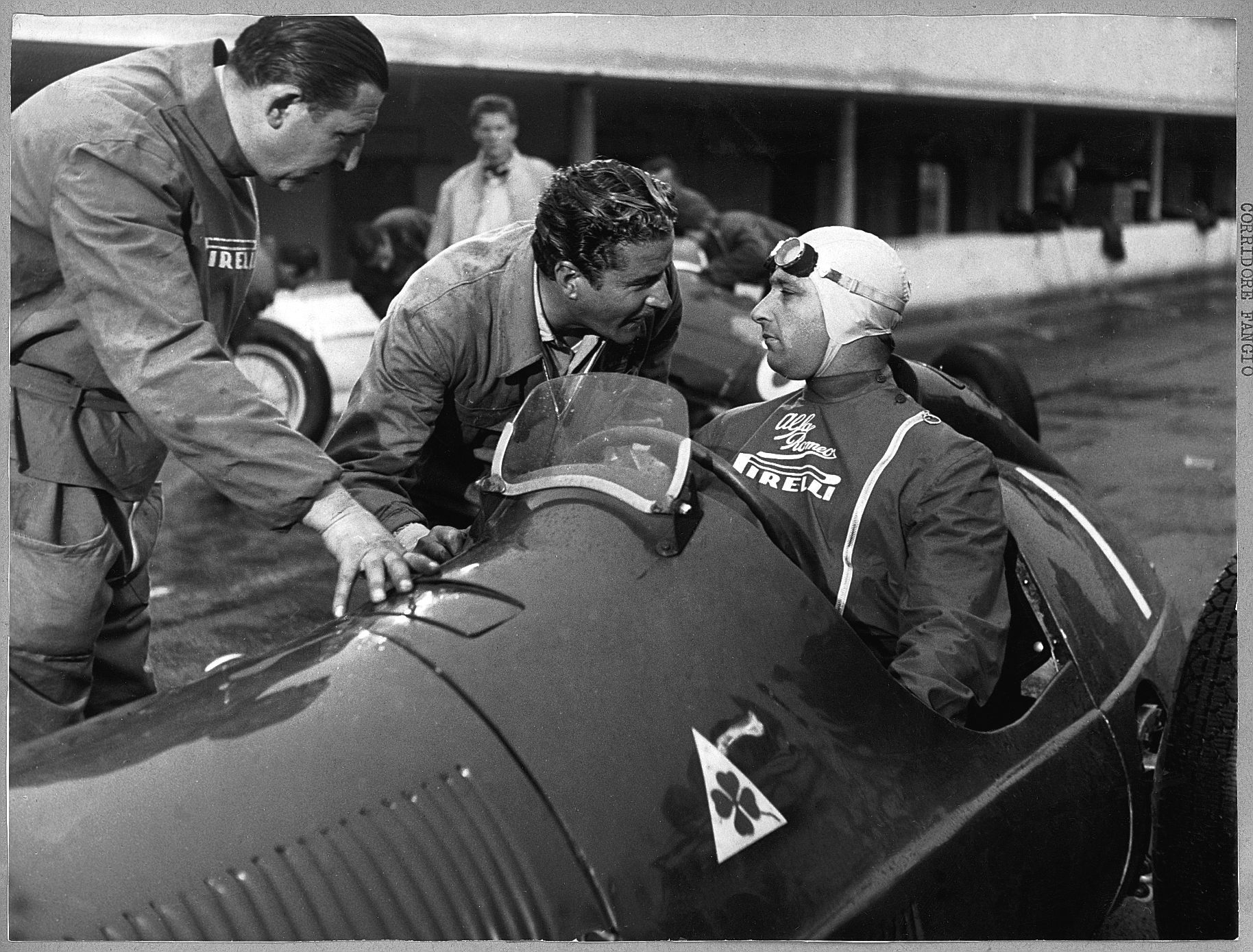
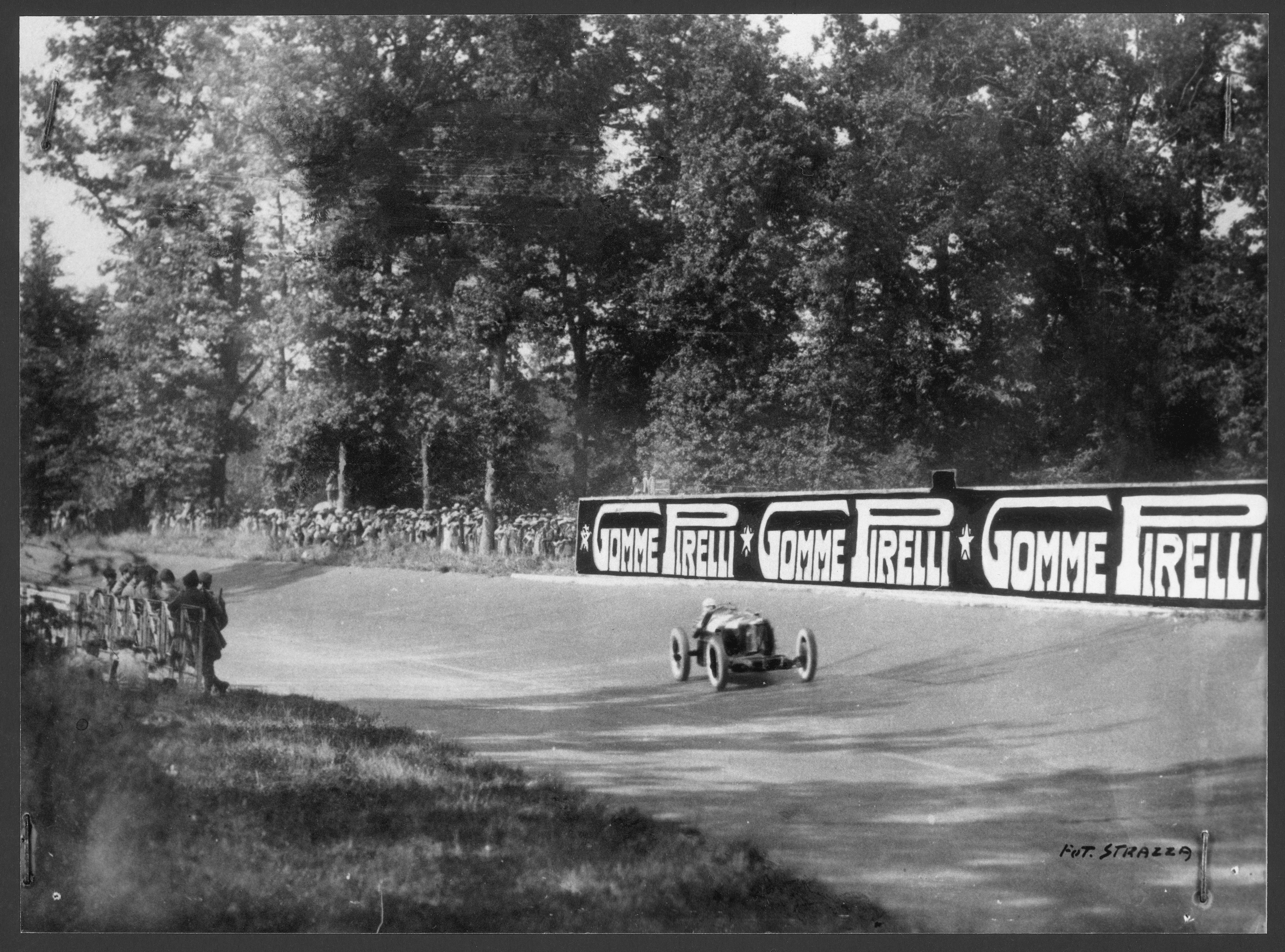
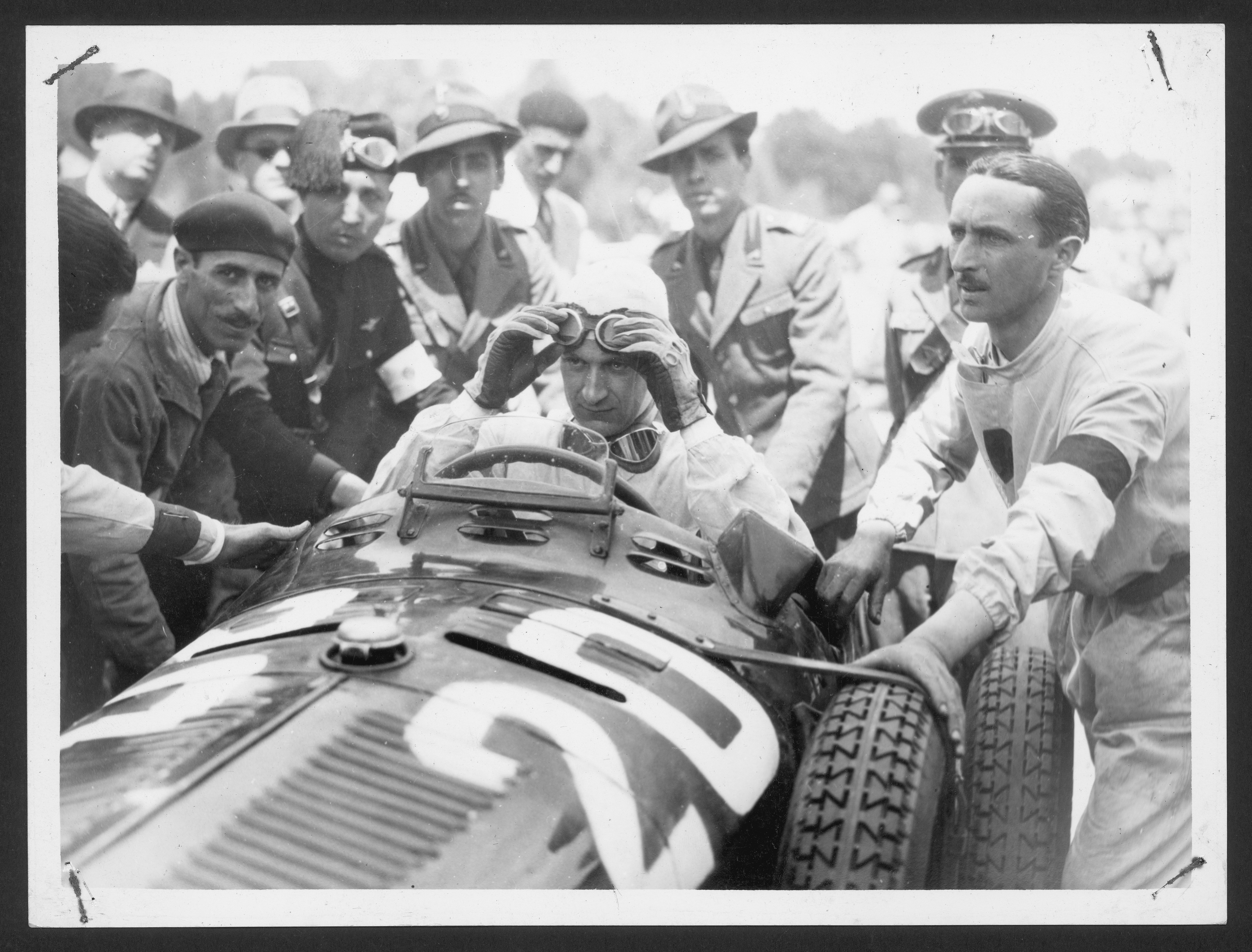
On 26 April 1955 the racing-car driver Alberto Ascari died in an accident on the Monza circuit. Or rather, “Our friend Alberto Ascari”, to quote the title of an article that Pirelli magazine devoted to him a month later. Ascari was the friend of the mechanics in the pits, the champion who after each victory would go up the stairs of the building in the Viale Abruzzi in Milan, Pirelli’s temporary post-war headquarters, too see his trusted technological partner. Ascari raced with Pirelli in Maseratis, Ferraris and Lancias, first with the Pirelli Stella Bianca tyre, and then with the Stelvio, which twice took him to the very top of the Formula 1 World Championship, in 1952 and 1953. With Pirelli he took on, and often won, the great classics, such as the Mille Miglia and the Nürburgring 1000 km.

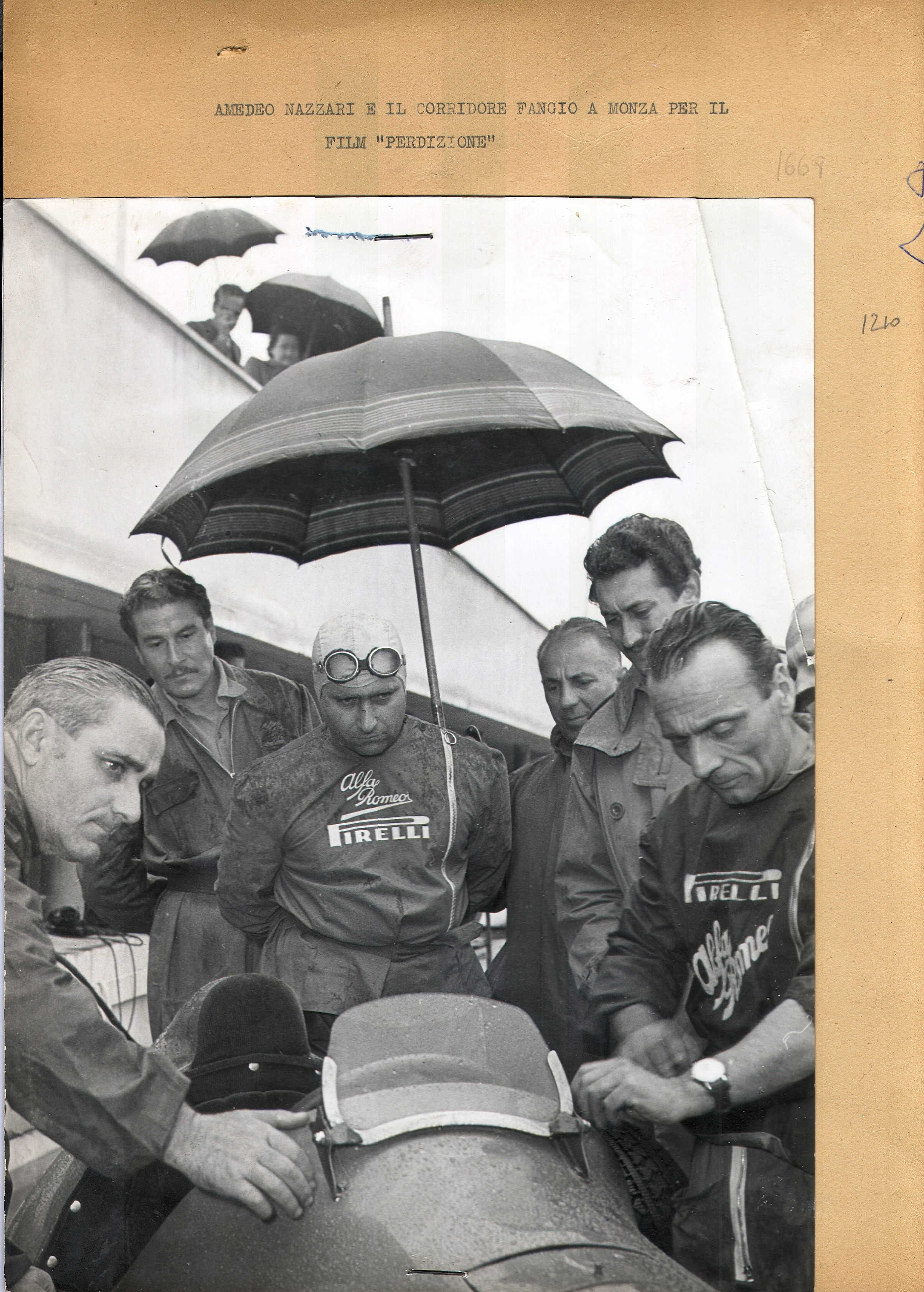
His loyalty over the years to the Long P brand was yet another reason for his long friendship with the “maestro” Gigi Villoresi and it was something he had in common with his rival Juan Manuel Fangio. Alberto was known by many as “Ascarino” –  “little Ascari” – because he was the son of the great Antonio who passed away in 1925. But others, like Gianni Brera, called him “Ciccio” – “chubby” – for his not exactly slim physique. Some – for the same reason – even called him “The Breathing Mountain”. His wife Mietta confirmed this to the journalist Nino Nutrizio in an article on the repose of champions published in Pirelli magazine in 1951: “The mountain’s in there, sleeping and breathing. That’s a good sign, it means everything’s all right.”

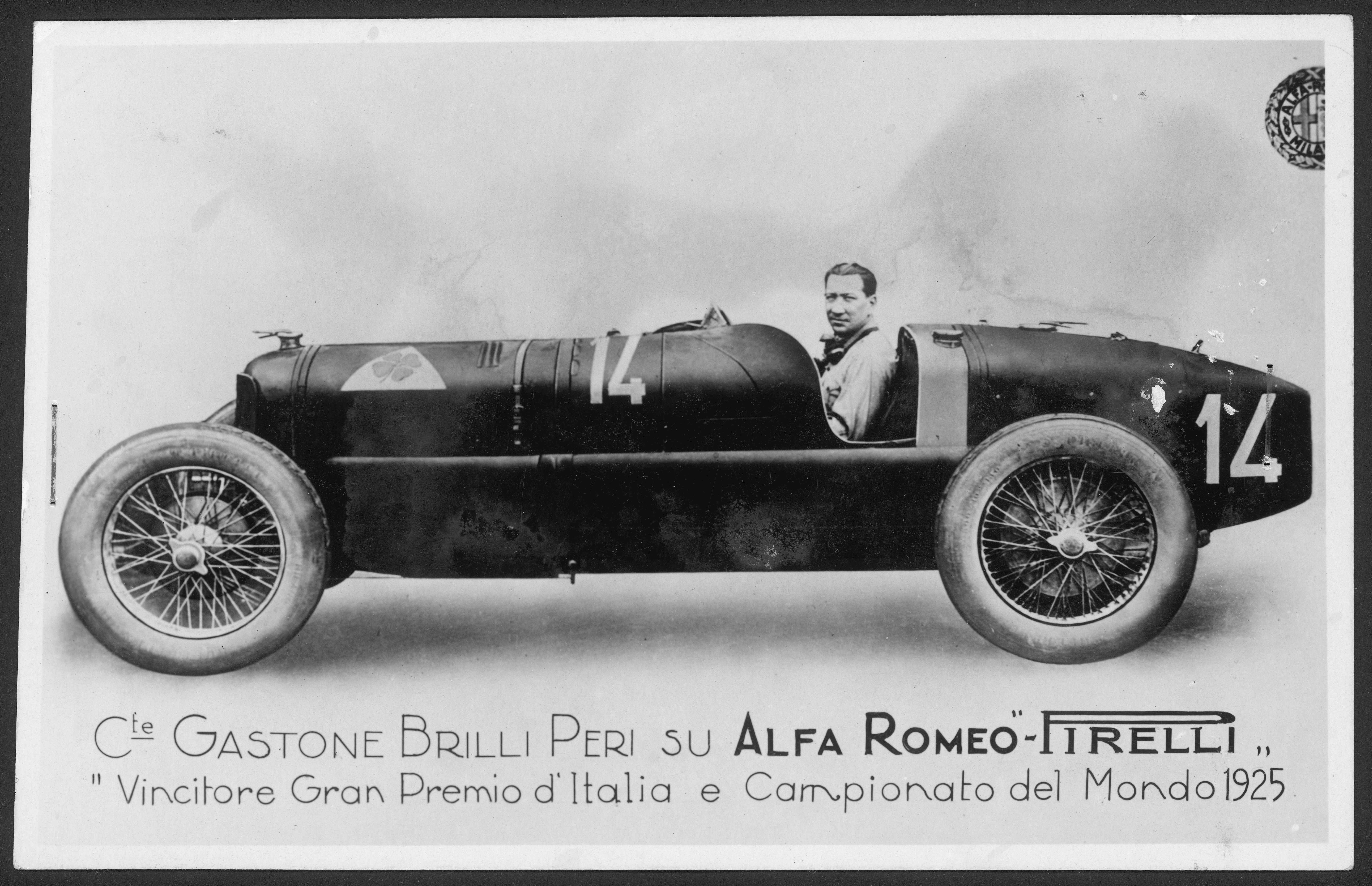
Was Ascari superstitious? He probably was – like so many drivers who were constantly risking their lives at the time. The thirteen letters that formed his name, as well as that of his father, already troubled him. His father had died in an accident on 26 July 1925, during the French Grand Prix, so never would Alberto get behind the wheel of a car on the 26th of the month. And, especially, he would never race without his lucky blue helmet.

When his friends Villoresi and Castellotti invited him to Monza to see the brand new Ferrari 750 Sport that was to make its debut a few days later, Ascari was at home in Milan, just back from the Monaco Grand Prix, where he had come off the track and flown, together with his Lancia D50, into the waters of the harbour in the Principality. At Monza, however, Ascari just could not resist the temptation to try out the new Ferrari, even without his blue helmet, and even though it was Thursday 26 May. On the third lap, the Vialone corner proved fatal: it was said he had braked sharply so as not to hit an intruder who was crossing the track.
He would have turned 37 just over a month later, just like his father Alberto at the time of his death: he had been born in 1888, his son in 1918. Two men bound by a similar destiny and a premature end, but also by the enduring fame of being legendary champions.

On 26 April 1955 the racing-car driver Alberto Ascari died in an accident on the Monza circuit. Or rather, “Our friend Alberto Ascari”, to quote the title of an article that Pirelli magazine devoted to him a month later. Ascari was the friend of the mechanics in the pits, the champion who after each victory would go up the stairs of the building in the Viale Abruzzi in Milan, Pirelli’s temporary post-war headquarters, too see his trusted technological partner. Ascari raced with Pirelli in Maseratis, Ferraris and Lancias, first with the Pirelli Stella Bianca tyre, and then with the Stelvio, which twice took him to the very top of the Formula 1 World Championship, in 1952 and 1953. With Pirelli he took on, and often won, the great classics, such as the Mille Miglia and the Nürburgring 1000 km.

His loyalty over the years to the Long P brand was yet another reason for his long friendship with the “maestro” Gigi Villoresi and it was something he had in common with his rival Juan Manuel Fangio. Alberto was known by many as “Ascarino” –  “little Ascari” – because he was the son of the great Antonio who passed away in 1925. But others, like Gianni Brera, called him “Ciccio” – “chubby” – for his not exactly slim physique. Some – for the same reason – even called him “The Breathing Mountain”. His wife Mietta confirmed this to the journalist Nino Nutrizio in an article on the repose of champions published in Pirelli magazine in 1951: “The mountain’s in there, sleeping and breathing. That’s a good sign, it means everything’s all right.”

Was Ascari superstitious? He probably was – like so many drivers who were constantly risking their lives at the time. The thirteen letters that formed his name, as well as that of his father, already troubled him. His father had died in an accident on 26 July 1925, during the French Grand Prix, so never would Alberto get behind the wheel of a car on the 26th of the month. And, especially, he would never race without his lucky blue helmet.

When his friends Villoresi and Castellotti invited him to Monza to see the brand new Ferrari 750 Sport that was to make its debut a few days later, Ascari was at home in Milan, just back from the Monaco Grand Prix, where he had come off the track and flown, together with his Lancia D50, into the waters of the harbour in the Principality. At Monza, however, Ascari just could not resist the temptation to try out the new Ferrari, even without his blue helmet, and even though it was Thursday 26 May. On the third lap, the Vialone corner proved fatal: it was said he had braked sharply so as not to hit an intruder who was crossing the track.
He would have turned 37 just over a month later, just like his father Alberto at the time of his death: he had been born in 1888, his son in 1918. Two men bound by a similar destiny and a premature end, but also by the enduring fame of being legendary champions.

Multimedia

Images

Cinema and TV in Pirelli Magazine

During its twenty-five years of publication, Pirelli magazine dealt with “information and technology”, covering everything that was modern and topical, keeping up to date with the changes sweeping across the world and society in the 1950s and ’60s. As a mirror of the times, cinema could hardly fail to occupy an important place among the topics dealt with by the magazine, which were naturally entrusted to the most famous critics of the day. A great man of letters, Emilio Cecchi turned to cinema, and in one of his many pre-war travels across America he was intrigued by “drive-in theaters” and he talked about them to his Italian readers in the magazine in 1954. In 1961, the young but already very sharp-witted Tullio Kezich investigated the impact that television was having on traditional forms of entertainment, such as cinema and theatre. In 1967, the critic Morando Morandini referred to the American actor Jerry Lewis as the last true comedian in the world of cinema in the late 1960s.

Born in Florence in 1884, and a pupil of Giuseppe Prezzolini and Giovanni Papini, Emilio Cecchi approached cinema as an intellectual and as a man of letters, bringing such classics as The Little World of the Past and The Betrothed to the silver screen in the 1940s. It was his fascination for cinema as a phenomenon, together with his travels in the United States, that inspired the article about “The drive-in cinema”, published in Pirelli magazine no. 1 of 1954. “This form of film show, which you watch while sitting in your car” was soon to be known in Italy too as a “drive-in”. In Cecchi’s view, nobody in America in the 1950s “would be tempted to increase the number of cinemas, and wait for people who wouldn’t come: while, like this, it’s cinema, so to speak, that goes out to meet an motorised audience, offering them a show without them even bothering to get out of their cars”. A curiosity: in East Dennis, Massachusetts, the “drive-in” had also become a “fly-in”. “The ticket to the ‘theatre’ costs one dollar a head: whether you arrive by car or by plane. “

The thirty-three-year-old Tullio Kezich was already being hailed as a leading film critic in 1961, when he wrote a short essay called “The eye of the TV camera” for Pirelli magazine. The camera was, of course, that of the television, almost ten years after it had started entering Italian homes. “Has TV stolen and does it continue to take away viewers from traditional forms of entertainment?” And, as a result: “Is there a process under way by which TV is destined to replace the public’s preference for, and consumption of, theatre and cinema?” The Trieste-born critic’s response is neither obvious nor unequivocal: to some degree there is such a process, because the mechanisms of television have “rules” that are independent from those of more traditional media. To some degree it is not, because theatre, opera and ballet can never be reduced to the small screen without distorting their nature as empathetic and emotional shows. One thing that Kezich was sure of was that television had immediacy on its side, for it brings you into the “here and now”, and it has a sense of the present moment that a stage or a film set will never be able to convey. Even when showing just a goal being scored on a football pitch, the eye of the camera will always bring a sense of the present moment.

Morando Morandini worked for many a long year with Pirelli magazine, putting his name to the section devoted to the cinema. Attentive and critical, Morandini studied the customs and traditions of the big screen, and readers always looked forward to his articles, and indeed the magazine hosted many of his famous “maulings with no right of appeal”. In a surprise move, in Pirelli magazine no. 2 of 1967, he looks at the work of an American comedian, Jerry Lewis, referring to him as “the James Dean of comedy, the only film comic on active duty with ingenuity, ideas, and a vision of the world”. Three on a Couch had just come out in the cinemas, directed and played by the then forty-one-year-old actor. Criticising the dubbing, which he said did no justice to the “spoken” comedy of Lewis, who was known in Italy as “Picchiatello”, Morandini nevertheless writes an enthusiastic appreciation of the countless personalities that the actor manages to convey on screen, in the finest tradition of sophisticated comedy. Stigmatising the way critics at the time referred to Lewis as “monkey-like”, using the nicknames “Id – Idiot” and “Ug” – Ugly “, Morandini wondered who it was that, “with almost diabolical intelligence, has managed to use such offensive nicknames to create a personal mythology, a comic style, and a small industrial empire?”

During its twenty-five years of publication, Pirelli magazine dealt with “information and technology”, covering everything that was modern and topical, keeping up to date with the changes sweeping across the world and society in the 1950s and ’60s. As a mirror of the times, cinema could hardly fail to occupy an important place among the topics dealt with by the magazine, which were naturally entrusted to the most famous critics of the day. A great man of letters, Emilio Cecchi turned to cinema, and in one of his many pre-war travels across America he was intrigued by “drive-in theaters” and he talked about them to his Italian readers in the magazine in 1954. In 1961, the young but already very sharp-witted Tullio Kezich investigated the impact that television was having on traditional forms of entertainment, such as cinema and theatre. In 1967, the critic Morando Morandini referred to the American actor Jerry Lewis as the last true comedian in the world of cinema in the late 1960s.

Born in Florence in 1884, and a pupil of Giuseppe Prezzolini and Giovanni Papini, Emilio Cecchi approached cinema as an intellectual and as a man of letters, bringing such classics as The Little World of the Past and The Betrothed to the silver screen in the 1940s. It was his fascination for cinema as a phenomenon, together with his travels in the United States, that inspired the article about “The drive-in cinema”, published in Pirelli magazine no. 1 of 1954. “This form of film show, which you watch while sitting in your car” was soon to be known in Italy too as a “drive-in”. In Cecchi’s view, nobody in America in the 1950s “would be tempted to increase the number of cinemas, and wait for people who wouldn’t come: while, like this, it’s cinema, so to speak, that goes out to meet an motorised audience, offering them a show without them even bothering to get out of their cars”. A curiosity: in East Dennis, Massachusetts, the “drive-in” had also become a “fly-in”. “The ticket to the ‘theatre’ costs one dollar a head: whether you arrive by car or by plane. “

The thirty-three-year-old Tullio Kezich was already being hailed as a leading film critic in 1961, when he wrote a short essay called “The eye of the TV camera” for Pirelli magazine. The camera was, of course, that of the television, almost ten years after it had started entering Italian homes. “Has TV stolen and does it continue to take away viewers from traditional forms of entertainment?” And, as a result: “Is there a process under way by which TV is destined to replace the public’s preference for, and consumption of, theatre and cinema?” The Trieste-born critic’s response is neither obvious nor unequivocal: to some degree there is such a process, because the mechanisms of television have “rules” that are independent from those of more traditional media. To some degree it is not, because theatre, opera and ballet can never be reduced to the small screen without distorting their nature as empathetic and emotional shows. One thing that Kezich was sure of was that television had immediacy on its side, for it brings you into the “here and now”, and it has a sense of the present moment that a stage or a film set will never be able to convey. Even when showing just a goal being scored on a football pitch, the eye of the camera will always bring a sense of the present moment.

Morando Morandini worked for many a long year with Pirelli magazine, putting his name to the section devoted to the cinema. Attentive and critical, Morandini studied the customs and traditions of the big screen, and readers always looked forward to his articles, and indeed the magazine hosted many of his famous “maulings with no right of appeal”. In a surprise move, in Pirelli magazine no. 2 of 1967, he looks at the work of an American comedian, Jerry Lewis, referring to him as “the James Dean of comedy, the only film comic on active duty with ingenuity, ideas, and a vision of the world”. Three on a Couch had just come out in the cinemas, directed and played by the then forty-one-year-old actor. Criticising the dubbing, which he said did no justice to the “spoken” comedy of Lewis, who was known in Italy as “Picchiatello”, Morandini nevertheless writes an enthusiastic appreciation of the countless personalities that the actor manages to convey on screen, in the finest tradition of sophisticated comedy. Stigmatising the way critics at the time referred to Lewis as “monkey-like”, using the nicknames “Id – Idiot” and “Ug” – Ugly “, Morandini wondered who it was that, “with almost diabolical intelligence, has managed to use such offensive nicknames to create a personal mythology, a comic style, and a small industrial empire?”

Multimedia

Images

Podcast

Rapporto Pirelli, una lezione di modernità

Multiple narratives

A book on transmediality leads the reader to the boundaries of narrative (for businesses, too)

 Total narration. For everyone and everything. This is the new way of telling a story, using multiple means of communication to recount the same thing, the effect of which is greater than the sum of its individual parts. In insider jargon, this is referred to as transmedia storytelling, or, translated into layperson’s terms, a story that goes beyond the boundaries of the individual narrative tools that can be used to tell it. Here, we are looking not only at the written word, but also images and therefore colour, and perhaps even sound, and movement, touch and so on. Transmedia storytelling takes us to the current (and perhaps final) frontiers of narrative. It pays to understand this technique in full, before any attempt is made to use it.

Reading “Transmedia experience. Dallo storytelling alla narrazione totale” (Transmedia experience. From storytelling to total narration) written by Francesco Gavatorta and Riccardo Milanesi (both teachers and experts in innovative communication techniques) is an experience in itself, even more so because of the subject it addresses. Right from the beginning of the book, we are aware of being led along new paths, when the authors use total football and Star Wars in order to improve our understanding of the content of the text. This is an excellent approach that enables us, in just a few pages, to gain a snapshot of a narrative technique that is far from easy to grasp, let alone to use. The explanation and application of the theory must in any case be based on precise techniques, and for this reason, the authors provide the following explanation in the first pages of the text: “Transmedia is a very precise adjective that encompasses a series of mechanics and links, and one which can simultaneously accommodate applications that go beyond the simple rendering of a story”. That is to say, nothing is left to chance in the use of these new forms of narration, bearing in mind that, as the two authors write, “in transmedia storytelling (…) each medium makes a unique contribution to the development of a single narrative universe”.

The book thus begins by addressing the theme of “building worlds”, before moving on to that of “designing narratives” and then to the function (including within companies) of the transmedia narrative organisation, which is a technique that must succeed in conveying sensations as well as information. Everything ends with a question: is there a transmedia future?

Gavatorta and Milanesi’s writing is highly enjoyable and comprehensible (despite the fact that they use an impressive amount of technical vocabulary), and the content of their book should be read and considered carefully, although the reader is of course not obliged to always agree with the authors.

The reference to Italo Calvino’s “Lezioni Americane“ (the English title of which is Six Memos for the Next Millennium ) is very apt, and indeed, right back in 1985, Calvino was already talking about “multiplicity”, which, after all, is essentially what transmediality is today. And indeed, Gavatorta and Milanesi honestly and dutifully pay homage to his great foresight, writing: “Transmedia storytelling translates into a multiplicity of perspectives”.

Transmedia experience. Dallo storytelling alla narrazione totale (Transmedia experience. From storytelling to total narration)

Francesco Gavatorta, Riccardo Milanesi

Franco Angeli, 2020

A book on transmediality leads the reader to the boundaries of narrative (for businesses, too)

 Total narration. For everyone and everything. This is the new way of telling a story, using multiple means of communication to recount the same thing, the effect of which is greater than the sum of its individual parts. In insider jargon, this is referred to as transmedia storytelling, or, translated into layperson’s terms, a story that goes beyond the boundaries of the individual narrative tools that can be used to tell it. Here, we are looking not only at the written word, but also images and therefore colour, and perhaps even sound, and movement, touch and so on. Transmedia storytelling takes us to the current (and perhaps final) frontiers of narrative. It pays to understand this technique in full, before any attempt is made to use it.

Reading “Transmedia experience. Dallo storytelling alla narrazione totale” (Transmedia experience. From storytelling to total narration) written by Francesco Gavatorta and Riccardo Milanesi (both teachers and experts in innovative communication techniques) is an experience in itself, even more so because of the subject it addresses. Right from the beginning of the book, we are aware of being led along new paths, when the authors use total football and Star Wars in order to improve our understanding of the content of the text. This is an excellent approach that enables us, in just a few pages, to gain a snapshot of a narrative technique that is far from easy to grasp, let alone to use. The explanation and application of the theory must in any case be based on precise techniques, and for this reason, the authors provide the following explanation in the first pages of the text: “Transmedia is a very precise adjective that encompasses a series of mechanics and links, and one which can simultaneously accommodate applications that go beyond the simple rendering of a story”. That is to say, nothing is left to chance in the use of these new forms of narration, bearing in mind that, as the two authors write, “in transmedia storytelling (…) each medium makes a unique contribution to the development of a single narrative universe”.

The book thus begins by addressing the theme of “building worlds”, before moving on to that of “designing narratives” and then to the function (including within companies) of the transmedia narrative organisation, which is a technique that must succeed in conveying sensations as well as information. Everything ends with a question: is there a transmedia future?

Gavatorta and Milanesi’s writing is highly enjoyable and comprehensible (despite the fact that they use an impressive amount of technical vocabulary), and the content of their book should be read and considered carefully, although the reader is of course not obliged to always agree with the authors.

The reference to Italo Calvino’s “Lezioni Americane“ (the English title of which is Six Memos for the Next Millennium ) is very apt, and indeed, right back in 1985, Calvino was already talking about “multiplicity”, which, after all, is essentially what transmediality is today. And indeed, Gavatorta and Milanesi honestly and dutifully pay homage to his great foresight, writing: “Transmedia storytelling translates into a multiplicity of perspectives”.

Transmedia experience. Dallo storytelling alla narrazione totale (Transmedia experience. From storytelling to total narration)

Francesco Gavatorta, Riccardo Milanesi

Franco Angeli, 2020

Risky predictions

Two researchers from the Banca d’Italia discuss the difficulties of analysing the present and the future in light of the economic situation we are currently experiencing

Predicting, or rather, speculating about a future that will never be as it we once thought it would. In any case, attempting to “be ready” for events in both the near and distant future that will affect social communities, businesses, production organisations and individuals. Forecasting has always been a fascinating (and dangerous) exercise. And now, this exercise has taken on even more complex undertones and connotations. Yet in one way or another, it still needs to be addressed. This is something that also applies to entrepreneurs and managers, and which must be approached with a profound awareness of the difficulties that lie ahead for us. Within this context, reading “Previsioni ai tempi del Coronavirus” (“Forecasting in the era of the Coronavirus”), written by Alberto Locarno and Roberta Zizza (of Banca d’Italia) certainly represents a good step forward in gaining a better understanding of the reality of the situation.

The two researchers begin their argument with the observation that “due to the virulence of its impact on society and the economy, the Covid-19 pandemic also represents a challenge for those responsible for forecasting”. Indeed, the challenge is so great that the expression “this time is different”, which was “last in vogue during the Global Financial Crisis, although appropriate, is nonetheless not sufficient to describe the gravity and the exceptional nature of the current emergency”.

The problem highlighted by the two authors is simple: the difficulty is derived from the lack of information on the true evolution of the contagion, a scarcity that in turn is due to the dearth of reliable statistical information and the presence “of new routes of transmission, through which the health crisis is affecting the economy”. In short, those who make predictions for a living now find themselves floored; they lack the basic elements they need to be able to carry out a proper analysis, which is the basis for providing a reasonably reliable forecast of what is likely to happen in the future. This is something that applies to everyone, and as such, to all companies that are facing suspended investments, balance sheets with unexpected costs, new organisational issues and more.

Locarno and Zizza’s essay, however, strives to strike a balance between the uncertainty that economic and social systems are currently experiencing and the need to give shape to analyses that are sufficiently trustworthy. Having taken an in-depth look at the factors that make forecasting more difficult, the authors move on, examining the potential developments that could occur through the use of the short and medium-term forecasting methods developed by the Banca d’Italia. As such, they outline a potential future for forecasting, where indications with a good degree of certainty are accompanied by hypotheses that will need to be verified over time.

The text by Locarno and Zizza is worth a read, not so much for the indications it provides with regard to what may happen in the future, but rather in order to gain a better understanding of the challenging situation we must wrestle with when formulating or using these forecasts.

Previsioni ai tempi del Coronavirus (“Forecasting in the era of the Coronavirus”)

Alberto Locarno, Roberta Zizza

Banca d’Italia, Covid-19 Notes, 11 May 2020

Two researchers from the Banca d’Italia discuss the difficulties of analysing the present and the future in light of the economic situation we are currently experiencing

Predicting, or rather, speculating about a future that will never be as it we once thought it would. In any case, attempting to “be ready” for events in both the near and distant future that will affect social communities, businesses, production organisations and individuals. Forecasting has always been a fascinating (and dangerous) exercise. And now, this exercise has taken on even more complex undertones and connotations. Yet in one way or another, it still needs to be addressed. This is something that also applies to entrepreneurs and managers, and which must be approached with a profound awareness of the difficulties that lie ahead for us. Within this context, reading “Previsioni ai tempi del Coronavirus” (“Forecasting in the era of the Coronavirus”), written by Alberto Locarno and Roberta Zizza (of Banca d’Italia) certainly represents a good step forward in gaining a better understanding of the reality of the situation.

The two researchers begin their argument with the observation that “due to the virulence of its impact on society and the economy, the Covid-19 pandemic also represents a challenge for those responsible for forecasting”. Indeed, the challenge is so great that the expression “this time is different”, which was “last in vogue during the Global Financial Crisis, although appropriate, is nonetheless not sufficient to describe the gravity and the exceptional nature of the current emergency”.

The problem highlighted by the two authors is simple: the difficulty is derived from the lack of information on the true evolution of the contagion, a scarcity that in turn is due to the dearth of reliable statistical information and the presence “of new routes of transmission, through which the health crisis is affecting the economy”. In short, those who make predictions for a living now find themselves floored; they lack the basic elements they need to be able to carry out a proper analysis, which is the basis for providing a reasonably reliable forecast of what is likely to happen in the future. This is something that applies to everyone, and as such, to all companies that are facing suspended investments, balance sheets with unexpected costs, new organisational issues and more.

Locarno and Zizza’s essay, however, strives to strike a balance between the uncertainty that economic and social systems are currently experiencing and the need to give shape to analyses that are sufficiently trustworthy. Having taken an in-depth look at the factors that make forecasting more difficult, the authors move on, examining the potential developments that could occur through the use of the short and medium-term forecasting methods developed by the Banca d’Italia. As such, they outline a potential future for forecasting, where indications with a good degree of certainty are accompanied by hypotheses that will need to be verified over time.

The text by Locarno and Zizza is worth a read, not so much for the indications it provides with regard to what may happen in the future, but rather in order to gain a better understanding of the challenging situation we must wrestle with when formulating or using these forecasts.

Previsioni ai tempi del Coronavirus (“Forecasting in the era of the Coronavirus”)

Alberto Locarno, Roberta Zizza

Banca d’Italia, Covid-19 Notes, 11 May 2020

The reasons why we should employ the best Italian energies for a recovery and development plan, making good use of EU and ECB resources

What is the deeper meaning of policy-making? The Anglo-Saxon language, which is both precise and pragmatic, distinguishes policy from politics; using the two terms to indicate, on the one hand, the values, plans and strategies and, on the other, the concrete choices made by the government, institutions, public administration bodies and the actions taken by the “practising” political parties. As in all human activities, there are areas which rub up against each other and overlap, such as between policy and politics. But the distinction remains, and must not be forgotten, in order to steer clear of confused language that can lead to ambiguous and confused choices.

In the debate that is raging in Italy on a daily basis, there are those who denounce companies who behave like “political entities” (including Fausto Bertinotti, former leader of “Rifondazione Comunista”, the Communist Refoundation Party, in the pages of Il Riformista newspaper, criticising the position taken by Confindustria with regard to the need for economic recovery in the wake of Covid 19). And the echoes of other controversies can also be heard, including those concerning the “partito del PIL” (the GDP party), the “strong powers”, and the alleged prevalence of interests over values in business decisions.

As such, it is worth seeking a degree of clarity, particularly at such a difficult time for the Italian and European economy and society, caught between the pandemic and the recession (the deepest of the last 75 years), and yet driven by an extraordinary will to recover, despite the fears, anxieties and the painful acknowledgement of its own fragility. In actual fact, companies, as social players, are “political entities”. And once again, during this crisis – as has been the case in other dramatic twists and turns in Italian history (beginning with the 1947 agreement between Angelo Costa, president of Confindustria, and Giuseppe Di Vittorio, leader of CGIL, at the start of the process of reconstruction of war-torn Italy, characterised by the dictum “first factories, then houses”) – business organisations, from Confindustria to its local and sector-based offshoots, have taken a position which focuses less on the interests of the trade category as a whole than on the need to safeguard and relaunch the entire country system. Similarly, trade unions and other representative organisations are also “political entities”, at a time when long-term thinking has got us talking once again about the positive role of intermediate bodies, as the conceited idea of the end of intermediaries and the pre-eminence of the direct channel between leader and people begins to tarnish. And “getting politics right” is a general responsibility, essential for Italy’s future, within the context of Europe’s recovery.

Companies have skills and knowledge. A strong link with regions in which they operate. They play an active role in strengthening community ties, from welfare – in the integration between the company and the region – to training, and from environmental sustainability to the promotion of the positive elements of social capital. And for a long time, these companies have been cultivating general ideas on how Italy could be developed more effectively. They are the key players in the “sweet patriotism” promoted by Carlo Azeglio Ciampi as President of the Republic. And in the Quirinale (with President Giorgio Napolitano before and President Mattarella now), they have never missed a chance to draw attention to the fact that Italian democracy and values – which must guide economic growth – represent a fundamental point of reference, both institutional and civil.

In an era in which we are seeing a shift from a culture founded on the primacy of shareholder value (the interests of shareholders, profits and the share prices on the stock exchange) to one that is based upon stakeholder value (namely those values that concern employees, suppliers, consumers and communities) – and where Italian companies can leverage their approaches to environmental and social sustainability – knowing how to be a “political entity” capable of general thoughts and opinions assumes a strategic importance that should not be underestimated.

The crisis accentuates this long-term role. “In the last decade, Italy has grown much less than the rest of Europe, producing less wealth, and the debt/GDP ratio has worsened. Now, we must either draw up a project that is focused on stable and lasting growth, engaging the best experts in the country, or alternatively, resign ourselves to the fact that in the medium term, the debt at 160% of GDP will fall upon us, and obliterate Italy”, says Marco Tronchetti Provera, CEO of Pirelli 8 “Affari&Finanza – la Repubblica“, 18 May). A major undertaking, then. And one that makes use of the very best skills that exist in the country. Values, ideas and general interests. And a job that we must do together. These are policy choices, indeed. And choices that call for a general and forward-thinking assumption of responsibility that involves institutional and social players.

In the last few weeks, the new president of Confindustria, Carlo Bonomi, and many other businessmen and women have vocally insisted that companies must play a central role in the reconstruction and relaunch of the country. And today, in the face of the massive resources made available by the EU and the ECB (which we talked about in last week’s blog), Italy cannot afford to miss out on this opportunity to implement an ambitious initiative designed to radically transform and relaunch the economy. An initiative that is able to salvage productivity and competitiveness, putting right both old and new environmental failures and social imbalances.

Projects, then. And plans. For innovation, research, the environment, infrastructure and digital transformation, not only with regard to industrial operations and services, but also in the public administration sector. And for training, schools, and culture in the widest sense.

In Sunday’s Corriere della Sera, Ferruccio de Bortoli spoke emphatically of the central position that a major investment in schools must take, in light of the fact that they represent a pivotal place for the improvement of the civil conscience and the establishment of a new ruling class, combining public and private resources. This is another tip that we should take heed of. It is a challenge to which companies have long been particularly sensitive. The challenge to engage in “good” politics. Responsible policy. Which demands competent, forward-thinking politics.

What is the deeper meaning of policy-making? The Anglo-Saxon language, which is both precise and pragmatic, distinguishes policy from politics; using the two terms to indicate, on the one hand, the values, plans and strategies and, on the other, the concrete choices made by the government, institutions, public administration bodies and the actions taken by the “practising” political parties. As in all human activities, there are areas which rub up against each other and overlap, such as between policy and politics. But the distinction remains, and must not be forgotten, in order to steer clear of confused language that can lead to ambiguous and confused choices.

In the debate that is raging in Italy on a daily basis, there are those who denounce companies who behave like “political entities” (including Fausto Bertinotti, former leader of “Rifondazione Comunista”, the Communist Refoundation Party, in the pages of Il Riformista newspaper, criticising the position taken by Confindustria with regard to the need for economic recovery in the wake of Covid 19). And the echoes of other controversies can also be heard, including those concerning the “partito del PIL” (the GDP party), the “strong powers”, and the alleged prevalence of interests over values in business decisions.

As such, it is worth seeking a degree of clarity, particularly at such a difficult time for the Italian and European economy and society, caught between the pandemic and the recession (the deepest of the last 75 years), and yet driven by an extraordinary will to recover, despite the fears, anxieties and the painful acknowledgement of its own fragility. In actual fact, companies, as social players, are “political entities”. And once again, during this crisis – as has been the case in other dramatic twists and turns in Italian history (beginning with the 1947 agreement between Angelo Costa, president of Confindustria, and Giuseppe Di Vittorio, leader of CGIL, at the start of the process of reconstruction of war-torn Italy, characterised by the dictum “first factories, then houses”) – business organisations, from Confindustria to its local and sector-based offshoots, have taken a position which focuses less on the interests of the trade category as a whole than on the need to safeguard and relaunch the entire country system. Similarly, trade unions and other representative organisations are also “political entities”, at a time when long-term thinking has got us talking once again about the positive role of intermediate bodies, as the conceited idea of the end of intermediaries and the pre-eminence of the direct channel between leader and people begins to tarnish. And “getting politics right” is a general responsibility, essential for Italy’s future, within the context of Europe’s recovery.

Companies have skills and knowledge. A strong link with regions in which they operate. They play an active role in strengthening community ties, from welfare – in the integration between the company and the region – to training, and from environmental sustainability to the promotion of the positive elements of social capital. And for a long time, these companies have been cultivating general ideas on how Italy could be developed more effectively. They are the key players in the “sweet patriotism” promoted by Carlo Azeglio Ciampi as President of the Republic. And in the Quirinale (with President Giorgio Napolitano before and President Mattarella now), they have never missed a chance to draw attention to the fact that Italian democracy and values – which must guide economic growth – represent a fundamental point of reference, both institutional and civil.

In an era in which we are seeing a shift from a culture founded on the primacy of shareholder value (the interests of shareholders, profits and the share prices on the stock exchange) to one that is based upon stakeholder value (namely those values that concern employees, suppliers, consumers and communities) – and where Italian companies can leverage their approaches to environmental and social sustainability – knowing how to be a “political entity” capable of general thoughts and opinions assumes a strategic importance that should not be underestimated.

The crisis accentuates this long-term role. “In the last decade, Italy has grown much less than the rest of Europe, producing less wealth, and the debt/GDP ratio has worsened. Now, we must either draw up a project that is focused on stable and lasting growth, engaging the best experts in the country, or alternatively, resign ourselves to the fact that in the medium term, the debt at 160% of GDP will fall upon us, and obliterate Italy”, says Marco Tronchetti Provera, CEO of Pirelli 8 “Affari&Finanza – la Repubblica“, 18 May). A major undertaking, then. And one that makes use of the very best skills that exist in the country. Values, ideas and general interests. And a job that we must do together. These are policy choices, indeed. And choices that call for a general and forward-thinking assumption of responsibility that involves institutional and social players.

In the last few weeks, the new president of Confindustria, Carlo Bonomi, and many other businessmen and women have vocally insisted that companies must play a central role in the reconstruction and relaunch of the country. And today, in the face of the massive resources made available by the EU and the ECB (which we talked about in last week’s blog), Italy cannot afford to miss out on this opportunity to implement an ambitious initiative designed to radically transform and relaunch the economy. An initiative that is able to salvage productivity and competitiveness, putting right both old and new environmental failures and social imbalances.

Projects, then. And plans. For innovation, research, the environment, infrastructure and digital transformation, not only with regard to industrial operations and services, but also in the public administration sector. And for training, schools, and culture in the widest sense.

In Sunday’s Corriere della Sera, Ferruccio de Bortoli spoke emphatically of the central position that a major investment in schools must take, in light of the fact that they represent a pivotal place for the improvement of the civil conscience and the establishment of a new ruling class, combining public and private resources. This is another tip that we should take heed of. It is a challenge to which companies have long been particularly sensitive. The challenge to engage in “good” politics. Responsible policy. Which demands competent, forward-thinking politics.

Pirelli: Stories of People and Inventions: Luigi Emanueli

Anyone who walked into Luigi Emanueli’s office at Pirelli could not help but be struck by the quatrain, by the American poet Longfellow, on display behind him in block capitals: “Not enjoyment, and not sorrow / Is our destined end or way; / But to act, that each tomorrow / Find us farther than today”. Verses that convey the joy of invention and the desire to be always one step ahead of the present. A life plan for the engineer Emanueli, who during his long career became the leading player in important technical advances in Pirelli production, in both the cable and rubber sectors. Born in Milan in 1883, he joined the company in 1907 after graduating in industrial electrical engineering. At the time, his father was working with Emanuele Jona, who had helped the Milanese company to become a powerful international force in the cables sector. Pirelli gave Emanueli, like Jona, the chance to carry out research with extraordinary means put at their disposal by the company, with the aim of finding technical solutions to improve production. In particular, Emanueli studied the behaviour of insulating materials and worked on finding solutions for the problem of the dissipation of energy: at the end of the First World War, he managed to make a cable with revolutionary characteristics in the field of electric power transmission. It consisted of a cable insulated by paper impregnated with fluid oil, which eliminated the dissipation of energy at source. The so-called Emanueli cable was tested at the Brugherio plant in 1924 and could carry 132,000 volts, the highest voltage ever reached at the time, and it was immediately put to use, in 1927, to light up two large American cities, New York and Chicago. A few years later, experiments carried out at the Cislago plant, in the province of Varese, raised the power level to 220,000 volts, and this voltage was used to power the city of Paris in 1936. The cable created by Emanueli was so superlative that no further improvements were required for many years and the cable was used the world over for the transmission of ever higher voltages, reaching 500,000 volts in the 1950s.

Emanueli also worked on insulated submarine cables and telecommunications cables. Appointed Technical Director in 1917, at the age of just 34, he quickly worked his way up, becoming Central Director in 1931 and then a member of the Board in 1939. In 1944 he was entrusted with central management not only of the cable sector, but also for rubber. The latter was a relatively new sector for him, but with his characteristic drive to discover new things, he achieved significant results in a short period of time, as certified by numerous international patents.

Emanueli’s research focused on three aspects of tyre production: the idea that an inextensible belt influences the life of the tread; the possibility of arranging the ply wires radially, thus maximising their resistance; and a special configuration of the beads that would mitigate the stress caused by their movement with respect to the rims. Based on these intuitions, in 1951 Pirelli patented its own radial tyre, the Cinturato, with a belt that longitudinally tautens the rubberised plies of the casing. Emanueli’s work earned him huge numbers of international honours, including the presidency of the Italian Electrotechnical Association, the chair of a course on cables in 1929 at the Engineering Faculty of the University of London in 1929 (later repeated at the Politecnico University of Milan), and honorary membership of the Société Francaise des Electriciens in 1951.

Luigi Emanueli died on 17 February 1959. Alberto Pirelli recalled him with these words: “lofty intellect, vast culture, a mind open to the spiritual values of life, and youthful to the very end in his enthusiasm as a researcher, he alternated the inspiration of the inventive spark with trust in a patient, tenacious method of research and experimentation.” Always one step ahead, with his eye to the future.

Anyone who walked into Luigi Emanueli’s office at Pirelli could not help but be struck by the quatrain, by the American poet Longfellow, on display behind him in block capitals: “Not enjoyment, and not sorrow / Is our destined end or way; / But to act, that each tomorrow / Find us farther than today”. Verses that convey the joy of invention and the desire to be always one step ahead of the present. A life plan for the engineer Emanueli, who during his long career became the leading player in important technical advances in Pirelli production, in both the cable and rubber sectors. Born in Milan in 1883, he joined the company in 1907 after graduating in industrial electrical engineering. At the time, his father was working with Emanuele Jona, who had helped the Milanese company to become a powerful international force in the cables sector. Pirelli gave Emanueli, like Jona, the chance to carry out research with extraordinary means put at their disposal by the company, with the aim of finding technical solutions to improve production. In particular, Emanueli studied the behaviour of insulating materials and worked on finding solutions for the problem of the dissipation of energy: at the end of the First World War, he managed to make a cable with revolutionary characteristics in the field of electric power transmission. It consisted of a cable insulated by paper impregnated with fluid oil, which eliminated the dissipation of energy at source. The so-called Emanueli cable was tested at the Brugherio plant in 1924 and could carry 132,000 volts, the highest voltage ever reached at the time, and it was immediately put to use, in 1927, to light up two large American cities, New York and Chicago. A few years later, experiments carried out at the Cislago plant, in the province of Varese, raised the power level to 220,000 volts, and this voltage was used to power the city of Paris in 1936. The cable created by Emanueli was so superlative that no further improvements were required for many years and the cable was used the world over for the transmission of ever higher voltages, reaching 500,000 volts in the 1950s.

Emanueli also worked on insulated submarine cables and telecommunications cables. Appointed Technical Director in 1917, at the age of just 34, he quickly worked his way up, becoming Central Director in 1931 and then a member of the Board in 1939. In 1944 he was entrusted with central management not only of the cable sector, but also for rubber. The latter was a relatively new sector for him, but with his characteristic drive to discover new things, he achieved significant results in a short period of time, as certified by numerous international patents.

Emanueli’s research focused on three aspects of tyre production: the idea that an inextensible belt influences the life of the tread; the possibility of arranging the ply wires radially, thus maximising their resistance; and a special configuration of the beads that would mitigate the stress caused by their movement with respect to the rims. Based on these intuitions, in 1951 Pirelli patented its own radial tyre, the Cinturato, with a belt that longitudinally tautens the rubberised plies of the casing. Emanueli’s work earned him huge numbers of international honours, including the presidency of the Italian Electrotechnical Association, the chair of a course on cables in 1929 at the Engineering Faculty of the University of London in 1929 (later repeated at the Politecnico University of Milan), and honorary membership of the Société Francaise des Electriciens in 1951.

Luigi Emanueli died on 17 February 1959. Alberto Pirelli recalled him with these words: “lofty intellect, vast culture, a mind open to the spiritual values of life, and youthful to the very end in his enthusiasm as a researcher, he alternated the inspiration of the inventive spark with trust in a patient, tenacious method of research and experimentation.” Always one step ahead, with his eye to the future.

Multimedia

Images

The First Pirelli Factory: An Industrial Revolution

In 1873, the young engineer  Giovanni Battista Pirelli  opened the first factory in Italy for processing elastic rubber. It was located in Via Ponte Seveso, now Via Fabio Filzi, in Milan. The area, which was then known as Corpi Santi Fuori Porta Nuova, was in the open countryside, outside the city.

The factory, which initially consisted of a single building 1000-square-metre building along the Sevesetto river, employed 40 workers and 5 office staff, and manufactured belts, valves, and rubber hoses. As new applications were found for this material, production rapidly expanded to include sanitary and haberdashery items (1877), electrical conductors (1879), and tyres (1890). The factory quickly used up all the available space, so in order to start production of “pneumatic tyres for velocipedes”, another plot of land was purchased in 1890. It was located beyond the Sevesetto, and was known as the “Brusada”, from the ruins of a “burnt” farmhouse. This was to be the last plot available for the factory to expand, for by this time the city had swallowed up the entire neighbourhood and new spaces could be found only by moving away. Pirelli’s second factory in Milan was therefore built out in the countryside at Bicocca in 1908. Work continued in the factory in the centre of Milan until the Second World War, when the building was destroyed by bombing raids in July 1943. The area was sold to the city municipality, with the exception of the “Brusada” lot, where the first stone of the Pirelli Tower was laid in 1956.

Back to the main page

In 1873, the young engineer  Giovanni Battista Pirelli  opened the first factory in Italy for processing elastic rubber. It was located in Via Ponte Seveso, now Via Fabio Filzi, in Milan. The area, which was then known as Corpi Santi Fuori Porta Nuova, was in the open countryside, outside the city.

The factory, which initially consisted of a single building 1000-square-metre building along the Sevesetto river, employed 40 workers and 5 office staff, and manufactured belts, valves, and rubber hoses. As new applications were found for this material, production rapidly expanded to include sanitary and haberdashery items (1877), electrical conductors (1879), and tyres (1890). The factory quickly used up all the available space, so in order to start production of “pneumatic tyres for velocipedes”, another plot of land was purchased in 1890. It was located beyond the Sevesetto, and was known as the “Brusada”, from the ruins of a “burnt” farmhouse. This was to be the last plot available for the factory to expand, for by this time the city had swallowed up the entire neighbourhood and new spaces could be found only by moving away. Pirelli’s second factory in Milan was therefore built out in the countryside at Bicocca in 1908. Work continued in the factory in the centre of Milan until the Second World War, when the building was destroyed by bombing raids in July 1943. The area was sold to the city municipality, with the exception of the “Brusada” lot, where the first stone of the Pirelli Tower was laid in 1956.

Back to the main page

Multimedia

Images

Avant-garde Design: Creative Interiors

One interesting feature in the history of the tower is that of its interior design. The work of Gio Ponti, who designed it “in relation to and in continuity with the architecture”, as we read in issue 71 of Edilizia Moderna devoted to the Pirelli headquarters in September 1960, the design gave a stylistic identity to all the premises and to all the furnishings, from the walls and floors, all clad in Pirelli rubber and linoleum, to the doors, through to the lifts, clocks, lamps and other lighting equipment, in the “democatic” belief that all the “inhabitants” of the building, from the company chairman to the office clerks, should live in the same spaces.

Colour, which was particularly important for Ponti – as he himself says in “Everything in the World Must Be Brightly Coloured”, an article he wrote for Pirelli magazine in 1952 – was used as a “means of correcting the monotony and anonymity of the spaces” in the doors, which were clad in red linoleum, and on the floors, in yellow and black linoleum. Gio Ponti and Alberto Rosselli also chose the furniture: the desks were those Ponti had designed in 1955 for the Rima company, with metal frames and wooden or linoleum tops

The large meeting room tables recalled the ground plan of the “rice grain” building. The upholstered seats, on the other hand, were made by Arflex, a company set up in 1950 to an idea by the Pirelli engineer Carlo Barassi, which produced furniture upholstered with Pirelli foam rubber, bringing chairs, armchairs, sofas, and beds onto the market. They were designed by the greatest names in 1950s architecture and design, building on the experience acquired in the 1930s, when several Rationalist architects, including Ponti himself, had carried out the first experiments in furniture upholstered with latex foam rubber, which had been exhibited in the furniture show of the VI Triennale di Milano in 1936. “Hall” armchairs, designed by Roberto Menghi in 1958, were chosen for the waiting rooms in the tower.

The Pirellone was ready to embark on its new life.

Back to the main page

One interesting feature in the history of the tower is that of its interior design. The work of Gio Ponti, who designed it “in relation to and in continuity with the architecture”, as we read in issue 71 of Edilizia Moderna devoted to the Pirelli headquarters in September 1960, the design gave a stylistic identity to all the premises and to all the furnishings, from the walls and floors, all clad in Pirelli rubber and linoleum, to the doors, through to the lifts, clocks, lamps and other lighting equipment, in the “democatic” belief that all the “inhabitants” of the building, from the company chairman to the office clerks, should live in the same spaces.

Colour, which was particularly important for Ponti – as he himself says in “Everything in the World Must Be Brightly Coloured”, an article he wrote for Pirelli magazine in 1952 – was used as a “means of correcting the monotony and anonymity of the spaces” in the doors, which were clad in red linoleum, and on the floors, in yellow and black linoleum. Gio Ponti and Alberto Rosselli also chose the furniture: the desks were those Ponti had designed in 1955 for the Rima company, with metal frames and wooden or linoleum tops

The large meeting room tables recalled the ground plan of the “rice grain” building. The upholstered seats, on the other hand, were made by Arflex, a company set up in 1950 to an idea by the Pirelli engineer Carlo Barassi, which produced furniture upholstered with Pirelli foam rubber, bringing chairs, armchairs, sofas, and beds onto the market. They were designed by the greatest names in 1950s architecture and design, building on the experience acquired in the 1930s, when several Rationalist architects, including Ponti himself, had carried out the first experiments in furniture upholstered with latex foam rubber, which had been exhibited in the furniture show of the VI Triennale di Milano in 1936. “Hall” armchairs, designed by Roberto Menghi in 1958, were chosen for the waiting rooms in the tower.

The Pirellone was ready to embark on its new life.

Back to the main page

Multimedia

Images

Life and Work in the Tower

In April 1960, the Pirelli Centre came to life. The first twelve floors were set aside for rental to other companies, the central ones were for the Group’s subsidiaries and the floors from the sixteenth up were to be for staff functions, with the Central Administration Department, the Research Office, the Purchasing Department, the Advertising Department, the Human Resources Department, and Accounting and Administration, as well as general management of the cables and rubber sectors.

Each floor had its own management office, and the workplaces, as we see in the “A Photographer in the office” report published in Fatti e notizie, in issue no. 4 of 1960, were arranged in bright open spaces with air conditioning. The tower could accommodate about 2000 people, who came in and out and moved around the building every day.

What made the design so advanced was thus not only the architectural and structural solutions, but also that of the services, making mobility and work within the building extremely efficient. Preliminary study had assessed movements in and out of the building (from Via Fabio Filzi or from the square in front of the central station) as well as inside, estimating the number of people, times of day, and the means by which people would reach the tower, taking into consideration both employees and external guests. One of the reasons for building a tower rather than a horizontal building was because it would be possible to move around inside using lifts.

After assessing the number of people on each floor and their needs, ten lifts with different capacities and speeds were designed to serve the various floors. Using a system of synchronised clocks, the lifts could automatically adapt to four different conditions of traffic: peak traffic up and down during the hours when the staff entered and left the building, normal traffic, and reduced traffic. Also the mail sorting system was carefully planned and designed. The average daily volume of mail consisted of 11,000 letters, 900 magazines, almost 2000 large packages and 300 telegrams. A system of post boxes was created up the entire length of the building, so that they could be sent from the post office to the right floor and unloaded using a sloping surface into a collection bin. These were new approaches to the work experience for the future “Italy on the move”.

Back to the main page

In April 1960, the Pirelli Centre came to life. The first twelve floors were set aside for rental to other companies, the central ones were for the Group’s subsidiaries and the floors from the sixteenth up were to be for staff functions, with the Central Administration Department, the Research Office, the Purchasing Department, the Advertising Department, the Human Resources Department, and Accounting and Administration, as well as general management of the cables and rubber sectors.

Each floor had its own management office, and the workplaces, as we see in the “A Photographer in the office” report published in Fatti e notizie, in issue no. 4 of 1960, were arranged in bright open spaces with air conditioning. The tower could accommodate about 2000 people, who came in and out and moved around the building every day.

What made the design so advanced was thus not only the architectural and structural solutions, but also that of the services, making mobility and work within the building extremely efficient. Preliminary study had assessed movements in and out of the building (from Via Fabio Filzi or from the square in front of the central station) as well as inside, estimating the number of people, times of day, and the means by which people would reach the tower, taking into consideration both employees and external guests. One of the reasons for building a tower rather than a horizontal building was because it would be possible to move around inside using lifts.

After assessing the number of people on each floor and their needs, ten lifts with different capacities and speeds were designed to serve the various floors. Using a system of synchronised clocks, the lifts could automatically adapt to four different conditions of traffic: peak traffic up and down during the hours when the staff entered and left the building, normal traffic, and reduced traffic. Also the mail sorting system was carefully planned and designed. The average daily volume of mail consisted of 11,000 letters, 900 magazines, almost 2000 large packages and 300 telegrams. A system of post boxes was created up the entire length of the building, so that they could be sent from the post office to the right floor and unloaded using a sloping surface into a collection bin. These were new approaches to the work experience for the future “Italy on the move”.

Back to the main page

Multimedia

Images

Sign up for the newsletter